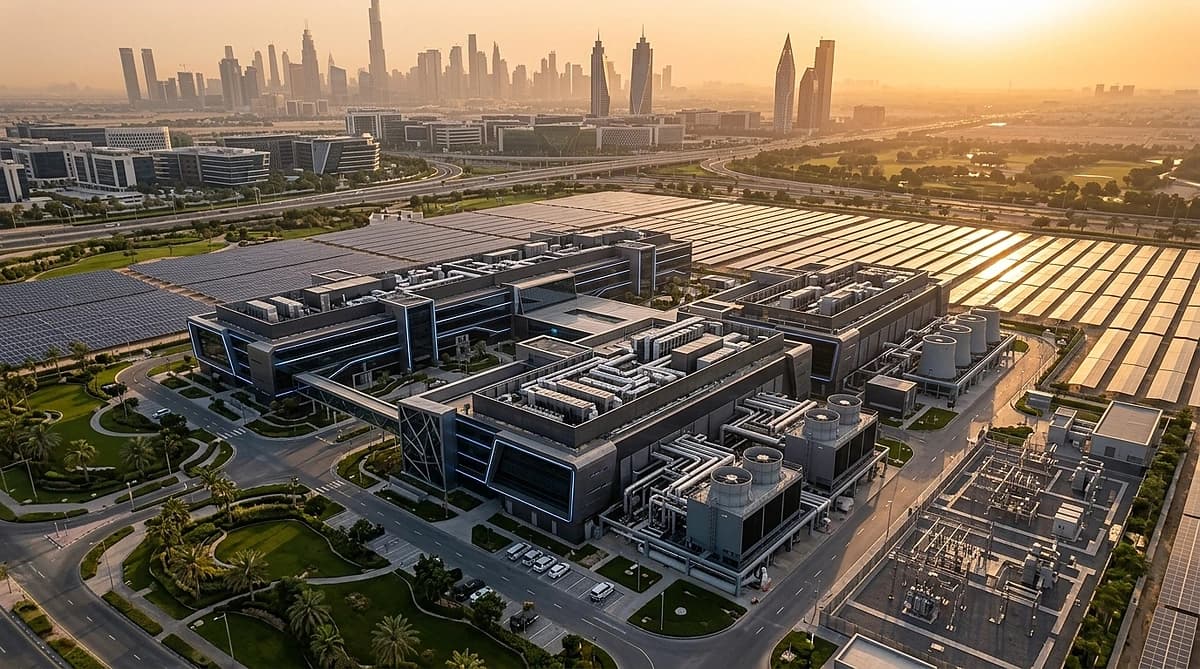
Submer AI integration agreement Dubai data centre impact
Submer AI integration agreement in Dubai embeds connectivity and power distribution into AI infrastructure projects from the earliest design stage.
Submer, a full-stack AI and HPC data centre infrastructure provider, signed an agreement in Dubai to integrate network connectivity and power distribution into AI projects from the design phase. That approach shifts responsibility earlier in the project lifecycle, aligning electrical and connectivity planning with compute needs and physical cooling strategies. The move reflects an industry trend where specialised infrastructure vendors become design partners rather than late-stage suppliers.
For developers and investors in Dubai and the wider Gulf, early technical integration can reduce coordination delays and technical rework during construction. The agreement positions Submer to influence layout decisions, electrical feed sizing and rack-level distribution before civil works are finalised. That can lower delivery risk and support faster commissioning of AI and high performance computing deployments.
What does the Submer agreement cover?
What does the Submer agreement cover? Key Data
Scope
Connectivity and power distribution
Stage
Early design integration
Application
AI and HPC data centres
Region
Dubai, UAE
The agreement gives Submer responsibility to embed connectivity and power distribution planning into AI and HPC data centre projects from the earliest design stage. This means Submer will work alongside architects and MEP engineers to specify rack-level power distribution, chilled-liquid cooling interfaces and network pathways while the design is being prepared, rather than retrofitting solutions later.
By integrating these systems at design stage, Submer aims to eliminate common clashes between mechanical, electrical and network trades that typically delay commissioning. Early alignment can reduce rework on cable trays, electrical rooms and feed routes and make equipment layouts more efficient. For Dubai projects that target dense AI racks and high power per rack, coordinated planning helps ensure sufficient mains services and avoids last-minute scope changes.
The practical effect for project schedules is a tighter handover from construction to operations, with fewer unforeseen technical fixes during commissioning. That reduces the likelihood of costly change orders and schedule slippage that undermine investor returns and operational readiness. Developers should expect design-phase deliverables to include detailed power distribution schematics, network routing diagrams and interface specifications.
Why does early-stage integration matter for data centres?
Early-stage integration matters because it aligns electrical, cooling and connectivity capacity with projected compute loads before construction begins. When a specialist like Submer participates in the design phase, teams can size mains, select distribution architecture and plan cable and pipe routes to support high-density AI racks without disruptive retrofits.
When integration happens late, projects often face clashes between installed infrastructure and the physical requirements of AI systems, which can cause delays and extra cost during commissioning. Involving Submer earlier reduces those risks by delivering coordinated design documentation and by validating interfaces between chilled liquid cooling systems and rack-level power distribution. This is especially relevant in Dubai where clients increasingly demand high-performance compute deployments that require precise electrical and thermal planning.
Early integration also supports clearer procurement and testing plans, which helps shorten the path from construction completion to full operation. Developers and investors benefit from more predictable schedules and technical handovers, and operators receive systems that match compute requirements from day one, reducing the risk of performance shortfalls after go-live.
| Aspect | Typical approach before agreement | Submer-led approach |
|---|---|---|
| Design timing | Power and connectivity sized late | Power and connectivity specified early |
| Coordination | Multiple rework cycles | Single coordinated design handover |
"Early technical integration reduces commissioning risk and clarifies interface responsibilities between builders and operators."
, Binayah Research Team
What are the market implications for Dubai and regional investors?
What are the market implications for Dubai and regional investors? Key Data
Investor benefit
Reduced execution risk
Developer benefit
Fewer retrofits
Operational benefit
Faster commissioning
Market shift
Design-stage partnerships
The agreement signals stronger market alignment between specialist infrastructure providers and project owners in Dubai, improving predictability for AI and HPC deployments. Submer’s role at the design stage helps reduce technical unknowns that often translate into timeline and cost risk for investors and developers pursuing high-density compute facilities in the region.
For regional investors, that predictability matters because it lowers execution risk and supports clearer capex planning and earlier revenue generation once a facility is commissioned. Submer’s integration model helps projects avoid scope creep associated with late changes to electrical or cooling systems. That can protect initial investment assumptions and contribute to smoother asset transfer from developer to operator.
Broader market effects include a potential increase in specialised design contracts and a shift in procurement toward providers that can deliver integrated electrical and connectivity blueprints. Investors should watch for more design-stage partnerships in Dubai projects aimed at AI, edge compute and HPC, with clearer contractual boundaries and technical acceptance criteria at handover.
Key Insight
Investors should require design-stage integration plans in contracts to reduce change-order risk and to protect projected delivery timelines.
What practical next steps should developers and investors take?
What practical next steps should developers and investors take? Key Data
Action 1
Add integration to design briefs
Action 2
Assign technical responsibility
Action 3
Schedule vendor reviews
Action 4
Define acceptance criteria
Developers and investors should include integrated power and connectivity scope in early procurement and design briefs, and consider partnering with specialist providers like Submer at concept stage. That ensures electrical feed sizing, distribution architecture and network pathways are validated before construction contracts are fixed.
Practical steps include updating design briefs to require coordinated schematics, assigning a single point of technical responsibility for power and connectivity interfaces, and scheduling manufacturer reviews during schematic design. These actions reduce later scope changes and clarify testing requirements at commissioning. For Dubai projects targeting AI or high-density racks, early vendor input is often the difference between a smooth handover and repeated contractor variation requests.
Legal and commercial documents should reflect these technical responsibilities by spelling out deliverables, milestones and acceptance criteria related to connectivity and power distribution. Doing so helps align expectations between developers, lenders and eventual operators and creates measurable checkpoints during delivery.
- Require coordinated power and connectivity schematics at concept stage
- Make vendor technical reviews mandatory during schematic design
- Include acceptance criteria for interfaces in contracts
Submer’s agreement to embed connectivity and power distribution at design stage signals a practical shift for AI and HPC projects in Dubai, reducing coordination risk and smoothing commissioning. The main takeaway is that early vendor-led technical integration can improve predictability for developers and investors and support faster, cleaner handovers from construction to operation.
Binayah Editorial
Analyste du marché immobilier
Notre équipe éditoriale étudie le marché immobilier de Dubai, en suivant les données du DLD, les lancements de promoteurs et les tendances d'investissement pour tenir les acheteurs et investisseurs informés.
Prêt à investir à Dubaï ?
Discutez avec nos analystes des meilleures opportunités sur le marché actuel, consultation gratuite.
Articles Articles
 Market Report 7 min read
Oct 28, 2026
Dubai healthcare market: opportunities for investors and startups
 Market Report 7 min read
Oct 28, 2026
Dubai IT opportunities for Indian companies market report
 Market Report 3 min de lecture
Oct 28, 2026