Dubai Metro impact: 17 years reshaping Dubai transport
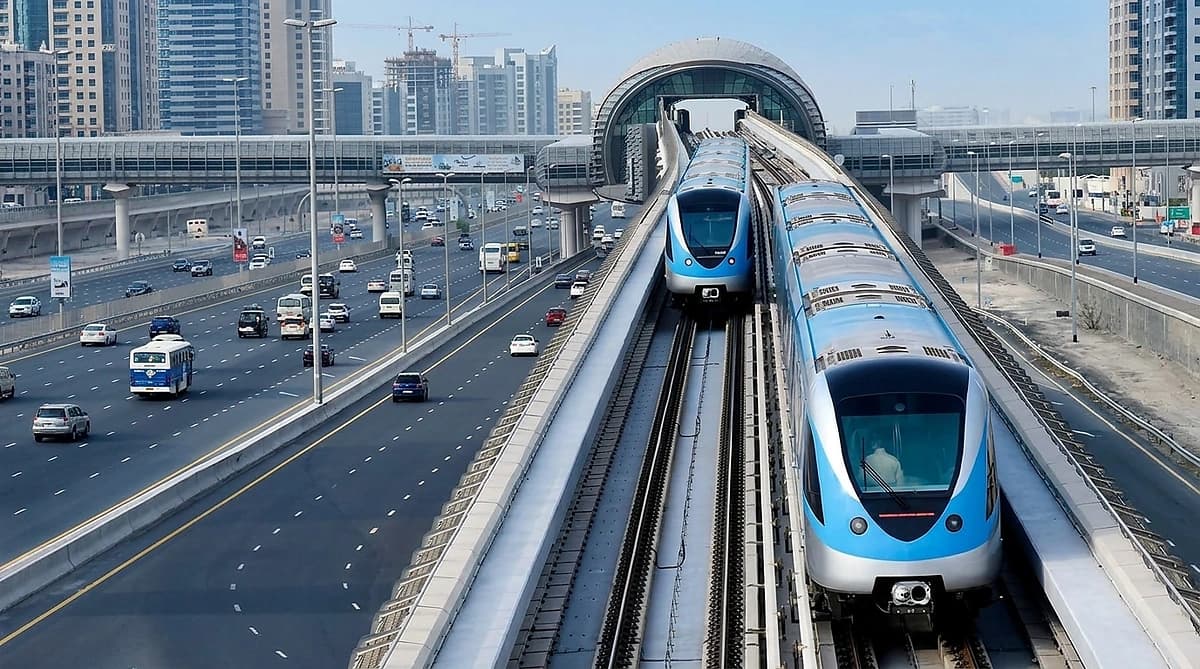
Dubai Metro marks 17 years today, a transport shift that reshaped how residents and visitors travel across Dubai each day.
The launch of the Dubai Metro was more than a service opening; it was a city-shaping event that moved millions and redefined corridors for growth. What began as a high-profile infrastructure project changed commuting habits, reduced journey times on key axes and concentrated new development around stations.
That concentration matters to property buyers and investors because metro access alters where people choose to live, work and rent. Over 17 years the presence of Dubai Metro influenced retail footprints, office siting and residential delivery patterns across the emirate, creating distinct market pockets that perform differently to areas without rail access.
How did Dubai Metro change urban geography?
How did Dubai Metro change urban geography? Key Data
Years
17
Ridership
Millions
Impact
concentrated development
Effect
changed commuting corridors
Dubai Metro reoriented the city by concentrating mobility and development along linear corridors anchored by stations, and those corridors remain focal points for growth 17 years after launch.
The presence of Dubai Metro created reliable movement axes that attracted higher density development and mixed uses around station clusters. By providing a fixed spine, the metro encouraged office, retail and residential projects to locate close to stations rather than spread uniformly across peripheral roads. This pattern shifted land-use decisions and gave developers confidence to build vertically along lines that move millions of passengers.
The concentrated model carries trade-offs for planners and owners. Areas near stations gain footfall and rental demand but can face higher service charges and congestion. Neighborhoods farther from stations may retain lower prices and slower turnover, so investors need to map station catchments and travel times rather than rely on broad neighbourhood labels when assessing value.
- Station corridors attract higher-density residential and mixed-use development
- Fixed-rail reduces long-term commuting friction compared with road-only corridors
- Proximity to a Metro station is now a primary filter for many renters and buyers
How did Dubai Metro affect property prices and rents?
Dubai Metro pushed localized gains in prices and rents by improving access, with the strongest effects observable in communities immediately adjacent to stations.
Areas next to major stations saw clearer demand because the Metro reduced commute time and broadened employment catchments. For homeowners and landlords, proximity to a station translated to stronger tenant demand and quicker leasing cycles. Developers capitalised on this by delivering projects close to station entrances, which reinforced value capture. The metro therefore acted as both a mobility solution and an economic magnet, changing expectations for what constitutes 'prime' residential or retail frontage.
The market effect is not uniform and depends on supply dynamics, product quality and micro-location. Some station-adjacent towers can command premiums while nearby mid-market stock may see only modest uplift. Investors should weigh station proximity against build quality, service charges and long-term supply pipelines to understand true rental and capital upside.
| Indicator | Before Metro | After Metro |
|---|---|---|
| Mobility options | Road-dominant | Fixed-rail corridors |
| Development pattern | Dispersed low-rise | Higher-density near stations |
| Years since launch | 0 | 17 |
"Dubai Metro altered movement patterns and became a spine for development that clusters value around stations."
, Binayah Research Team
What are the best investment strategies for a metro city?
What are the best investment strategies for a metro city? Key Data
Investor focus
Transit corridors
Years
17
Investing in a metro city like Dubai generally rewards targeting properties within defined station catchments and along high-frequency corridors rather than scattering capital across distant suburbs.
Buyers focused on short-term rental income should prioritise units that cater to metro-linked demand profiles, such as smaller apartments near major interchange stations and mixed-use pockets that capture both office and retail commuters. Long-term capital investors should consider developments that integrate with station access and future feeder services. Over 17 years the Metro proved that transport-led clusters generate sustained footfall which supports retail sales and consistent leasing demand.
Risks remain: oversupply near popular stations can compress yields, and service charges on premium towers can erode cashflow. Effective strategy therefore combines location analysis, supply pipeline assessment and a clear exit timeline. For many investors the sweet spot is stations with limited new delivery and clear mixed-use catchments.
- Target station catchments with low upcoming supply
- Match unit size to commuter demand for steady rental income
- Assess service charges and ground-floor retail potential
Which policy and infrastructure changes around Dubai Metro should investors watch?
Which policy and infrastructure changes around Dubai Metro should investors watch? Key Data
Watch
feeder networks and zoning
Effect
expands station catchments
Investors should watch expansions to feeder networks, policy on mixed-use zoning and any changes to station-area planning that affect development intensity around Metro lines.
Dubai Metro shaped growth over 17 years because policy and infrastructure choices amplified its effect. Extensions, tram connections and bus feeders increase the effective catchment of each station, while zoning that permits higher density close to lines determines how much development will cluster there. Changes in station-area policy can therefore change supply and demand balance in specific micro-markets, altering rental and capital dynamics for projects positioned near transit nodes.
Monitoring official planning updates and municipal decisions is essential. Investors should pay attention to announced feeder services, pedestrianisation programs and zoning amendments. Even without immediate new lines, policies that encourage transit-oriented development can uplift entire corridors, while restrictive or unclear policies can slow expected gains.
Key Insight
Policy changes around station areas can change a location’s investment case quickly; track feeder service announcements, zoning updates and pedestrian improvements. These shifts alter supply dynamics and tenant demand within the Metro’s 10 to 20 minute walk catchments and can either accelerate or delay value capture.
- Feeder services widen station catchments and tenant pools
- Zoning determines density and therefore long-term supply
- Pedestrian and last-mile improvements increase station desirability
After 17 years the Dubai Metro stands as a defining piece of the emirate's infrastructure, concentrating development and changing how value is distributed across corridors. Its presence created station-led pockets of stronger demand and altered investment approaches, making station catchments a primary filter for property evaluation going forward.
Binayah Editorial
Analyste du marché immobilier
Notre équipe éditoriale étudie le marché immobilier de Dubai, en suivant les données du DLD, les lancements de promoteurs et les tendances d'investissement pour tenir les acheteurs et investisseurs informés.
Prêt à investir à Dubaï ?
Discutez avec nos analystes des meilleures opportunités sur le marché actuel, consultation gratuite.