
UAE Central Bank package impact on Dubai property finance
UAE Central Bank package approval signals state support as the banking sector reaches $1.47tn and reserves exceed $270bn, strengthening financial resilience.
The UAE Central Bank announced a resilience package alongside confirmation that the nation’s banking sector size is $1.47 trillion and foreign reserves sit above $270 billion, according to Arabian Business. That combination is meant to reassure markets and protect liquidity after a period of regional and global financial stress. The announcement does not disclose a monetary size for the package but frames a policy stance focused on stability and confidence.
For Dubai property finance this matters because banks are primary mortgage providers and liquidity backstops for developers. A better-capitalised banking system reduces the chance of sudden lending freezes, supporting ongoing mortgage approvals and development funding. Still, broader forces such as global interest rates and developer balance sheets will determine how quickly this reassurance translates into more buying or lending activity.
What did the UAE Central Bank package announce?
What did the UAE Central Bank package announce? Key Data
Banking sector size
$1.47tn
Foreign reserves
$270bn
Resilience package
Approved
Source
Arabian Business
The UAE Central Bank approved a resilience package and confirmed the banking sector has $1.47 trillion in assets with foreign reserves above $270 billion, signalling policy support for financial stability.
Arabian Business reported that the Central Bank paired the package announcement with data showing the banking sector’s $1.47tn scale and reserves above $270bn. While the report calls the measure "massive," it did not publish a specific monetary amount for the package in the article. The combination of explicit sector size and high reserves is intended to reassure depositors, interbank counterparties and international investors.
The practical effect of declaring a resilience package is confidence support rather than an immediate cash transfer unless the Central Bank defines interventions later. Markets typically treat confirmed high reserves and a strong banking balance sheet as cushions against stress, but that does not remove other risks such as interest‑rate shocks or property developer liquidity issues.
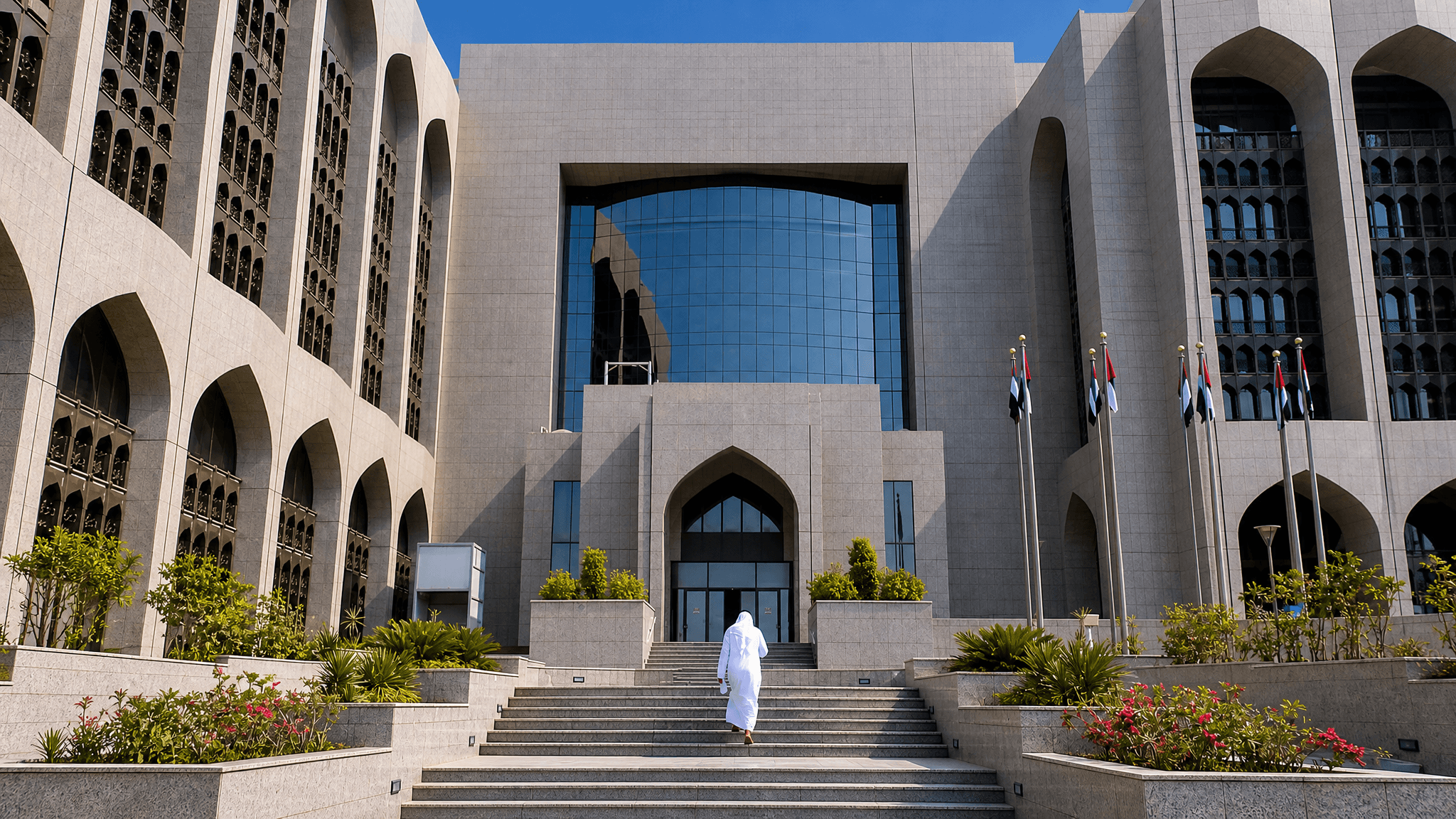
How will the UAE Central Bank package affect Dubai property finance in the short term?
Short term, the package should shore up lender confidence and support mortgage and developer liquidity by signalling that the UAE banking sector sized at $1.47tn with reserves above $270bn has official backing.
Banks and lenders respond to perceived systemic support by maintaining or cautiously extending credit lines and processing mortgage applications rather than abruptly tightening. With the sector scale of $1.47tn and reserves above $270bn, the immediate risk of a domestic banking liquidity crisis is lower, which helps short-term transaction flow in Dubai and keeps funding channels for developers open. That said, the article does not state specific changes to interest rates, loan-to-value rules or mortgage pricing.
The main short-term risk is market sentiment translating into selective tightening by individual banks even after the announcement, especially for higher-risk developer financing or speculative buyers. Buyers and brokers should therefore watch lender statements and underwriting guidance in the coming weeks to see whether the reassurance turns into materially easier credit conditions.
| Metric | Value | Note |
|---|---|---|
| Banking sector total assets | $1.47tn | Reported sector size cited by Arabian Business |
| Foreign reserves | $270bn | Reported central reserves supporting liquidity |
"A stronger banking balance sheet reduces systemic risk and supports mortgage liquidity, but individual lenders will still manage risk through underwriting."
, Binayah Research Team
What are the medium term investor implications of the UAE Central Bank resilience package?
Medium term, the package and the underlying $1.47tn banking sector with $270bn in reserves should bolster investor confidence and reduce systemic tail risks that can amplify property market corrections.
Institutional and private investors evaluate banking-system strength when deciding on allocations to real estate. The UAE Central Bank’s announcement that the sector totals $1.47tn and reserves exceed $270bn signals capacity to absorb shocks, which can make longer-horizon buyers more comfortable holding Dubai assets and accepting existing financing structures. That can translate into steadier capital flows into core residential and prime commercial stock if global rate conditions remain favourable.
However, the package is not a guarantee of rising prices. Medium-term returns depend on rental demand, developer delivery, global interest rates and geopolitical factors. Investors should therefore treat the package as a reduction in systemic risk rather than an affirmative signal to chase yield without due diligence on specific assets and financing terms.
Key Insight
Investor tip: Use the improved systemic backdrop to focus on fundamentals. Verify financing terms and stress-test yields against higher global rates even as the UAE Central Bank confirms a $1.47tn banking base and $270bn in reserves. Treat the package as risk mitigation, not a price guarantee.
What should buyers and brokers monitor now after the UAE Central Bank package?
Buyers and brokers should monitor lender statements, mortgage underwriting changes and Central Bank circulars, because those sources will show whether the resilience package results in tangible credit easing for property finance.
Specifically, track public comments from major UAE banks about mortgage pricing and loan-to-value policy, watch for official UAE Central Bank guidance or circulars that clarify the package’s mechanisms, and review Dubai Land Department transaction volumes and mortgage approval pipelines for signs of flow changes. The banking sector’s $1.47tn scale and $270bn reserves provide context, but real impact is visible in lender-level behaviour and transaction data.
Practically, buyers should confirm pre-approval conditions and financing timelines, while brokers should document any changes in required deposits or repayment terms. The package reduces systemic tail risk, yet individual lender risk appetites and global rate movements will still determine how accessible finance becomes in the weeks ahead.

- Monitor lender public guidance and mortgage product changes
- Watch UAE Central Bank circulars for implementation details
- Track Dubai Land Department transaction and mortgage pipelines
- Confirm pre-approval terms with banks before listing or bidding
The UAE Central Bank’s resilience package was announced alongside data showing a $1.47tn banking sector and reserves above $270bn, reinforcing systemic liquidity buffers. That combination reduces the immediate probability of banking-driven disruptions and supports mortgage and developer funding, but it does not guarantee lower mortgage rates or automatic property-price gains.
Binayah Editorial
Analyste du marché immobilier
Notre équipe éditoriale étudie le marché immobilier de Dubai, en suivant les données du DLD, les lancements de promoteurs et les tendances d'investissement pour tenir les acheteurs et investisseurs informés.
Prêt à investir à Dubaï ?
Discutez avec nos analystes des meilleures opportunités sur le marché actuel, consultation gratuite.