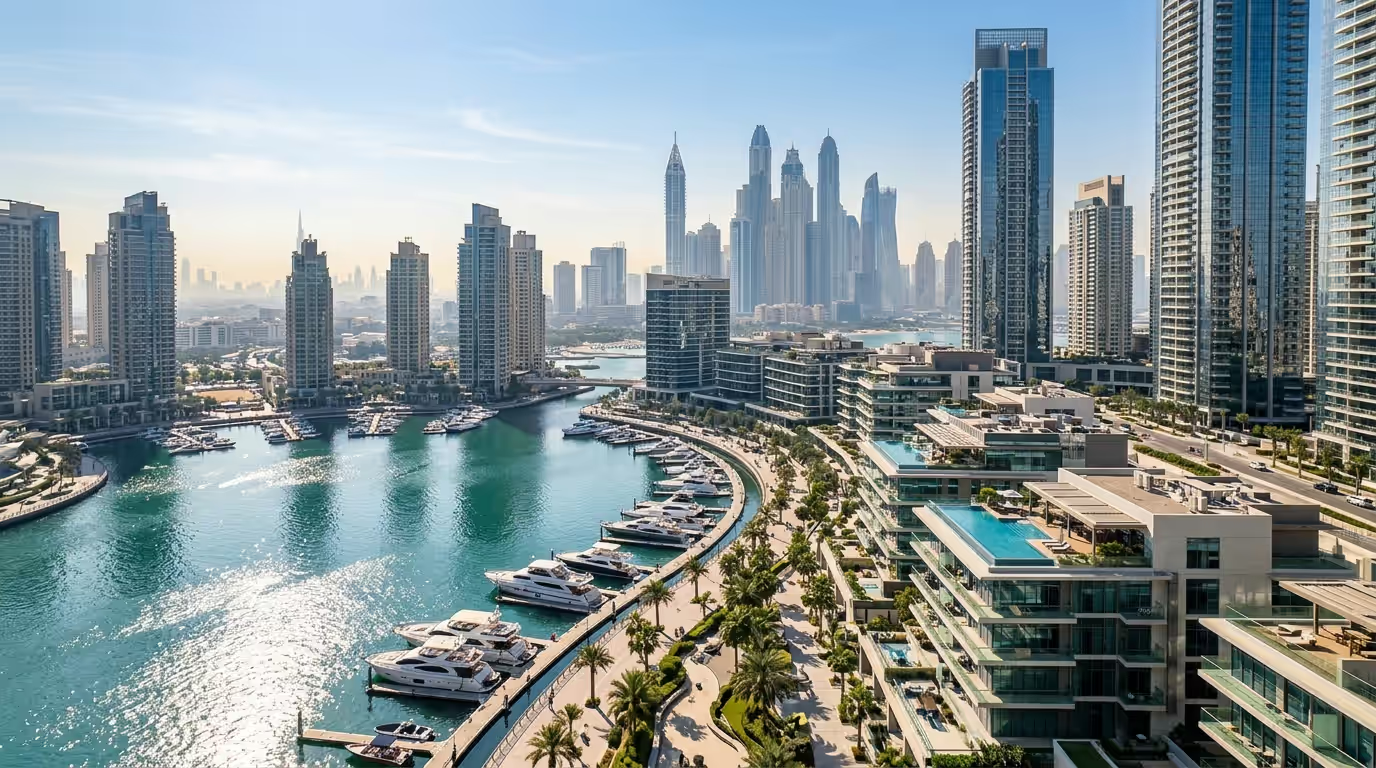
Investing in Dubai property is often seen as a lucrative opportunity, driven by the city's rapid development and cosmopolitan appeal. However, like any investment, it is essential to weigh the pros and cons before making a decision. This guide provides a balanced comparison to help investors understand the potential benefits and risks associated with Dubai's real estate market.
Understanding the Dubai Property Market
Dubai's real estate market is known for its dynamic nature, characterized by impressive architectural developments and a strategic location that attracts global investors. The city recorded over 222,417 property transactions in 2025, indicating a robust market activity. The real estate sector benefits from Dubai's position as a global business hub, with its tax-free environment and high-quality infrastructure making it an attractive destination for property investment.
While the market has shown resilience, it's important to note that property values can fluctuate based on economic conditions and global market trends. For instance, the influx of around 73,550 new units expected in 2026 could impact supply and demand dynamics, potentially affecting property prices and rental yields.
Advantages of Investing in Dubai Property
One of the primary advantages of investing in Dubai property is the absence of property taxes, which significantly enhances the return on investment. Additionally, the city's strategic location with its excellent connectivity to Europe, Asia, and Africa makes it a preferred choice for international investors.
Dubai's real estate market also offers high rental yields, often outperforming other major global cities. The city's diverse population and strong expatriate community drive demand for rental properties, ensuring a steady income stream for investors. Furthermore, the government's initiatives to promote economic diversification and innovation continue to enhance the city's attractiveness as a long-term investment destination.
Potential Risks and Challenges
Despite the benefits, investing in Dubai property comes with certain risks. Market volatility is one of the main concerns, as property prices can be subject to fluctuations based on global economic conditions and geopolitical factors. Additionally, the forecasted increase in new property units may lead to an oversupply, which could impact rental yields and property values.
Another challenge is the cost of property maintenance and service charges, which can vary significantly depending on the location and type of property. Investors need to consider these ongoing expenses, as they can affect the overall profitability of the investment.
Comparing Investment Options: Dubai vs. Other Global Cities
When comparing Dubai to other global cities like London, New York, or Hong Kong, several factors come into play:
| Factor | Dubai | Other Global Cities |
|---|---|---|
| Tax Environment | No property taxes | High property taxes |
| Rental Yields | High | Moderate to low |
| Market Volatility | Moderate | Varies |
| Supply Dynamics | Increasing supply | Stable or decreasing supply |
| Economic Growth | Strong, diverse economy | Varies by city |
Dubai's tax-free environment and high rental yields make it an attractive option compared to other cities that have higher property taxes and lower returns. However, the potential for market volatility and increasing supply are factors that investors should carefully consider.
Choosing the Right Property Type
Investors have a variety of property types to choose from in Dubai, including apartments, villas, and commercial properties. Each type has its own set of advantages and considerations:
- Apartments: Generally offer higher rental yields due to demand from expatriates and young professionals. They are often located in key urban areas, providing easy access to amenities and business districts.
- Villas: Provide a more luxurious lifestyle and are popular among families. Areas like Arabian Ranches 2 offer spacious living with community facilities, though they may come with higher maintenance costs.
- Commercial Properties: Suitable for investors looking for long-term capital appreciation. The demand for office spaces and retail units is driven by Dubai's thriving business environment.
Legal Considerations and Regulations
Investors need to be aware of the legal framework governing property transactions in Dubai. The Dubai Land Department (DLD) oversees real estate activities, ensuring transparency and regulation compliance. It's crucial for investors to understand the laws related to property ownership, tenancy contracts, and dispute resolution.
Foreign investors can purchase property in designated freehold areas, with communities like Al Raha and Barsha Heights (Tecom) offering diverse investment opportunities. Understanding these regulations can help mitigate risks and ensure a smooth investment process.
Conclusion: Is Dubai Property Right for You?
Choosing to invest in Dubai property depends on various factors, including your risk tolerance, investment goals, and market understanding. If you prioritize tax-free returns and high rental yields, Dubai presents a compelling case. However, if you are concerned about market volatility and potential oversupply, it may be wise to diversify your portfolio or consider other global markets.
Ultimately, Dubai offers a unique investment landscape with distinct advantages and challenges. By conducting thorough research and consulting with real estate experts, you can make an informed decision that aligns with your financial objectives.
- Choose Dubai if: You seek high rental yields, a tax-free environment, and are comfortable with market dynamics.
- Consider alternatives if: You prefer stable markets with lower supply risks or have a low risk tolerance.