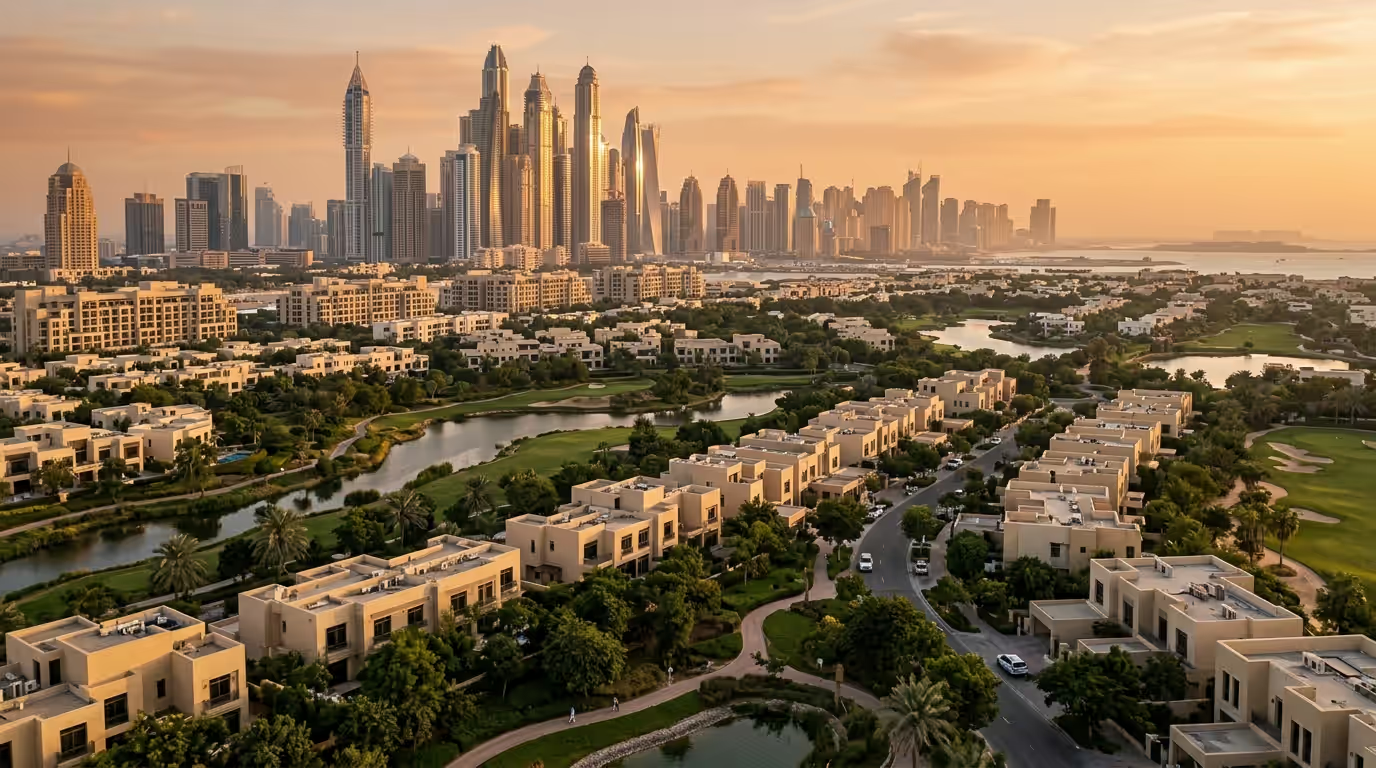
Dubai is shifting from a transient hub to a long-term home for many. Recent sentiment surveys indicate roughly seven in ten residents now expect to stay for a decade or more, a marked change from the short-cycle mindset that historically shaped the rental-heavy market. This pivot has real consequences for how people choose communities, the type of homes they buy, and how investors position portfolios.
For buyers and landlords alike, a longer average residency horizon points to steadier end-user demand, more family-focused upgrades, and a premium on community infrastructure. Here’s what the trend means for your next property decision.
What a longer residency horizon means for demand
When residents plan to stay 10+ years, priorities shift from short-term flexibility to life-stage fit and total cost of occupancy. Families weigh school catchments, commute stability, health care access, and outdoor space; singles often prefer lifestyle-centric, transit-connected areas they can grow into.
Key demand shifts we’re seeing:
- More end-user purchases of townhouses and villas as families plan for space and stability
- Larger apartments (2BR+) in master communities with schools, clinics, and retail
- Preference for quality building management and service charge transparency
- Greater interest in renovation-ready freehold homes to personalise for the long haul
For investors, this trend supports lower turnover costs, longer average lease durations, and steadier income in communities with proven livability.
Rent vs buy when you expect to stay a decade
Longer stays change the rent-vs-buy maths. While rents provide flexibility, buying can reduce lifetime housing cost and lock in today’s pricing and mortgage rates if you plan to hold through cycles.
| Factor | Renting long term | Buying long term |
|---|---|---|
| Upfront cash | Lower (deposit + fees) | Higher (down payment + fees) |
| Monthly outlay | Variable with rent cycles | Mortgage is predictable; plus service charges |
| Inflation hedge | Limited | Strong (fixed-rate effect on housing cost) |
| Flexibility | High | Lower, but can sell or lease |
| Wealth building | None | Equity accumulation over time |
Indicative yields in established Dubai areas often range around 5–8% for apartments and 4–6% for villas, which means owner-occupiers effectively “pay themselves” via principal repayment and avoid rent escalations over a 10-year horizon. Figures vary by community, building quality, and maintenance.
- If you expect to stay 7–10+ years, buying typically becomes more cost-effective overall.
- If your horizon is under 3–4 years, renting can preserve flexibility and friction costs.
Financing, fees, and the Golden Visa
Dubai’s transaction costs and mortgage rules matter more when you’re planning a decade ahead. Budget beyond the purchase price and align your financing with realistic holding periods.
- Dubai Land Department transfer fee: 4% of the purchase price, paid on transfer
- Agency commission (sale): typically around 2% of the price (market practice can vary)
- Trustee/registration fee: a fixed amount per the DLD schedule (commonly a few thousand dirhams)
- Mortgage registration: 0.25% of the loan amount + admin fee
- Bank valuation: typically a few thousand dirhams
- Service charges: vary by community/building, billed annually per sqft
Loan-to-Value caps are set by the UAE Central Bank. For first-home buyers, expats can generally access up to around 80% LTV (subject to bank policy, property value, and eligibility). Fixed or capped-rate mortgages can help long-term planners manage payment stability.
Golden Visa: Purchasing property of at least AED 2 million in value can qualify eligible buyers for a 10-year residency (subject to current criteria and documentation). For many end-users, that residency stability pairs well with a long holding period.
Freehold: Non-UAE nationals can buy freehold in designated areas across Dubai, allowing full ownership and the ability to sell or lease.
Communities that fit a 10-year plan
Long-term residents increasingly prioritise full-spectrum communities with schools, healthcare, retail, parks, and connectivity. Consider:
- Family suburbs: master-planned villa and townhouse districts with clubhouses, pools, and established greenery
- Urban lifestyle hubs: walkable waterfront or downtown clusters near metro, with retail and F&B density
- Emerging growth corridors: new master plans where early movers seek value, larger layouts, and modern amenities
Filters to apply when shortlisting:
- School proximity and commute patterns you can sustain
- Service charge levels vs amenities and building age
- Historic rental demand (if you may lease the home later)
- Community governance and maintenance track record
- Access to metro/highways and future infrastructure plans
Investor takeaways: positioning for stickier tenants
Longer residency expectations tend to reduce churn and elevate the appeal of homes that support life milestones. For landlords, that suggests focusing on livability and after-lease support.
- Prioritise layouts over headline size; storage, balconies, and usable kitchens retain tenants
- Offer small upgrade packages (appliances, lighting, landscaping) to encourage multi-year renewals
- Consider longer initial lease terms where appropriate, with clear renewal clauses
- Maintain transparent communication on maintenance and service charges to build trust
Portfolio angle: Balance core, high-occupancy communities with selective exposure to growth areas undergoing infrastructure upgrades. Target buildings with strong owners’ associations and predictable service charge histories.
For tenants turning owners: a practical path
If your horizon has shifted from a few years to a decade, map out a clear transition from renting to owning.
Steps to consider:
- Get mortgage pre-approval to set a firm budget and streamline offers
- Compare whole-of-life cost: rent escalations vs mortgage + service charges
- Shortlist 2–3 communities that fit schools/commute; view across multiple buildings
- Inspect service areas and ask for recent service charge statements and sinking fund details
- Reserve, conduct valuation, and complete conveyancing with a registered trustee office
Expect the transfer timeline for a resale property to run several weeks once finance is cleared; off-plan timelines follow developer milestones and handover schedules.
What this means for prices and yields
A resident base planning to stay longer typically supports:
- Deeper end-user demand in mid-to-prime family communities
- Lower vacancy and steadier yields where amenities and governance are strong
- Premiums for renovated or turnkey homes that remove friction for families
Price performance remains community- and building-specific. New supply can rebalance certain segments, while infrastructure additions (metro expansions, road links, schools) often catalyse micro-market outperformance. Use recent comparable sales and rental evidence at the building level to calibrate offers.
Common Mistakes to Avoid
- Ignoring service charges. Focusing only on price without modelling annual service charges can distort affordability.
- Overlooking school and commute fit. A great villa far from daily routes can strain time and budget over 10 years.
- Skipping mortgage pre-approval. Shopping without a firm budget weakens offers and risks delays at transfer.
- Underestimating transaction costs. Not planning for DLD fees, mortgage registration, and valuations creates last-minute shortfalls.
- Buying solely on headline yield. Tenant stickiness and building management quality often matter more over a decade.
Conclusion
Dubai’s resident base is maturing: more people plan to build long-term lives here, not just pass through. That shift rewards communities with strong infrastructure, quality management, and family-friendly amenities—and it tilts the equation toward ownership for many who expect to stay 10 years or more. Whether you’re upgrading your home or optimising a portfolio, align decisions with a decade-long view of livability, cost, and resilience.