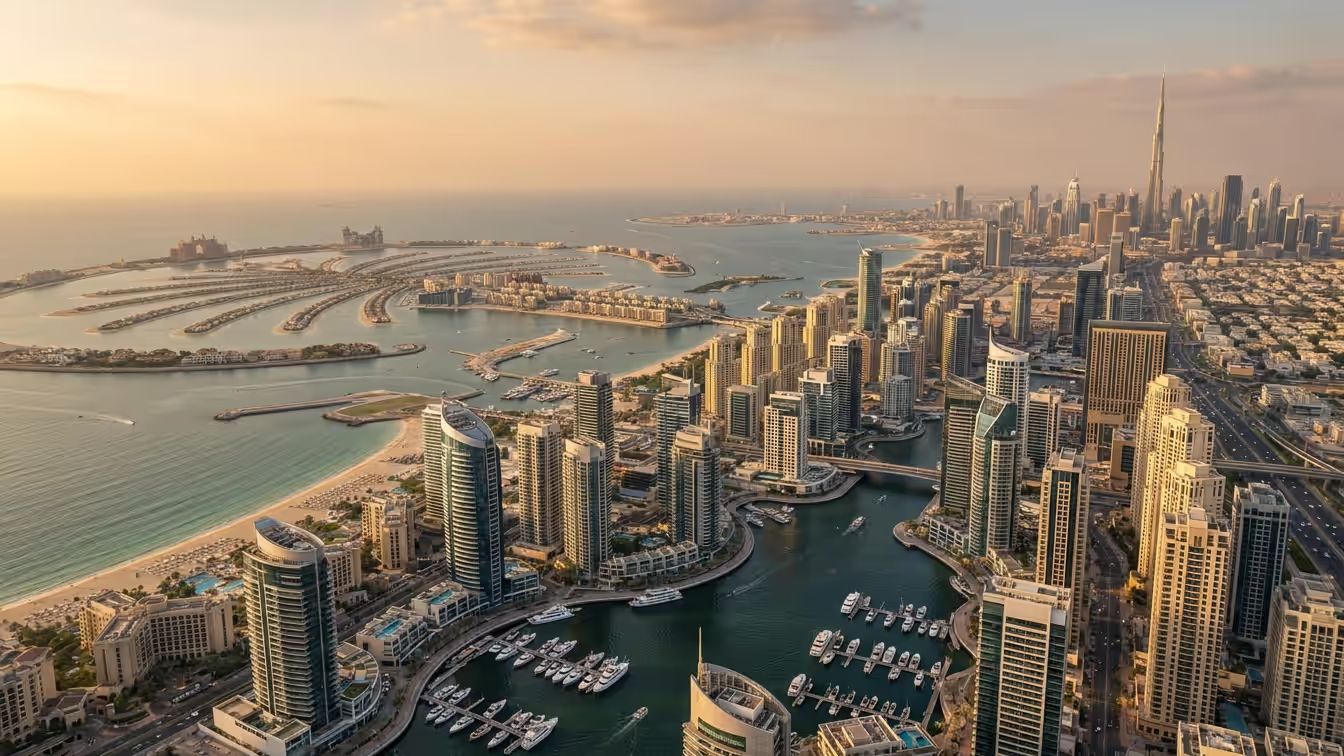
Daily rentals—also called holiday homes—have become a mainstream segment of Dubai’s property market, serving tourists, business travellers and residents between moves. For owners, the model can deliver flexible use and potentially higher gross income than long lets when executed correctly and compliantly.
This guide explains how daily rentals work in Dubai, the licensing you need, and the communities that consistently attract bookings. We also include indicative nightly rate ranges, occupancy trends, and practical tips to help you choose the right unit and operator.
What counts as a daily rental in Dubai
In Dubai, daily rentals fall under the Holiday Homes framework regulated by the Dubai Department of Economy and Tourism (DET). Homes are furnished residential units leased for short periods (from a single night up to several months) without hotel services such as F&B or room service. Both individual owners and licensed operators can let units as holiday homes, provided the building permits short-term use and the unit is registered and permitted with DET.
Key points:
- Furnished apartments, villas and townhouses qualify if building/owner association rules allow
- Guests receive temporary accommodation, not a tenancy under the Ejari system
- A per-night Tourism Dirham fee applies to guests as set by DET (commonly charged per bedroom category)
- Standard check-in KYC and guest records are required
- Short-stay accommodation income may be subject to UAE VAT; confirm with a tax adviser
Licensing and compliance essentials
Owners must obtain a Holiday Home permit for each unit through DET’s digital portal. If you are managing multiple units for third parties, you also need a professional operator licence. Buildings may require an NOC, and some communities restrict short-term stays entirely, so confirm rules before purchase.
Compliance checklist:
- DET Holiday Home permit for the specific unit and correct classification (e.g., Deluxe/Standard)
- Owner association/building NOC and adherence to house rules (check-in procedures, quiet hours)
- Guest registration, identity verification and record-keeping as per DET requirements
- Clear display of the permit number in listings and guest communications
- Collection and remittance of Tourism Dirham; proper invoicing and VAT treatment where applicable
- Adequate insurance (contents, public liability) covering short-term use
Best areas for daily rentals: who they serve and why
Dubai’s strongest daily-rental communities combine visitor magnets—beachfronts, landmarks, dining and transport links—with modern buildings and amenities. Here is how the most popular districts typically position:
- Downtown Dubai: Burj Khalifa, Dubai Mall and Fountains put this at the top for first-time visitors and business travellers. Walkability, metro access and premium towers drive steady demand.
- Business Bay: Adjacent to Downtown with newer inventory, waterfront pockets and competitive pricing. Popular for corporate stays and weekly trips.
- Dubai Marina & JBR: Beach, marina promenade and restaurants deliver strong leisure demand year-round. Family-friendly and ideal for 1–3BR units.
- Palm Jumeirah: Resort lifestyle, beaches and premium branding. Strong ADRs for luxury apartments and villas; demand peaks in winter.
- City Walk: Urban, design-led apartments near attractions and clinics; appealing for medical and retail tourism.
- Bluewaters Island: Iconic setting and sea views; limited supply supports premium rates.
- Dubai Creek Harbour: Emerging skyline views and proximity to old Dubai and airport; growing inventory suits mid-to-premium stays.
- DIFC: Financial hub with upscale dining; weekdays corporate-heavy, weekends leisure spillover from Downtown.
Typical nightly rate and occupancy ranges are indicative only and vary by season, building, view, furnishing quality, and operator performance:
| Area | Typical 1BR Nightly Rate (AED) | Typical Occupancy (Annualised) |
|---|---|---|
| Downtown Dubai | 500–1,300 | 70%–85% |
| Business Bay | 400–1,000 | 65%–80% |
| Dubai Marina | 450–1,100 | 70%–85% |
| JBR | 600–1,400 | 70%–85% |
| Palm Jumeirah | 800–2,000+ | 65%–80% |
| City Walk | 600–1,300 | 65%–80% |
| Bluewaters Island | 1,200–2,500+ | 65%–80% |
| Dubai Creek Harbour | 450–1,000 | 60%–75% |
| DIFC | 600–1,400 | 65%–80% |
Seasonality and pricing strategy
Dubai’s peak months for daily rentals typically run from October to April, driven by outdoor events and cooler weather; shoulder and summer months (May–September) require agile pricing. Operators often use dynamic pricing tools to adjust rates around conferences, public holidays and school breaks.
Practical tactics:
- Set higher ADRs in winter and around major events; offer weekly discounts off-peak to sustain occupancy
- Maintain strict quality control on linens, amenities and cleaning—reviews directly influence pricing power
- Offer early check-in/late check-out flexibility when occupancy allows to boost guest satisfaction and repeat stays
- Monitor competitor listings in the same building and view line rather than broad area averages
What type of unit performs well
Performance is driven less by bedroom count and more by micro-features guests actually book for:
- View and orientation: Fountain, Burj, full sea or marina views command a premium; noisy road exposure reduces ADR.
- Layout efficiency: A well-planned 1BR with a sofa-bed can outperform a poorly laid-out 2BR.
- Walkability and transport: Proximity to beach access, metro, tram or malls matters for short stays.
- Building amenities: Pool, gym, parking, 24/7 security and guest-friendly access policies are essential.
- Interior standards: Neutral palettes, hotel-grade linens, blackout curtains, high-speed Wi‑Fi and smart locks improve reviews and yield.
Illustrative returns math (indicative only)
For orientation only—actual outcomes vary widely by unit, seasonality and management quality.
Example: 1BR in Dubai Marina at AED 700 ADR during peak and AED 450 off-peak, blended illustrative ADR AED 575; at 75% annual occupancy equals roughly 274 booked nights and AED 157,550 gross revenue.
Indicative deductions:
- Management fees: often 15%–25% of gross bookings depending on service scope
- Cleaning/linen turns: typically charged per stay; blended annual estimate varies by average stay length
- Utilities, internet, platform fees, Tourism Dirham collection, minor maintenance
- Service charges (building OPEX) and sinking fund paid by owner
Net yield versus a long-term lease should be assessed over a full 12-month cycle including voids and capex refresh.
Choosing between self-managing and using an operator
Self-managing can improve margins but requires time, 24/7 responsiveness and local compliance knowledge. A licensed operator provides marketing, dynamic pricing, guest vetting, housekeeping, maintenance and reporting, but charges a fee.
Consider:
- Your availability for guest communication and on-the-ground issues
- Comfort with permits, Tourism Dirham, invoicing and record-keeping
- Access to professional photography, channel management and revenue tools
- Ability to maintain hotel-level standards consistently
For guests: what to expect from Dubai holiday homes
Guests can expect a fully furnished unit with kitchenware, linens, Wi‑Fi and utilities included. The permit number should be visible in the listing and on check-in documents. Operators commonly take a refundable security deposit and require passport/ID scans for registered guests.
Tips:
- Confirm parking, baby cots, extra beds and early/late check-in policies in advance
- Ask whether housekeeping is included for longer stays or available on request
- Expect to pay Tourism Dirham per night and any refundable deposit per the host’s policy
Legal and ownership considerations for investors
Freehold foreigners can buy in designated freehold areas. If acquiring a unit primarily for daily rentals, verify building rules, short-term friendliness, chiller arrangements and guest access procedures before committing. Standard purchase costs in Dubai include the Dubai Land Department transfer fee of 4% of the purchase price, trustee/registration costs, and agency fees; mortgage buyers should factor valuation and bank fees. Investors targeting residency may consider the UAE Golden Visa route available at or above AED 2 million property value (subject to prevailing rules).
Common Mistakes to Avoid
- Skipping the building NOC. Some towers restrict short-term stays—always confirm before buying or furnishing.
- Underestimating seasonality. Pricing and occupancy swing widely between winter and summer; plan cash flow accordingly.
- Poor furnishing and photos. Subpar interiors and imagery depress both occupancy and nightly rates.
- Ignoring compliance details. Missing permits, undeclared Tourism Dirham or weak guest records risk fines and delisting.
- Choosing views that fight your price. Road-facing or obstructed views struggle to achieve premium ADRs.
Conclusion
Daily rentals in Dubai can be a compelling strategy when matched to the right community, unit specification and professional operations. Downtown, Marina/JBR and Palm Jumeirah lead for visibility and rates, while Business Bay, City Walk and Creek Harbour balance demand with pricing. Whether you self-manage or appoint an operator, anchor your plan around compliance, quality and dynamic pricing to turn great guest reviews into sustainable returns.