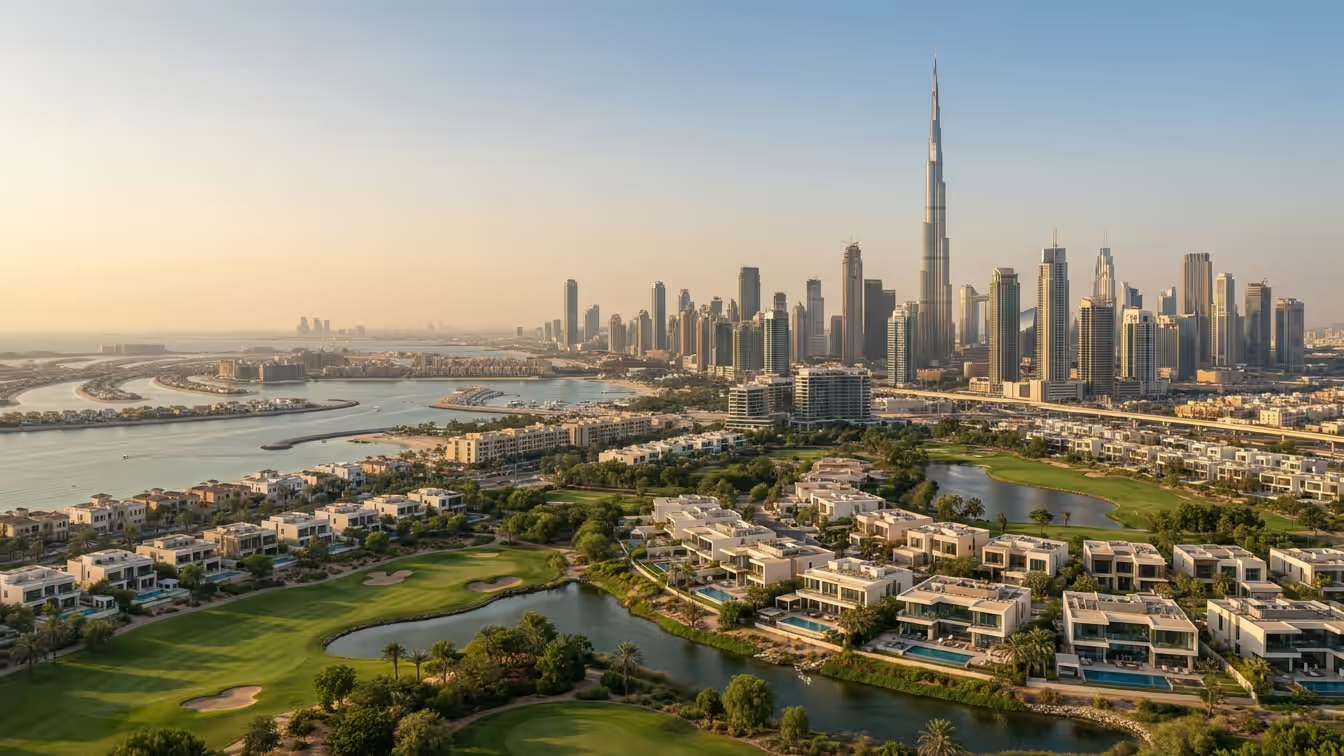
Dubai has established itself as a global capital for ultra-prime real estate—think waterfront penthouses, branded residences with hotel-grade services, and private villa estates. Yet the market is diverse: multiple top-tier developers, varied payment plans, and distinct communities designed for different lifestyles and investment goals.
This expert guide maps the luxury landscape: who the leading developers are, how to assess quality beyond the show apartment, how off-plan differs from ready, what fees to budget, and what trends are shaping the next cycle. Use it as your reference before shortlisting projects and negotiating your deal.
Who Are Dubai’s Leading Luxury Developers?
Dubai’s luxury segment is led by a core group of developers with long track records, robust delivery pipelines, and distinct design philosophies. Below is a high-level snapshot to help you frame the landscape. Always assess individual projects on their own merits.
| Developer | Core Strengths | Representative Luxury Projects (illustrative) |
|---|---|---|
| Emaar | Master-planned communities, iconic towers, strong after-sales | Downtown Dubai, Dubai Hills Estate, Address-branded residences |
| DAMAC | Branded concepts, golf communities, statement architecture | Cavalli and de GRISOGONO-branded towers, DAMAC Hills |
| Nakheel | Waterfront and island living, large-scale master plans | Palm Jumeirah, Palm Jebel Ali |
| Meraas | Design-led urban districts, beach and leisure integration | City Walk, Bluewaters, Jumeira Bay (via partnerships) |
| Sobha Realty | In-house build quality, meticulous finishes, waterfront urbanism | Sobha Hartland, Sobha Hartland II |
| Omniyat | Ultra-prime, architectural icons, art-driven interiors | The Opus, One at Palm Jumeirah (by Omniyat) |
| Ellington | Boutique contemporary design, interior-centric apartments | DT1, Ellington Beach House |
| Select Group | Waterfront high-rises, premium finishes, efficient layouts | Marina Gate, Peninsula |
- This list is indicative, not exhaustive. Many developers operate across price tiers and partner on branded residences.
- Evaluate project-by-project: location, orientation, views, finish specs, service standards, and owners’ association governance matter as much as the name on the brochure.
What Makes a Property ‘Luxury’ in Dubai?
In Dubai, true luxury is more than marble and marketing. Look for:
- Location and outlook: waterfront, golf-front, skyline, or park-facing with protected view corridors.
- Architecture and planning: low FAR plots, generous setbacks, efficient cores, higher floor-to-ceiling heights, large terraces.
- Interior specification: stone slabs, premium joinery, branded appliances, smart-home integration, acoustic performance.
- Amenities and services: concierge, valet, spa/wellness, lap pools, residents’ lounges, private dining, kids’ facilities.
- Privacy and security: controlled access, discreet arrival, secure parking, well-run owners’ association.
- Sustainability: energy-efficient glazing, solar-ready systems, water-efficient landscaping, green certifications (where applicable).
- Proven operations: clear service-charge budgeting, reliable FM provider, transparent snagging/rectification protocols.
Off-Plan vs Ready Luxury Homes
Each path has benefits. The best choice depends on your timeline, risk profile, and capital plan.
| Factor | Off-Plan (Under Construction) | Ready (Completed) |
|---|---|---|
| Entry Price | Often lower entry with staged payments | Pay full price upfront (or via mortgage) |
| Capital Appreciation | Potential uplift through construction cycle | Immediate market pricing; less construction upside |
| Cash Flow | No rent until handover; lower near-term costs | Immediate rental income or end-use |
| Choice | Early access to best stacks, views, layouts | What you see is what you get; limited selection |
| Quality Certainty | Based on developer track record, specs, show units | Inspect actual unit; do professional snagging |
| Fees Timing | Oqood/DLD at purchase milestones | DLD transfer at purchase; service charges start immediately |
| Financing | Developer plans; mortgages possible with limits | Conventional mortgages more accessible |
- Many luxury off-plan launches offer structured plans (e.g., 60/40, 70/30, 80/20). These are illustrative; always confirm the exact schedule and escrow details.
- Ready stock suits buyers needing immediate occupancy or rent generation and those prioritizing certainty over construction gains.
How to Evaluate a Luxury Developer and Project
Run a disciplined due-diligence process:
- Track record: delivery history, handover punctuality, and long-term performance of previous communities.
- Project approvals: verify RERA/DLD registration, escrow account details for off-plan, and construction status updates.
- Master plan context: future phases, adjacent plots, and planned infrastructure that could enhance or obstruct views.
- Floor plans and efficiency: net usable area, column placement, balcony depth, storage, and cross-ventilation.
- Finish schedule: brand/model lists for appliances and sanitaryware; confirm actual samples, not just renders.
- Building systems: lifts per core, parking ratios, EV charging readiness, waste management, and acoustic insulation.
- Service charges: request indicative AED/sqft budgets and inclusions; compare to similar assets in the same micro-location.
- Governance: owners’ association setup, reserve fund provisioning, and facilities management provider track record.
- Snagging and warranties: typical coverage in Dubai includes a 1-year defects liability for MEP/finishes and a 10-year structural warranty. Confirm specifics in your SPA.
Costs and Fees to Budget
Transaction and ownership costs in Dubai are transparent but vary by project:
- Dubai Land Department (DLD) transfer/registration: typically 4% of the purchase price. For off-plan, this is collected as Oqood registration during construction; for ready, it’s paid on transfer.
- Trustee office fee: commonly in the range of AED 2,000–4,000 plus VAT, depending on property value and office.
- Agency commission: typically 1%–2% of purchase price plus VAT, agreed case by case.
- Developer NOC (for secondary sales): often AED 500–5,000.
- Service charges: vary widely by asset and amenities; luxury buildings can range from roughly AED 8–25+ per sqft per year, indicative.
- Utilities and connections: DEWA connection and refundable deposits typically a few thousand dirhams depending on unit size.
Always request a full cost sheet before committing. Figures above are indicative and may vary by project and policy.
Financing, Payment Plans, and the Golden Visa
Luxury purchases are often structured via a mix of equity, developer payment plans, and mortgages.
- Developer payment plans: staged payments during construction, sometimes with post-handover tranches. Review cash-flow timing and any post-handover interest or penalties.
- Mortgages: UAE Central Bank regulations generally allow up to around 80% loan-to-value for resident expats on a first property under a set value threshold, with lower LTVs for subsequent properties and off-plan. Exact offers depend on lender policy, borrower profile, and project approval.
- Golden Visa: a property (or properties) with a total value of at least AED 2 million can qualify the buyer for a 10-year residency, subject to ICP requirements. Mortgaged purchases can qualify; additional documents such as a bank NOC may be required.
Work through scenarios that align handover dates with payment milestones and mortgage drawdowns to avoid liquidity crunches.
Key Luxury Micro-Markets and What They Offer
- Palm Jumeirah and Palm Jebel Ali: trophy beachfront villas and branded residences; privacy, private beaches, and iconic views.
- Downtown Dubai and Business Bay waterfront: skyline and Burj Khalifa views; top-tier hotel-branded residences; prime urban lifestyle.
- Jumeirah Bay Island and Jumeirah coastline: ultra-prime villa plots, bespoke mansions, and boutique low-rise luxury.
- Dubai Hills Estate and Emirates Hills precincts: golf-front villas, large plots, family-centric amenities with green space.
- Dubai Marina and emerging waterfronts (e.g., Dubai Harbour, Creek Harbour): high-rise luxury with marina and skyline vistas.
Choose based on your lifestyle (beachfront vs. golf vs. urban) and view protection over the long term.
Design, Wellness, and Sustainability in the Next Cycle
Top developers are competing on well-being and environmental performance, not just finishes.
- Wellness design: circadian lighting, enhanced air filtration, spa-grade facilities, cold/hot plunge, and active rooftop spaces.
- Biophilia and landscape: native planting, shaded promenades, and meaningful green ratios that reduce heat gain.
- Energy efficiency: low-e glazing, smart thermostats, solar-ready rooftops, efficient MEP systems to curb service charges.
- Quiet luxury: refined materials, tactile craftsmanship, and minimal branding with high-end functionality.
These features support long-term value retention and tenant appeal, especially in premium rentals.
Investor and End-User Playbooks
- For investors: focus on micro-location, stack selection, and liquidity. Target layouts with broad tenant appeal and manage service charges. Typical gross yields for luxury apartments can fall in the ~4%–7% range, and luxury villas often in the ~3%–5% range, indicative and market-dependent.
- For end-users: prioritize lifestyle fit—commute, schools, clubs, beach access—and acoustic/thermal comfort. Inspect actual noise lines and sun paths.
- For UHNW/trophy buyers: scarcity drives value. Seek wide frontages, singular views, and privacy. Consider bespoke fit-out potential and staff accommodation planning.
- Exit strategy: know future buyer pools and upcoming supply. Avoid over-customization that narrows resale demand.
How Binayah Assesses a Luxury Launch (A Practical Checklist)
- Verify DLD/RERA project registration and escrow details; review contractor grade and construction milestones.
- Model total cost of ownership: price per sqft, net-to-gross efficiency, service charges, and likely maintenance.
- Stress-test payment plan vs. your cash flow and expected mortgage drawdowns; include contingency.
- Benchmark view premiums using recent transactions in the same micro-market and comparable stacks.
- Commission independent snagging at handover and confirm warranty workflows and SLA response times.
Common Mistakes to Avoid
- Buying by brochure alone. Renders don’t reveal core layouts, sun paths, or actual view corridors.
- Ignoring service charges. High amenities can inflate annual costs and compress net yields.
- Overlooking escrow and approvals. Off-plan safety hinges on proper RERA registration and escrow compliance.
- Misaligning payment plan and financing. Liquidity gaps at key milestones can force costly bridge solutions.
- Underestimating exit liquidity. Niche layouts or over-customization can slow resale in shifting markets.
Conclusion
Dubai’s luxury market is rich with choice—from beachfront villas to skyline-branded residences—delivered by a handful of seasoned developers with distinct strengths. The best outcomes come from disciplined due diligence: verify approvals, interrogate specs, model all ownership costs, and choose stacks with enduring appeal. Whether you are securing a primary residence, a long-hold investment, or a trophy asset, align the project, payment plan, and micro-location with your goals to capture both enjoyment and value over the long term.