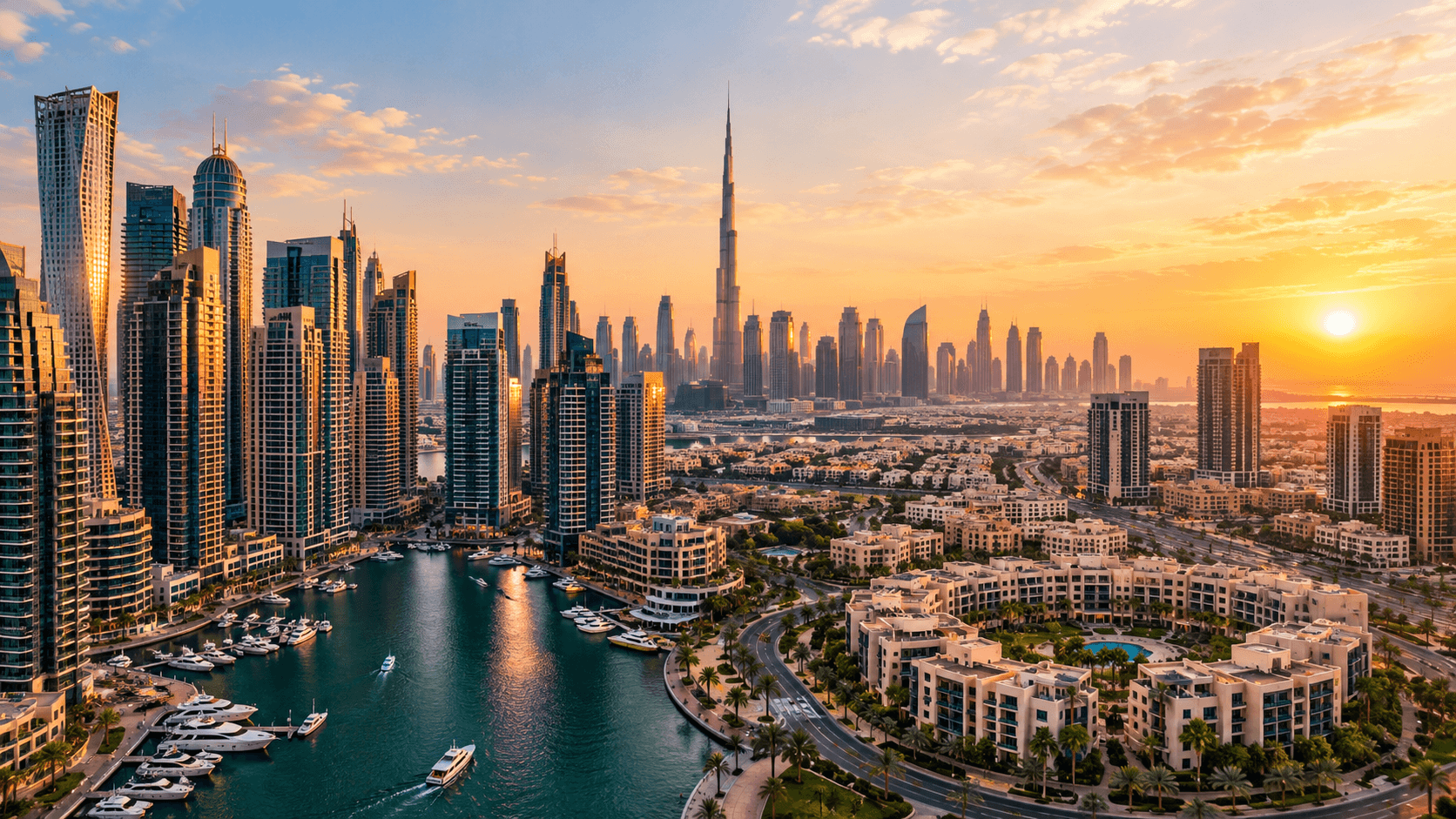
Dubai’s residential market sustained its post‑pandemic expansion in Q3 2026, with secondary (ready) transactions rising by roughly mid‑teens year‑on‑year and leasing demand pushing to new highs. Momentum was supported by robust population inflows, steady job creation in services and tech, and ongoing investor confidence in Dubai’s long‑term fundamentals.
While off‑plan launches remained active, the standout story was depth in the resale market and a historically tight rental vacancy environment. Below we unpack sales and leasing trends, price/yield dynamics, supply, financing conditions, and the outlook heading into Q4 2026.
Headline performance: sales volumes and pricing
The resale (secondary) market led activity in Q3 2026, with transactions increasing by an estimated 15–17% year‑on‑year. Resale momentum reflected faster handovers from 2021–2023 launch cycles, end‑users upsizing, and investors recycling capital from off‑plan to income assets.
Prices broadly trended upward across established freehold districts, though performance diverged by asset type and community maturity.
- Apartments: Price growth was moderate in many mid‑market zones, with premiums sustained for renovated, well‑located units close to transit and retail.
- Villas/Townhouses: Family segments remained supply‑constrained; sought‑after submarkets maintained firm pricing and faster absorption.
Indicative ranges (not guarantees):
- Prime apartments: AED 2,000–4,000+ per sq ft depending on developer, view, and readiness.
- Established mid‑market apartments: AED 1,000–1,800 per sq ft.
- Townhouses/Villas in popular suburban master plans: AED 900–1,800 per sq ft depending on plot/finish/phase.
Leasing market: record demand, tight vacancy
Leasing demand hit a record high in Q3 2026, supported by new company formations, a large expatriate intake, and rising household formation among residents shifting from shared to independent accommodation. Vacancy tightened most in transit‑connected apartment corridors and family villa districts near schools.
Key themes:
- Renewals vs new leases: Renewals dominated as tenants favored stability amid limited alternatives; new lease rates often cleared above renewals in high‑demand areas.
- Unit quality bifurcation: Refurbished or turnkey units achieved outsized interest and faster leasing cycles.
- Affordability spillover: As central areas appreciated, demand migrated to peripheral but connected submarkets.
Indicative gross yields (community and unit‑specific):
- Apartments: ~5–8% gross.
- Townhouses/Villas: ~4–6% gross.
Note: Service charges, maintenance, and vacancy can materially affect net yields. Always model conservatively.
Supply pipeline and handovers
Handover volumes in 2026 remained healthy, with completions from 2021–2023 sales cycles relieving pockets of imbalance but not fully offsetting demand in mature villa communities. Off‑plan launches by major developers (e.g., Emaar, DAMAC, Sobha, Nakheel) continued to absorb buyer interest, especially for branded residences and waterfront plots.
Pipeline implications:
- Apartments: A steady stream of mid‑to‑upper‑mid launches is set to temper price acceleration in some corridors, though best‑in‑class assets should hold premiums.
- Villas/Townhouses: New phases help but structural scarcity of ready family homes near key schools/arterials keeps conditions firm.
Financing conditions and buyer behavior
Mortgage affordability remained a central variable. While rate cycles evolve globally, Dubai’s market continued to transact on both cash and mortgage terms, with mortgage usage stronger for end‑users in the secondary market.
Typical considerations:
- Loan‑to‑value (LTV): For UAE residents buying a first property, banks commonly offer up to 80% LTV (subject to eligibility); lower LTVs apply for non‑residents and higher‑value assets.
- Fees: Buyers should budget the 4% Dubai Land Department (DLD) transfer fee, registration/admin charges, mortgage registration (typically 0.25% of the loan amount plus admin), and brokerage fees (commonly around 2% on secondary purchases, subject to agreement).
- Off‑plan: Oqood registration is typically 4% of the purchase price payable to DLD, plus developer/admin fees. Payment plans vary widely.
End‑users prioritized larger layouts and community amenities, while investors targeted units with strong rentability and efficient service charges.
Segment performance: apartments vs villas
| Segment | Demand drivers | Pricing tone | Rental tone | Indicative gross yields |
|---|---|---|---|---|
| Prime waterfront/city‑core apartments | Lifestyle, liquidity, brand cachet | Firm to rising | Strong inquiry; quick lets for renovated units | ~4.5–6% |
| Established mid‑market apartments | Value, connectivity, schools | Gradual appreciation | High absorption; limited vacancy | ~6–8% |
| Townhouses (master‑planned) | Family demand, schools, green space | Firm; faster re‑sales for quality phases | Consistent; longer lease terms | ~4.5–6% |
| Free‑standing villas (prime) | Scarcity, plot size, privacy | Premium pricing; low turnover | Deep but selective demand | ~3.5–5% |
Yields, costs, and what investors should model
To underwrite realistically, investors should account for all recurring and one‑off costs alongside headline yields.
Key line items to include:
- DLD transfer: 4% of purchase price for secondary; for off‑plan, Oqood registration is typically 4%.
- Brokerage fee: Commonly around 2% on resale (negotiable).
- Mortgage registration: Typically 0.25% of loan amount plus admin if financing.
- NOC/developer fees: Often a few hundred to a few thousand dirhams for transfers and move‑in; varies by developer.
- Service charges: Community/asset‑specific; apartment towers can range widely per sq ft; villas tend to be lower per sq ft but include landscaping/community fees.
- Maintenance and vacancy: Conservative allowance suggested when targeting net yields.
Investors targeting income stability favored buildings with proven occupancy, strong owners’ associations, and demonstrated maintenance standards.
Regulatory notes and eligibility
Dubai continues to offer a transparent freehold framework for designated areas open to foreign ownership. Buyers should verify title and developer escrow compliance on off‑plan purchases.
Residency and visas:
- Property investors may qualify for long‑term residency subject to prevailing rules. An investment of AED 2 million or more in property can qualify for a 10‑year Golden Visa (subject to eligibility and documentary requirements). Terms may evolve; verify current criteria at the time of application.
Leasing compliance:
- Ejari registration remains mandatory for tenancy contracts, and standard renewal/notice periods should be observed under applicable tenancy regulations.
Outlook for Q4 2026
With record leasing demand, a broadening secondary market, and measured handovers, Q4 2026 is set to remain active. We expect:
- Continued end‑user activity in ready stock, particularly larger layouts and family districts.
- Strong rental absorption in well‑connected mid‑market corridors as affordability arbitrage persists.
- Healthy off‑plan bookings, especially for waterfront and branded schemes, though buyers will be more selective on payment plans and developer track record.
Risks to watch: shifts in global rates, currency moves affecting non‑USD‑pegged buyers, and bunching of handovers in specific micro‑markets that could temporarily ease prices or rents.
Actionable strategies for buyers, sellers, and landlords
- Buyers: Pre‑approve financing to compete on secondary listings; prioritize buildings with strong service records and realistic service charges; negotiate on completion/transfer timings for smoother move‑ins.
- Sellers: Price to the last 30–60 days of comparable trades; pre‑gather NOC, service charge statements, and snag reports to accelerate due diligence; consider minor refurbishments that improve first impressions.
- Landlords: Align renewal increases with current regulations; refresh units between tenancies to maximize rentability; lock multi‑year terms where tenants are high‑quality and increments are reasonable.
- Off‑plan investors: Focus on developer delivery history, escrow structuring, and exit rentability; model handover‑year cash needs (Oqood, service charges, snagging, furnishing).
Common Mistakes to Avoid
- Chasing headline yields without netting costs. Ignoring service charges, vacancy, and maintenance can overstate returns.
- Overpaying for unproven buildings. Paying prime pricing for assets with weak owners’ associations or high defect rates risks capital loss.
- Underestimating transfer and financing fees. DLD, mortgage, and admin costs can materially change your breakeven.
- Overlooking lease compliance and notice periods. Missteps at renewal can lead to disputes or vacancy.
- Ignoring micro‑market supply. Upcoming handovers in a single corridor can soften short‑term rents or prices.
Conclusion
Q3 2026 confirmed the depth of Dubai’s residential cycle: secondary sales grew at a mid‑teens clip and leasing demand reached new highs amid limited ready supply. As we move into Q4, fundamentals remain constructive, with selective opportunities across both income and capital‑growth strategies. Diligent underwriting, attention to fees and service quality, and a clear understanding of micro‑market supply will differentiate outcomes for end‑users and investors alike.