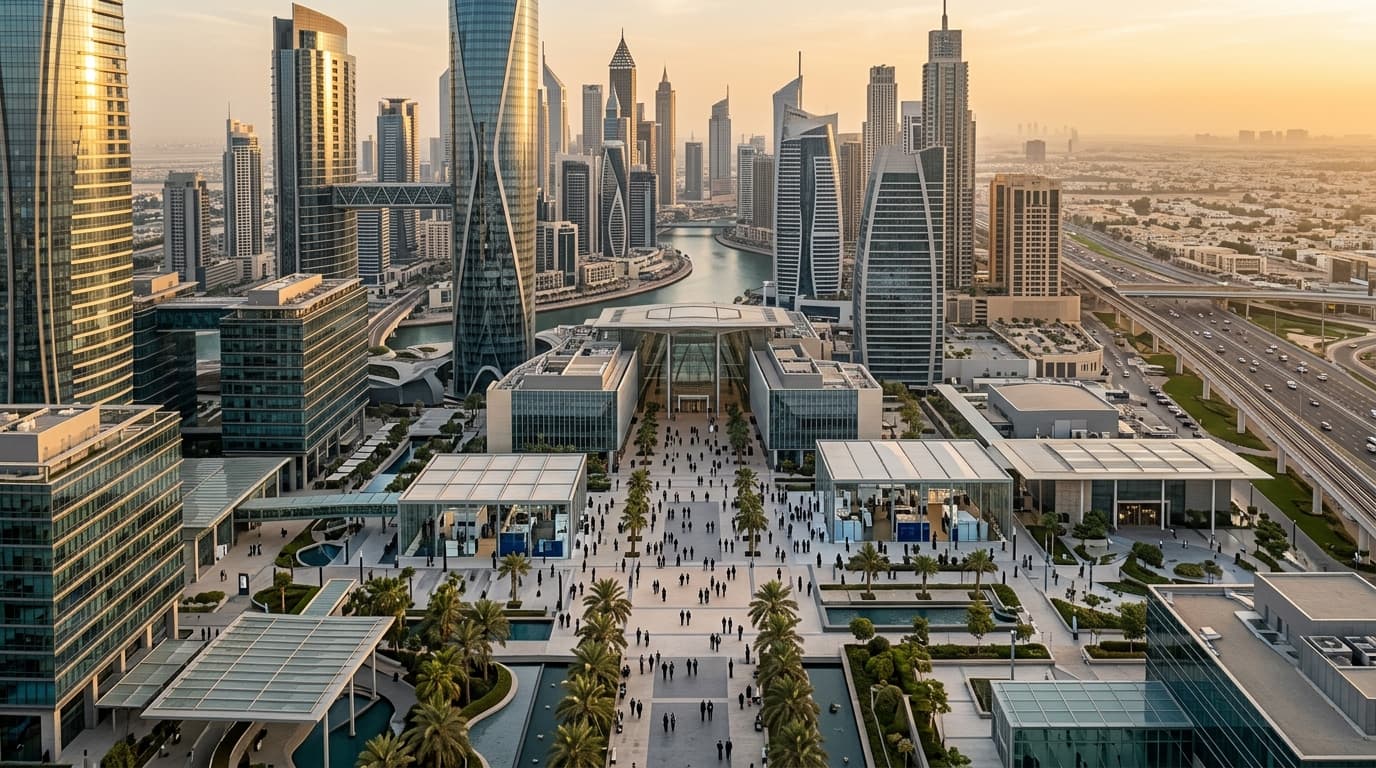
Dubai heads into 2026 with strong leasing momentum across office, logistics, retail, and hospitality—underpinned by population growth, tourism outperformance, and a maturing institutional investor base. Lease Conference Dubai 2026 is set to convene global landlords, occupiers, asset managers, and proptech founders at a pivotal time for the emirate’s growth story.
Whether you manage portfolios, structure corporate leases, or advise on occupier strategy, here’s what to expect and how to get the most value from the event—so you leave with actionable relationships, data-led insights, and a sharper view of Dubai’s leasing cycle.
Why Dubai 2026 Matters for Leasing
The leasing landscape has become more sophisticated as Grade A office, last‑mile logistics, and institutional build-to-rent (BTR) grow in depth. Landlords are leaning into service-led models, while occupiers demand flexibility, ESG-aligned spaces, and data transparency.
Macro tailwinds—continued business migration, company set‑ups across free zones, and high tourism volumes—support steady space absorption. Against this backdrop, Lease Conference Dubai 2026 provides a neutral forum to benchmark terms, valuation assumptions, and risk management across asset types.
- Institutionalisation: greater emphasis on WAULT, covenant strength, and indexation.
- Flex demand: hybrid work fuelling core-and-flex office strategies.
- Operational real estate: BTR, student housing, and co‑living advancing toward scale.
- Logistics: e‑commerce and 3PLs driving demand for modern, power‑ready sheds.
Core Themes and Agenda Tracks to Watch
- Regulation and leasing law: practical briefings on RERA tenancy updates, Ejari practices, and strata/owners association governance that influence service charge recoveries and lease clauses.
- Corporate occupier strategy: hybrid workplace metrics, flight-to-quality for Grade A assets, and how landlords can structure expansion/contraction rights.
- Build-to-Rent (BTR) and multifamily: underwriting rental growth, stabilisation timelines, and operating expense benchmarks for Dubai versus mature BTR markets.
- Logistics and industrial: power capacity, clear heights, sustainability retrofits, and free zone versus onshore considerations.
- Retail and F&B: turnover rent mechanics, data-sharing protocols, and fit-out capital recovery.
- Hospitality and serviced living: flexible length-of-stay models, branded residences leasebacks, and operator selection.
- Proptech and data: AI-driven underwriting, smart metering, digital leasing workflows, and ESG reporting tech.
- Capital markets: sale-and-leaseback pipelines, Sharia-compliant structures, and refinancing in a higher-for-longer rate world.
Leasing Models: What’s Gaining Traction
Expect deep dives comparing traditional fixed-term leases with more flexible, service-led arrangements. Each model carries different risk, cash flow, and operational profiles.
| Model | Typical Term | Pricing Basis | Landlord Risk | Occupier Flexibility | Where It Fits |
|---|---|---|---|---|---|
| Traditional (FRI/NNN variants) | 3–5 years (offices), 5–10 years (logistics/retail, often with options) | Base rent; periodic indexation | Lower operational risk; exposure to downtime at expiry | Limited; break options negotiable | Core office/logistics/prime retail |
| Core-and-Flex | 1–3 year core + on-demand flex | Blended: base for core; premium for flex | Moderate; higher service exposure | High; scale up/down quickly | Headquarters and project teams |
| Managed/Flex Office | 1–24 months | All‑in service fee | Higher operational intensity | Very high | SMEs, project markets, new market entries |
| Turnover/Percentage Rent | 5–10 years with turnover top-up | Base + % of sales | Shared revenue risk | Moderate; transparency obligations | Retail, F&B, entertainment |
| BTR/Multifamily (Operational) | Rolling ASTs; stabilisation within 12–24 months | Monthly rents; dynamic pricing | Operational and leasing velocity risk | N/A (consumer) | Institutional rental communities |
- Indexation: CPI‑linked increases or fixed step‑ups are increasingly negotiated; specifics vary by asset, location, and covenant.
- Incentives: fit‑out contributions and rent-free periods remain deal levers, especially in refurbishments.
Regulatory and Legal Updates to Track
Dubai’s regulatory framework continues to prioritise clarity and digitalisation.
- RERA and Ejari: Expect emphasis on accurate Ejari registrations, clearer documentation around renewals and notices, and digital workflows that reduce disputes.
- Strata and service charges: For mixed-use and strata-titled assets, owners association governance and audited service charges affect NER and tenant recoveries; conference sessions typically unpack best practices.
- DIFC and free zones: Free zone leases may follow zone-specific regulations; look for panels comparing DIFC/D3/TEC/DWC practices versus onshore norms.
- ESG and building compliance: Anticipate guidance aligned with Dubai’s 2040 Urban Master Plan and green building standards—impacting retrofit ROI, utility pass-throughs, and green lease clauses.
Note: For sales transactions (not leases), Dubai Land Department typically levies a 4% transfer fee; this often arises in sale-and-leaseback discussions but is distinct from tenancy procedures.
Market Outlook 2026: What the Data Signals
Indicative ranges suggest Grade A office vacancy in Dubai’s prime corridors remains tight, with effective rents holding firm to modestly higher where quality and amenities are superior. Logistics demand is resilient in Dubai South, Jebel Ali, and key last‑mile nodes, with tenants prioritising specification and power availability over headline rent.
- Offices: Prime CBD assets tend to see low vacancy; secondary stock competes via incentives and upgrades.
- Industrial: Modern, well‑located units with adequate power and clear eaves command a premium; older stock discounts.
- Retail: Destination and community retail benefit from strong population growth and tourism; turnover rent adoption is widening in F&B-led schemes.
- Residential rentals/BTR: Stabilised communities often achieve steady occupancy; yields and rent growth vary by location and specification.
- Treat any published yield or rent figure as indicative; micro-location, fit-out, and covenant strength drive outcomes.
- Underwrite sensitivity to occupancy, indexation, and incentives rather than assuming linear rent growth.
Proptech: From Hype to Underwriting
Expect fewer buzzwords and more ROI math. The most useful demos typically show how to compress leasing cycle times, reduce leakage in service charge reconciliation, or quantify ESG payback.
- Deal workflow: Digital heads of terms, e‑signature, and automated CP checklists cut time-to-lease.
- Data & AI: Computer vision for footfall, AI models for pricing/renewal risk, and anomaly detection in utilities.
- Smart buildings: Sub‑metering, IAQ monitoring, and predictive maintenance feed green lease KPIs.
- Valuation bridges: Integrations that pipe operational data into appraisal models improve lender confidence.
Who Should Attend—and What They’ll Gain
- Landlords and asset managers: Benchmark incentive structures, indexation norms, and fit‑out economics; meet anchor tenants and brokers.
- Corporate occupiers: Compare flex vs. fixed strategies, test-drive locations, and understand service charge methodologies.
- Developers: Stress-test BTR and logistics designs against operating cost realities and demand patterns.
- Lenders and investors: Validate underwriting assumptions, WAULT strategies, and forward-funding structures.
- Proptech founders: Access problem statements from real users and pilot pathways with portfolios.
How to Prepare: A Tactical Checklist
- Clarify objectives: Pipeline deals to progress, target tenants/landlords to meet, and 2–3 questions you must answer.
- Bring comparables: Recent leasing comps, incentive benchmarks, and service charge summaries to inform negotiations.
- Map your calendar: Balance plenaries with targeted roundtables; leave buffers for ad‑hoc meetings.
- Prepare collateral: Stacks with floor plans, power specs, ESG certifications, and fit‑out timelines.
- Post‑event cadence: Book follow‑ups within 48 hours; convert insights into a term‑sheet template update.
Dubai vs. Regional Leasing Considerations
Comparing Dubai with other GCC hubs helps contextualise tenant expectations and risk allocation.
| Factor | Dubai | Selected GCC Peers |
|---|---|---|
| Documentation | Digitised processes (Ejari, DLD systems) and widely used standard forms | Varies; digitisation progressing but uneven |
| Lease Flexibility | Growing adoption of core‑and‑flex, managed office, and turnover rent | Increasing, but often at earlier stage |
| Depth of Demand | Diverse base: finance, tech, professional services, logistics, tourism | Often more concentrated by sector |
| Transparency | High frequency market reporting from agencies and free zones | Variable by city |
| ESG | Accelerating green retrofits and green lease clauses | Mixed adoption; improving across the region |
Common Mistakes to Avoid
- Chasing headline rent over NER. Ignoring incentives and service charges distorts true returns.
- Underestimating fit-out timelines. Power upgrades, permits, and delivery often take longer than expected.
- One-size-fits-all flex strategy. Not every location or team benefits from the same flex proportion.
- Skipping covenant diligence. Failing to assess tenant credit and parent guarantees elevates default risk.
- Neglecting post-signing operations. Weak handover and SLA tracking erode tenant satisfaction and renewals.
Conclusion
Lease Conference Dubai 2026 arrives at a moment when leasing moves beyond square footage into service, data, and outcomes. Go in with clear questions, the right comparables, and an openness to new models—from core‑and‑flex to BTR and green leases. The result: cleaner underwriting, stronger occupier relationships, and assets that outperform through the next phase of Dubai’s cycle.