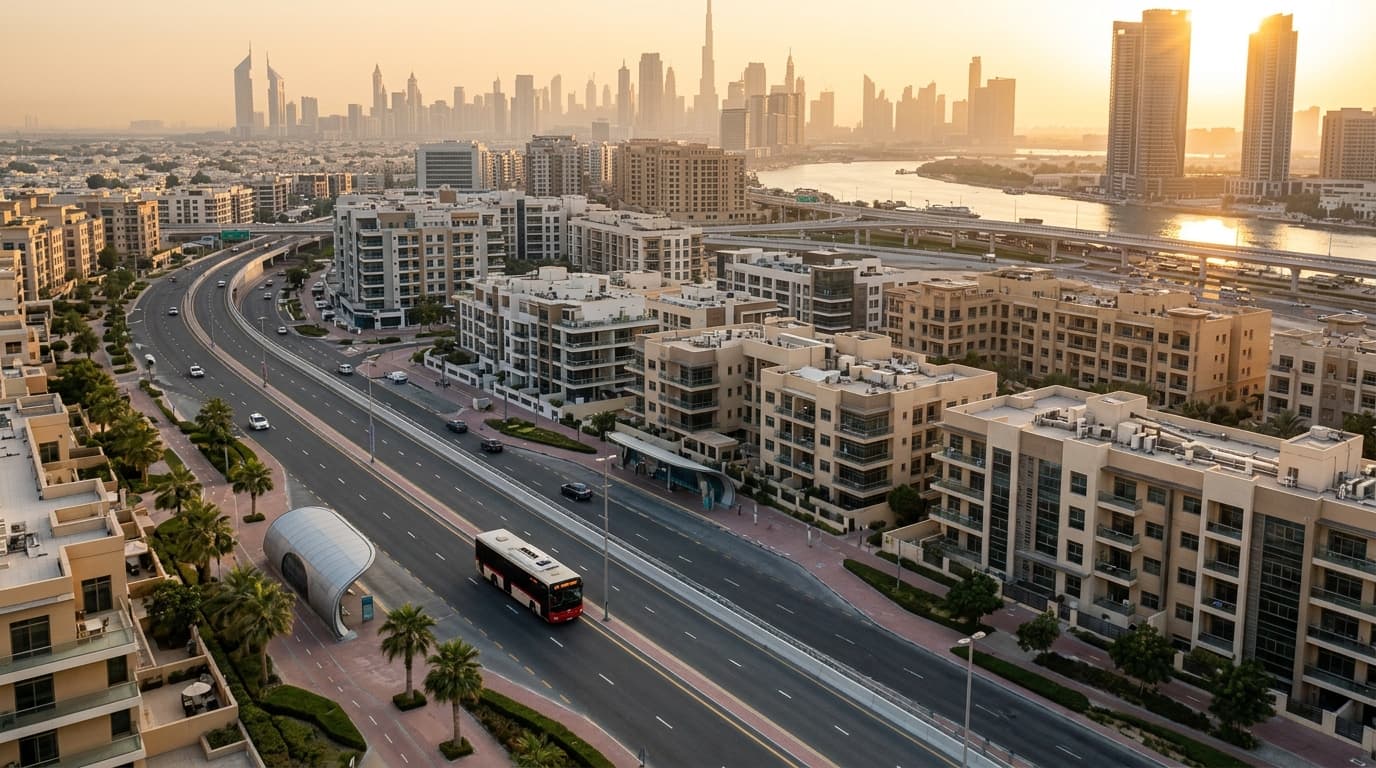
Dubai’s surface transport network quietly powers everyday life—and the 20A bus route is a good example of how a single line can stitch together residential neighborhoods, work hubs, and Metro interchanges. Whether you ride it daily, plan to, or are weighing a property purchase along its path, understanding how 20A operates will help you make smarter mobility and real estate decisions.
This guide explains how RTA route variants like 20A work, typical operating patterns, practical tips for riders, and the implications for tenants and investors in the communities it serves. Because RTA occasionally fine‑tunes routes, always verify the latest timetable and stop list in the official RTA channels before you travel.
What the 20A Route Is (and How RTA Route Variants Work)
In Dubai’s bus network, letters added to a route number (like “A” in 20A) usually indicate a variant: a branch that shares a core corridor with the base route (e.g., 20) but diverges near one or both ends to cover additional streets or a different terminus. Variants can help reduce walking distance for specific clusters and improve first/last‑mile reach to Metro stations.
For riders: the destination displayed on the bus and the stop‑by‑stop list are the definitive reference. For property users: the presence of a variant often signals stable demand for surface transport in that micro‑market—useful when evaluating rental appeal or liveability.
- Shared trunk corridor with slight deviations
- Typically same fare rules as the base route
- Check the bus headsign and stop code before boarding
Timings, Frequency, and Fares: What to Expect
Operating hours on Dubai bus routes generally span early morning to late evening, with extended night runs on some corridors. Frequencies tighten during peak hours and relax mid‑day and late night. While exact 20A headways can change, riders commonly experience shorter intervals in rush hours and longer waits off‑peak.
Fares are distance/zone‑based and paid via Nol. Most city rides fall into an indicative range around AED 3–8.5 depending on zones crossed and card type. Silver Nol is the standard reusable option; contactless is supported on validators. Always tap in and tap out to ensure correct fare calculation.
- Typical headway: shorter in AM/PM peaks, longer off‑peak (verify live ETA in the RTA app)
- Indicative fare range: approx. AED 3–8.5 based on zones and Nol product
- Accessibility: low‑floor buses with priority seating and wheelchair access on many units
Connectivity: Interchange Points and Common Trip Patterns
The 20A variant is designed to link residential neighborhoods to employment and service nodes, often intersecting one or more Dubai Metro stations. Many riders use 20A for first/last‑mile connections rather than end‑to‑end travel.
Common patterns include:
- Neighborhood-to-Metro: Short hop from mid‑density residential areas to the nearest Red or Green Line station, then continue by Metro.
- Cross‑neighborhood errands: Reaching schools, clinics, or shopping streets that are off the Metro alignment.
- Off‑peak commuting: When ride‑hailing costs surge or parking is constrained in business districts.
Expect travel time variability based on traffic, signals, and boarding times. A segment that takes 12–18 minutes off‑peak can stretch to 20–30 minutes at peak—plan buffers accordingly.
Communities Commonly Associated With the 20/20A Corridor
While the exact 20A alignment can be adjusted by the RTA, this corridor is typically relevant to established mid‑city neighborhoods where bus penetration supplements Metro access. Areas frequently discussed in relation to Route 20 variants include parts of Karama and Oud Metha (for civic amenities and schools), Al Jaddaf (for interchange potential), and Al Nahda/Deira‑side catchments (for dense residential blocks). Some trips may also interface with International City or Al Quoz in broader east‑west travel plans, though you should confirm the current 20A stop list for precise coverage.
- Good for renters seeking budget‑friendly commutes without private cars
- Useful for end‑users who prefer walkable blocks plus bus reach to stations
- Attractive to investors targeting stable occupancy in mid‑market stock
- Walk the route: test actual walking times to stops
- Map school/clinic proximity if family‑oriented
- Confirm night and weekend headways before committing to a lease
Property Angle: How a Bus Route Like 20A Moves the Needle
Transit access is a core driver of liveability. Even when a home is not at a Metro doorstep, consistent bus service that plugs into the network can materially lift rental appeal. In Dubai’s mid‑market buildings, tenants often prioritize a reliable bus within a 3–7 minute walk.
Investor takeaways:
- Occupancy support: Bus‑served buildings typically see steady leasing interest, especially near schools, hospitals, and employment clusters.
- Yield stability: In mid‑market zones, yields often reflect neighborhood norms; transit access can help reduce vacancy downtime rather than radically change gross yields.
- Liquidity: Resale conversations benefit from highlighting verified commute times and door‑to‑door journeys via bus+Metro.
End‑user takeaways:
- Car‑light lifestyle: The 20A corridor can enable a one‑car or no‑car household if core daily needs sit within the bus+walk shed.
- Cost control: Predictable Nol fares help manage monthly budgets versus exclusive reliance on ride‑hailing.
Commute Planning: From Doorstep to Desk
To build a dependable daily routine, stack these steps:
- Time windows: Note the 3 busiest hours in your direction; test at least twice in peak conditions.
- First/last‑mile: If your walk exceeds 8–10 minutes, consider a foldable scooter or a short e-hail for the first leg.
- Metro sync: Check connection times so you’re not regularly missing a train by 1–2 minutes.
- Contingency: Save an alternate route (another bus or a parallel Metro station) for disruptions.
| Option | Typical cost profile | Reliability in peak | Best for |
|---|---|---|---|
| 20A + Metro | Low to moderate (zone-based Nol fare) | High if planned with buffer | Daily commuters, students |
| Direct bus only | Low | Moderate (more signal delays) | Short cross-neighborhood trips |
| Ride-hailing | Variable, higher in surge | High, but cost-sensitive | Late nights, time-critical trips |
| Private car | Fuel/parking/tolls apply | Variable (parking constraints) | Those with fixed parking at destination |
How to Verify the Latest 20A Information
Routes evolve with new roads and demand patterns. Before relying on 20A for key journeys, do this:
- Check official RTA channels for the live timetable, route map, and stop codes
- Use real-time ETA tools at the stop or in the app on commute days
- Save your most-used stops as favorites and enable alerts
- Confirm weekend and public holiday schedules, which can differ
Small changes—like a stop relocation of 150–300 meters—can affect daily convenience if you’re carrying groceries or traveling with children.
Renting or Buying Near the 20A: Practical Checklist
If you’re shortlisting homes along the 20A corridor, put these on your viewing checklist:
- Stop proximity: 3–7 minutes’ walk with shaded sidewalks and safe crossings
- Frequency fit: Acceptable headways during your actual commute window
- Noise vs convenience: Corner stops can add ambient noise; high floors often mitigate it
- Night operations: If you work shifts, confirm late services
- Amenities map: Grocer, pharmacy, clinics, schools reachable without a car
- Parking plan: If you own a car, verify building parking and guest spots to avoid friction
- Do a trial run on a weekday at your exact start time
- Test the reverse trip in evening peak
- Speak to building security/concierge about typical rider flows
Common Mistakes to Avoid
- Assuming timetables never change. Routes and headways can be adjusted—always recheck official sources.
- Judging by straight-line distance only. A 400 m walk without shade or safe crossings can feel much longer in summer.
- Ignoring peak-direction delays. Travel times can widen by 30–60% at rush hour versus mid‑day.
- Not testing weekend service. Friday/Saturday frequencies may differ from weekdays.
- Overlooking first/last‑mile solutions. A small scooter or planned rideshare can transform a borderline commute.
Conclusion
The 20A is more than a bus number—it’s a connective thread that can make specific buildings and blocks meaningfully more livable and rentable. By verifying the latest route details, pressure-testing your commute at peak times, and aligning home selection with genuine stop proximity, you can capture the convenience of bus+Metro mobility without overextending on transport costs. For investors and end‑users alike, a smart read of the 20A corridor helps turn location into lifestyle advantage.