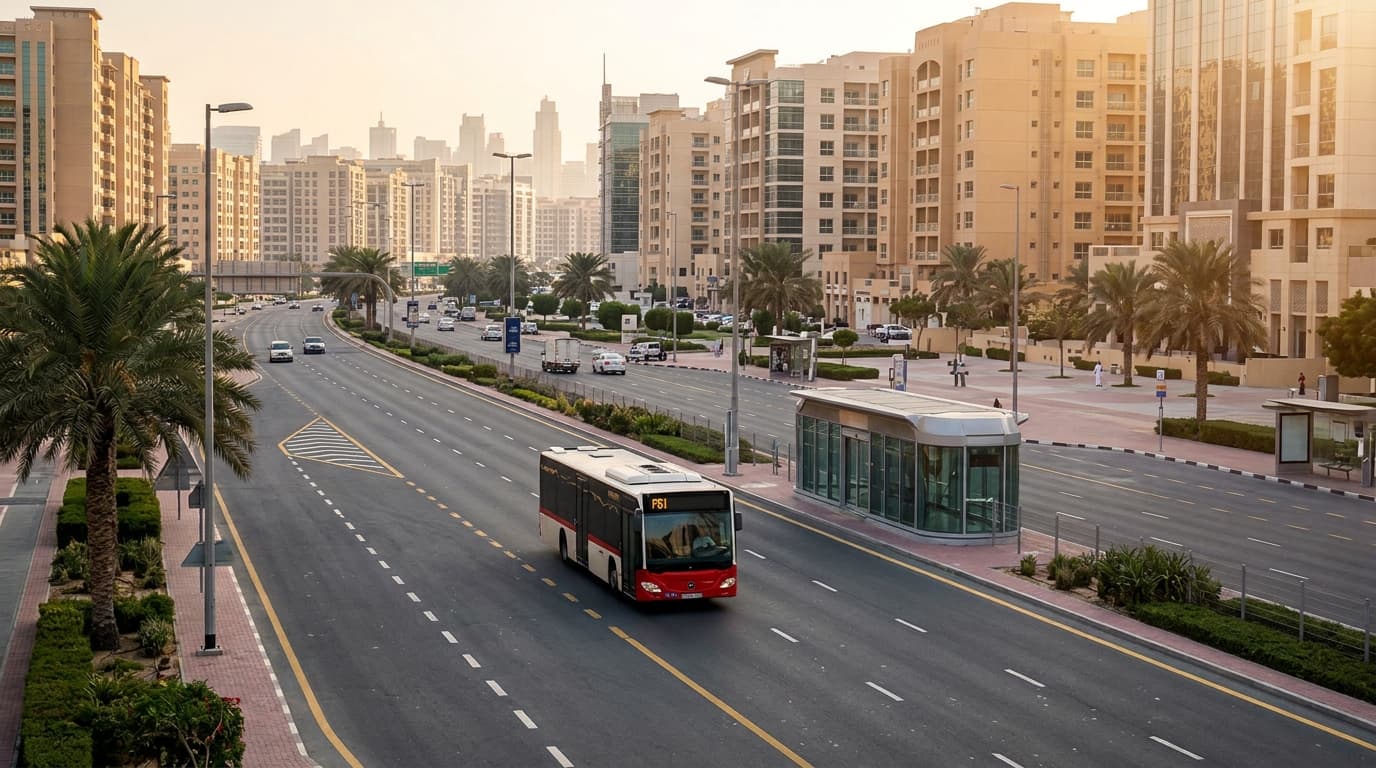
Public transport is a quiet value driver in Dubai real estate. Whether you’re a daily commuter or weighing an investment, knowing how a feeder bus operates can translate to lower living costs, better tenant retention and stronger demand. The F61 is one of Dubai’s RTA feeder routes that links neighborhoods to the Metro and key community hubs.
This guide explains how to check the latest F61 bus timings in seconds, what frequencies to expect throughout the week, fare basics with Nol, and smart planning tips—plus why transit connectivity matters when choosing a home or investment property.
What is the F61 and how often does it run?
RTA “F” routes are Metro feeder buses designed to connect residential clusters with nearby stations and local amenities. Timings and pathing are optimized around Metro patterns and adjusted periodically by the Roads & Transport Authority.
While exact first/last trips and stop-by-stop schedules can change, riders typically find that F-routes operate from early morning until late evening with higher frequencies during commuter peaks and moderately spaced departures off-peak. Expect slightly different weekend patterns.
Indicative frequency ranges (subject to RTA updates):
| Period | Typical Headway (minutes) |
|---|---|
| Weekday peak (AM/PM) | ~8–12 |
| Weekday off-peak | ~12–20 |
| Evenings | ~15–25 |
| Weekends/public holidays | ~12–25 |
Treat the above as a planning guide. Always confirm live departures before you travel.
- Feeder routes sync with Metro flows
- Early morning to late evening service span (varies by day)
- Higher frequency at commuter peaks
How to check live F61 bus timings in seconds
Use official and reliable tools for real-time accuracy:
- RTA S'hail app: The fastest way to see live F61 arrivals, full journey planning, and service alerts. Search by route (F61), stop name, or use location.
- RTA website journey planner: Enter your origin/destination and filter by bus to surface the next F61 options.
- Stop code lookup: Each bus stop has a unique code on the pole/shelter. Use it in the S’hail app for precise next-bus times.
- Google Maps (Transit layer): Good as a cross-check for live arrivals and walking connections. Confirm with S’hail for any last-minute diversions.
Tip: Allow a few extra minutes during peak periods, school terms, rain, or major events, when dwell times can lengthen.
- Bookmark your frequent stops in S’hail
- Enable service alerts/push notifications
- Cross-check if you’re catching the last bus of the day
First and last trips: what to expect
Feeder routes generally begin early morning and wind down around late evening to shortly past midnight, with the exact first and last departures varying by day and route direction. During special occasions or city events, RTA may extend or compress service windows.
If you’re planning airport connections or late-night commutes, verify the last F61 departure on the same day—service end times can shift on weekends and public holidays.
- Check both directions—start/end times can differ
- Last trips fill up quickly; arrive a bit early
- Build a backup plan (alternative routes or taxi/rideshare)
Fares, Nol cards, and zones
Dubai’s bus and Metro fares are zonal and integrated, so one trip can include bus+Metro on a single Nol card within the transfer window. Most intra-city bus journeys fall within a typical fare band that is modest by international standards, with concessions for students, senior citizens, and people of determination (subject to eligibility and registration).
- Payment: Tap in and out with a Nol card. Ensure sufficient balance before boarding; top up at Metro stations, ticket offices, vending machines, or via official digital channels.
- Card types: Nol Silver is the most common for residents; Nol Gold offers access to Gold Class where available; personalized cards unlock eligible concessions.
- Transfers: Within the permitted window, your Nol automatically calculates the correct zonal fare across bus/Metro/tram legs.
Note: Open-loop bank card payments are not a universal substitute for Nol on buses; always carry a valid Nol until RTA states otherwise.
- Keep AED 15–30 balance to avoid failed taps
- Tap out on exit to cap the correct fare
- Register your Nol to protect balance if lost
Riding smarter: reliability, comfort, and accessibility
Dubai’s bus network features air-conditioned shelters and low-floor buses with designated areas for wheelchairs and strollers. For the smoothest F61 experience:
- Peak planning: Morning and evening commuter windows are busiest. If flexible, travel just outside the peak to find a seat.
- Weather buffer: During rain or high heat, add a cushion of 5–10 minutes for potential delays.
- Boarding etiquette: Queue, allow passengers to alight, and be mindful of priority seating. Strollers should be folded unless in designated areas.
- Safety: CCTV-equipped buses and shelters enhance security; hold the handrails when standing.
- Carry a foldable umbrella during rain alerts
- Use air-conditioned shelters to wait comfortably
- Check wheelchair/stroller space before boarding
Why F61 timings matter for property decisions
From an investment perspective, dependable feeder links are a strong demand signal. Renters without cars and cost-sensitive households gravitate to homes where the first/last bus aligns with working hours, cutting ride-hailing costs and commute times. For end-users, a predictable F61 cadence can reduce car dependence, parking stress, and monthly fuel bills.
Property implications you can expect (indicative, area-dependent):
- Rental depth: Better absorption and fewer vacancy days near reliable feeder stops.
- Liquidity: Broader buyer/renter pool, especially among first-time residents and young professionals.
- Yield resilience: Transit-proximate stock often sees steadier occupancy across cycles, though premiums vary by neighborhood and building quality.
When assessing a building, map the walk to the nearest F-route stop, check live F61 timings during your exact commute window, and test the trip on a weekday and weekend before committing.
- Time the walk in midday heat and at night for safety/comfort
- Verify shelter quality and lighting at the nearest stop
- Test both directions—morning inbound and evening return
Service changes and public holiday operations
RTA periodically recalibrates routes and headways to match demand and infrastructure works. Public holiday hours may differ from regular weekends. Always refresh your plan a day before travel during Ramadan, national holidays, and major events, when timetables often shift.
If a temporary diversion is in effect, the S’hail app and on-site notices at shelters usually provide revised stop lists and estimated delays.
Common Mistakes to Avoid
- Relying on static PDFs. Timings can shift; use live data in the S’hail app before you leave.
- Assuming weekday and weekend are identical. Frequencies and last trips often differ on weekends and holidays.
- Not tapping out with Nol. Skipping the exit tap can miscalculate your fare and deplete balance faster.
- Cutting it too close for the last bus. Arrive early; the final run can be crowded or adjusted.
- Ignoring transfer windows. Exceeding the time limit between legs may trigger a separate fare.
Conclusion
For commuters and investors alike, the F61’s value lies in predictability. Use the RTA S’hail app for live timings, plan for peak variability, and keep your Nol topped up. If you’re evaluating a property, test the real commute at your exact hours—well-aligned feeder access can improve daily life and quietly support long-term rental performance.