Solar panel installation Dubai: commercial market report
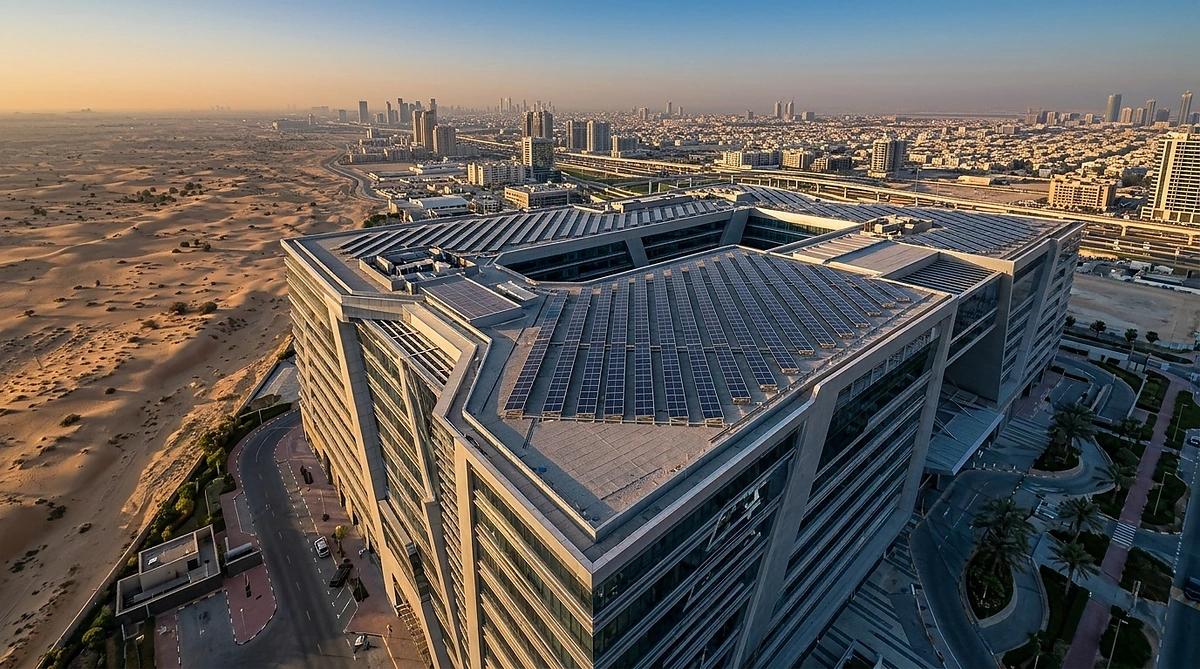
Solar panel installation Dubai is reshaping energy planning for Jumeirah Lakes Towers businesses by lowering grid dependence and future-proofing operating budgets.
Dubai firms are adopting rooftop and carport solar to cut exposure to volatile wholesale electricity costs and to support predictable long-term budgeting. Businesses from warehouses in Jebel Ali to retail malls in Deira are evaluating on-site generation alongside energy-efficiency projects. That mix reduces purchased electricity reliance and creates options for staged investment and scalability across multi-site portfolios.
Decisions hinge on capital cost profiles, available incentives and site-specific factors such as roof area, structural capacity and daytime load profiles. Companies looking to compare options should map current electricity spend, meter export rules with the local utility and potential space for panels before seeking detailed proposals from qualified installers.
Why are Dubai businesses choosing solar panels now?
Why are Dubai businesses choosing solar panels now? Key Data
Key benefit
Lower dependence on purchased electricity
Deployment
Rooftop and carport systems are common
Decision driver
Predictable operating costs
Primary risk
Roof and tenancy constraints
Businesses in Dubai are choosing solar panels now because on-site generation reduces reliance on purchased electricity and supports long-term budget planning.
Commercial operators cite predictable operating costs and reduced exposure to price volatility as primary drivers for adoption. For many logistics parks, retail centres and office campuses, solar is attractive because daytime consumption aligns with peak solar production, helping lower net imported energy. Investors and CFOs also favour installations that can be scaled or combined with battery storage to improve continuity for critical loads.
Risk considerations include roof condition, tenancy arrangements and regulatory approvals. Projects perform best when firms audit roof area, confirm structural capacity and secure necessary technical approvals up front. Companies should factor in potential interference with warranty terms on roofing and ensure clear contractual allocations for energy produced when multiple tenants share a roof.
Key Insight
Map your daytime electricity demand and available roof or canopy area before requesting quotes. That single step reduces scope risk and avoids costly redesigns later.
- Align panel area with daytime load to maximise self-consumption
- Inspect roof warranties and structural reports early
- Plan for phased installation across multiple sites
What are the costs, incentives and simple payback steps for UAE companies?
Commercial solar costs and incentives in the UAE are shaped by capital expenditure, available subsidies and local utility rules that affect export and billing arrangements.
Capital costs vary by system size, mounting type and inverter choice and are complemented by soft costs such as structural surveys and permitting. Incentives can include reduced permit fees, government facilitation for larger commercial projects and accelerated depreciation for some corporate accounting treatments. Simple payback analysis should compare installed cost against current annual electricity spend and expected on-site consumption to estimate when the investment becomes net positive.
To calculate simple payback, businesses should gather three inputs: total installed cost, current annual electricity bills, and an estimate of annual on-site solar generation. Run conservative generation estimates to allow for shading, soiling and seasonal variations. Include financing costs and maintenance in scenarios to see true payback under different financing structures and utility arrangements.
| Item | What to document | Why it matters |
|---|---|---|
| Installed cost | Quotes including equipment and labour | Determines capital required and financing need |
| Annual electricity spend | Last 12 months of utility bills | Baseline for payback and savings |
| Available roof area | Measured usable square metres | Limits maximum system size |
| Permitting requirements | Local utility and municipality approvals | Affects schedule and soft costs |
"Compare installed cost to current annual bills and use conservative production figures to avoid overestimating payback."
, Binayah Research Team
- Collect 12 months of bills before modelling payback
- Request roof structural report early
- Factor in soft costs and approvals in the budget
How do solar panels improve operational resilience at commercial sites?
How do solar panels improve operational resilience at commercial sites? Key Data
Operational gain
On-site daytime power
Resilience option
Pair generation with battery storage
Manager task
Integrate generation into existing controls
Maintenance need
Regular cleaning and inverter checks
Solar panels improve operational resilience by providing a local source of daytime power and reducing exposure to grid interruptions and price shocks.
For commercial sites, on-site generation supports business continuity for non-critical loads and can be paired with batteries or generators for critical systems. This layered approach reduces reliance on contracted grid energy and creates flexibility to prioritise loads during supply constraints. Facilities managers also benefit from increased control over energy procurement timing and from lower operational volatility when a portion of daily consumption is met on-site.
Operational trade-offs include the need for integration with existing electrical systems and potential investment in controls and safety upgrades. Managers should assess whether to include battery storage, which improves backup capability but adds cost and maintenance complexity. Consider staged upgrades starting with generation, then adding storage if backup or peak shaving becomes a priority.
Key Insight
If backup for critical loads is required, plan integration of batteries and automatic transfer equipment at design stage to avoid costly retrofits.
- Use panels to reduce daytime grid draw and smooth bills
- Consider batteries only after assessing operational priorities
- Schedule routine inverter and array maintenance
What practical next steps should Dubai businesses take to install solar?
What practical next steps should Dubai businesses take to install solar? Key Data
Step 1
Gather 12 months of utility bills
Step 2
Commission roof structural assessment
Step 3
Compare itemised proposals
Step 4
Include permitting timelines
Practical next steps for Dubai businesses are to audit energy use, survey roof or canopy space and request detailed proposals from qualified installers.
Start by collecting 12 months of electricity bills, noting daytime consumption patterns and peak demand periods. Commission a structural roof assessment and obtain any tenancy or landlord consents that might be needed. With that information, ask installers for proposals that include production estimates, equipment warranties and an itemised cost schedule so you can compare apples to apples across suppliers.
Include permitting and utility-interconnection timelines in your project plan to set realistic expectations for delivery. Factor in soft costs such as engineering, permits and insurance. Finally, evaluate financing options and operational models including purchase, lease, or third-party ownership to choose the structure that best aligns with your balance sheet and risk appetite.
Key Insight
Obtain a structural roof report before finalising quotes. Many proposals assume a structurally sound roof and discover additional costs late in the process.
- Collect bills and daytime load profiles
- Get landlord consent when roofs are leased
- Ask installers for production models and warranty details
Commercial solar in Dubai is a practical tool for reducing reliance on purchased electricity and for improving operational certainty. The sensible next steps are a 12‑month bill audit, a roof structural report and multiple itemised proposals so businesses can compare payback under realistic generation assumptions. These actions clarify cost, schedule and compliance implications without committing capital prematurely.
Binayah Editorial
Property Market Analyst
Our editorial team researches Dubai's real estate market, tracking DLD data, developer launches, and investment trends to keep buyers and investors informed.
Ready to Invest in Dubai?
Speak with our analysts about the best opportunities in today's market, free consultation.