Abu Dhabi real estate market: islands lead record foreign inflows
Abu Dhabi real estate shows broad growth with investors from 121 nationalities driving record foreign inflows across island and mainland sectors.
The regulator’s summary highlights expansion across residential, commercial and land categories, noting particular strength in island and waterfront locations without publishing AED totals. That breadth matters because buyer origin and location mix determine where liquidity and price pressure will be strongest in the weeks ahead.
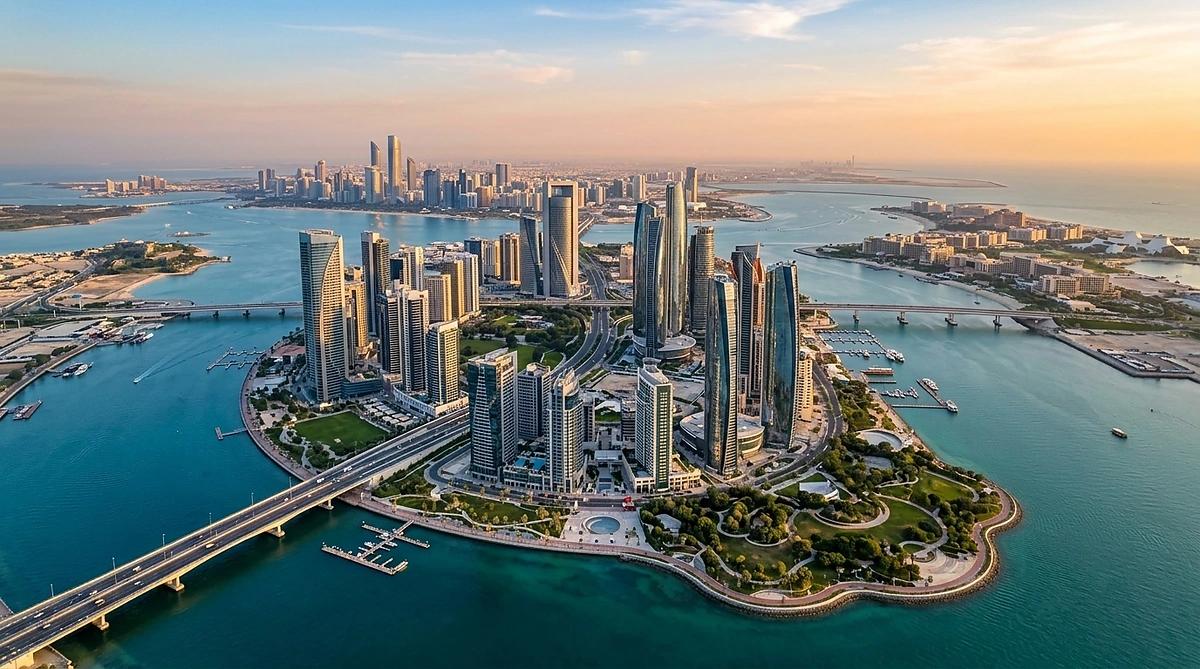
Al Reem, Al Hudayriyat and Al Saadiyat islands are named as leading locations, and the report’s emphasis on international buyers suggests demand is increasingly global rather than local, reshaping which neighbourhoods see the most immediate competition.
Has Abu Dhabi recorded activity across all asset classes?
Has Abu Dhabi recorded activity across all asset classes? Key Data
Foreign nationalities
121
Growth
across all asset classes
Leading areas
Al Reem; Al Hudayriyat; Al Saadiyat
Investment
record foreign direct investment
The regulator reported growth across all asset classes in Abu Dhabi, led by island and waterfront projects and supported by record foreign direct investment with buyers from 121 nationalities.
The official summary specifically ties the rise in activity to residential, commercial and land categories, saying island locations accounted for a material portion of transactions and international buyers drove the broader uptick. The regulator did not publish AED totals in the concise release, but it identified Al Reem, Al Hudayriyat and Al Saadiyat as primary engines of the recent momentum. These findings show the market’s recovery is multi‑faceted rather than limited to a single sector.
For buyers and investors the key nuance is liquidity concentration: island-led demand can push values in prime micro-markets while leaving peripheral areas relatively muted. Without AED figures for volumes or prices, stakeholders should monitor project delivery schedules, resale stock levels and service charges to assess whether reported growth translates into sustainable price gains or a short-term allocation of capital.
Where did buyers come from in Abu Dhabi's latest report?
Buyers came from a wide international base, with the regulator recording investors from 121 nationalities who contributed to record foreign direct investment into Abu Dhabi’s property market, especially for island and waterfront developments, and broadening buyer profiles across multiple price bands.
The report’s single clear numeric is the 121 nationalities figure, which the regulator cites as evidence of increased foreign investor breadth. That international mix helped drive transactions in Al Reem, Al Hudayriyat and Al Saadiyat and changed demand patterns: more enquiries for waterfront apartments and island villas, and a larger share of buyers purchasing as a second or investment property rather than primary residence. The regulator did not include AED totals or transaction counts by nationality in the summary, so the primary takeaway for brokers and investors is the qualitative shift toward international capital rather than a precise valuation benchmark.
The strategic implication is practical: sellers in island locations may see deeper buyer pools and shorter listing times, while buyers competing in those pockets should expect stronger bidding dynamics. For mainland and suburban segments the international uplift appears less pronounced, which could create differentiated returns between micro-markets within the same emirate.

| Metric | Value | Note |
|---|---|---|
| Foreign nationalities | 121 | Record breadth of international investors |
| Leading neighbourhoods | Al Reem; Al Hudayriyat; Al Saadiyat | Island and waterfront projects led activity |
"The presence of buyers from 121 nationalities signals Abu Dhabi’s renewed global appeal and explains why island projects moved to the front of the market mix."
, Binayah Research Team
Which neighbourhoods led Abu Dhabi's market surge?
Which neighbourhoods led Abu Dhabi's market surge? Key Data
Al Reem activity
leading island transactions
Al Hudayriyat activity
island-led demand
Al Saadiyat activity
prime waterfront interest
Investor breadth
121 nationalities
Al Reem, Al Hudayriyat and Al Saadiyat islands led the surge, according to the regulator, with island and waterfront projects cited as the primary contributors to recent activity.
The regulator singled out those three islands as the focal points where transaction velocity and buyer interest were most concentrated, linking the trend to waterfront amenity, project delivery timing and international demand. While the report did not disclose AED totals for these neighbourhoods, their repeated mention indicates a cluster effect: limited prime supply plus strong cross-border interest produced a visible lead in market share for island projects. That pattern is common when global buyers prioritise lifestyle locations with clear scarcity of comparable new stock.
Buyers should note that micro-market leadership can be transient: new launches or fast completions elsewhere could redistribute demand, and premium island pockets often carry higher service charges and maintenance costs. Investors focused on yield or near-term resale should quantify holding costs and expected rental demand before assuming island price appreciation will continue unabated.
What do the regulator findings mean for buyers and investors in Abu Dhabi?
What do the regulator findings mean for buyers and investors in Abu Dhabi? Key Data
Immediate effect
deeper liquidity in island pockets
Buyer composition
more international demand
Data gap
no AED totals published
Investor count
121 nationalities
The regulator’s findings mean buyers and investors face stronger international competition in island and waterfront locations, with the 121 nationalities figure highlighting the scale of foreign interest driving record inflows.
Practically, that translates into deeper liquidity for sellers in Al Reem, Al Hudayriyat and Al Saadiyat and faster sales cycles for prime units. For buyers the immediate consequence is higher competition and potentially narrower negotiating margins in those pockets, while mainland or secondary neighbourhoods may offer comparatively calmer markets. The report did not publish AED-level investment totals, so valuation decisions should combine on-the-ground transaction evidence with project-specific factors such as completion dates, developer reputation and service charge trends.
Risk management matters: investors attracted by headline international demand should stress-test assumptions about rental take-up and exit timing, and consider diversification across neighbourhood types. Where bids are tight on islands, a value-seeking strategy may be better executed in emerging or less-crowded micro-markets until clear AED transaction benchmarks are released.

Key Insight
Investors should treat the 121 nationalities figure as a signal of international appetite, not a substitute for AED transaction data. Verify recent closed sales in your target micro-market before making an offer.
The regulator’s summary shows growth across residential, commercial and land categories, with Al Reem, Al Hudayriyat and Al Saadiyat islands leading the activity and investors from 121 nationalities driving record foreign inflows. The immediate takeaway is deeper liquidity and competition in island pockets, while AED-level figures will be needed to quantify precise price and yield impacts.
Binayah Editorial
Property Market Analyst
Our editorial team researches Dubai's real estate market, tracking DLD data, developer launches, and investment trends to keep buyers and investors informed.
Ready to Invest in Dubai?
Speak with our analysts about the best opportunities in today's market, free consultation.