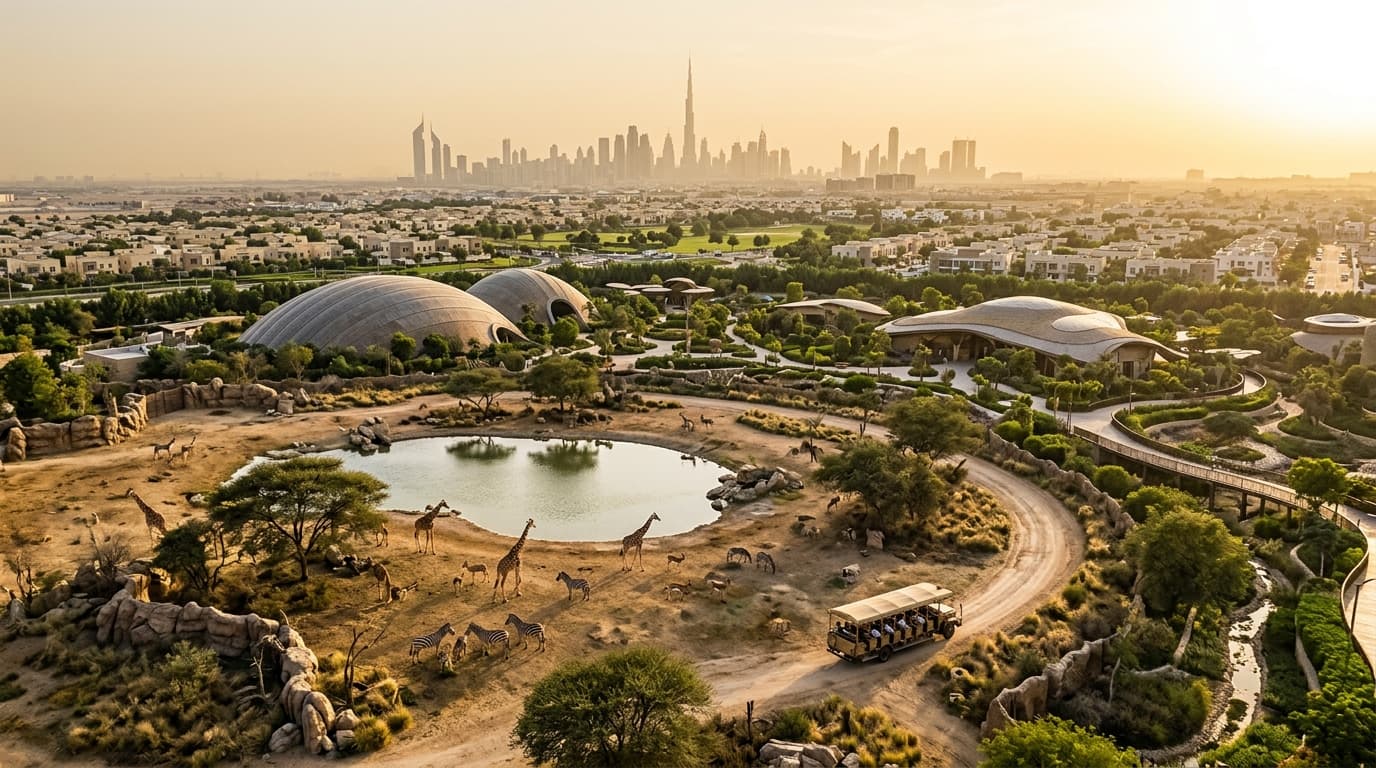
Dubai Safari Park is one of the city’s signature wildlife attractions, spanning multiple themed zones and home to hundreds of species from Africa, Asia and the Arabian Peninsula. Designed as an educational and conservation-forward destination, it blends immersive habitats, drive-through safaris and family-friendly experiences.
Whether you’re visiting with children or looking for a unique weekend plan, this guide explains ticket options, the main zones and animals to expect, how to time your visit, and practical tips to make the most of your day.
Quick facts and location
Dubai Safari Park sits in Al Warqa 5, easily reached via Hatta Road (E44). It typically operates seasonally, focusing on the cooler months; opening hours and program schedules can change across the season, so always check the official website or social channels before you go.
- Parking: On-site parking available; arrive early on weekends and public holidays.
- Access: Taxis and ride-hailing are the most convenient; RTA bus routes serve the wider Al Warqa area.
- Duration: Plan 4–6 hours for a comfortable circuit including the drive-through safari and shows.
- Essentials: Comfortable shoes, sun protection, water bottle (outside food policies apply), and a light jacket for evening shows in cooler months.
Ticket types and what they include
Ticket structures can vary by season, but you’ll typically find three tiers. Prices are dynamic and may change during peak periods or special events; consider booking online in advance to secure preferred time slots.
| Ticket Type | What It Typically Includes | Good For |
|---|---|---|
| Park Entry (General Admission) | Walking access to core villages/zones, exhibitions, kids’ areas, most shows; internal transport (shuttle/tram) where available | Casual visits, families wanting flexibility |
| Safari Journey Add‑On / Combo | Everything in Park Entry plus a guided drive‑through safari experience in Explorer Village | First-timers who want the signature safari |
| VIP / Private Safari | Priority entry, private vehicle/guide for the drive‑through, enhanced seating for shows (varies by package) | Small groups, special occasions, limited time |
Notes:
- Age categories and eligibility (e.g., child/senior) vary; bring ID for verification.
- Feeding encounters, behind-the-scenes tours and photo experiences are usually paid extras with limited slots.
- Seasonal promotions and resident offers can apply; check official announcements.
Main zones and highlights
Dubai Safari Park is arranged into themed zones that reflect regional habitats. Expect a mix of walk-through exhibits, aviaries, children’s activities, and the headline drive-through safari.
- Explorer Village (Safari Journey): The guided, drive‑through experience with large herbivores and carnivores in expansive habitats; this is the park’s signature attraction and often requires a timed slot.
- African Village: Savannah and forest species, with opportunities to see giraffes, zebras, antelopes and big cats in curated environments, plus interactive educational displays.
- Asian Village: A focus on Asian fauna with primates, small carnivores and wetland species, complemented by cultural theming and keeper talks.
- Arabian Desert Safari: Indigenous and regional species such as oryx, gazelles and desert-adapted predators, highlighting conservation of native wildlife.
- Kids Farm: Petting and feeding experiences with domestic animals, pony or camel interactions (seasonal), and child-friendly learning zones.
- Al Wadi: A central relaxation and dining valley with water features, picnic-style seating, and access to cafés and food kiosks.
Animal collection highlights include large herbivores (giraffe, rhino, hippo), big cats (lion, tiger), cheetah, hyenas, primates, reptiles, and diverse birdlife. Species line-ups can change as the park refines habitats and conservation priorities.
Shows, encounters and timings
Daily keeper talks, educational demonstrations and bird shows are scheduled across the park. These are capacity-controlled and popular on weekends.
- Check show boards at entry for the latest times; plan your walking route around 1–2 must-see presentations.
- Animal feeding and photo encounters are usually paid add-ons; slots may sell out early in the day.
- Quiet periods for animal viewing are typically earlier mornings and late afternoons, especially in warmer weather.
Food, facilities and accessibility
- Dining: Multiple cafés and kiosks serve quick bites, family meals and beverages. Outside food policies can change; when in doubt, pack light and confirm at entry.
- Facilities: Restrooms and baby-changing rooms are distributed across zones; stroller-friendly paths cover most of the park.
- Prayer rooms: Available within the park; follow signage or ask staff.
- Accessibility: Wheelchair-friendly routes and rental options are typically available; contact the park ahead for specific needs or assistance.
- Souvenirs: Gift shops near major zones carry plush toys, educational kits and themed merchandise.
Best time to visit and crowd strategy
- Seasonality: The park generally operates during the cooler months; shoulder-season mornings provide comfortable temperatures and active animal viewing.
- Weekends vs weekdays: Weekdays are typically quieter. If visiting on a weekend or during school holidays, arrive at opening time.
- Route planning: Do the Safari Journey first (if you have a timed slot), then loop through African/Asian Villages and end with Al Wadi dining.
- Heat management: Prioritize shaded exhibits midday, use indoor attractions, and schedule shows when you can sit and rehydrate.
How to get there and parking tips
- By car: Navigate to Dubai Safari Park, Al Warqa 5 (near E44). Follow event-day signage for overflow parking on peak days.
- By taxi/ride-hailing: Drop-off and pick-up areas are signposted near the main gate; confirm your pickup pin to avoid delays.
- Public transport: RTA bus links serve the wider Al Warqa corridor; check the RTA app for active routes and last-mile walking times.
- With kids or seniors: Consider parking closer to your planned exit route or use internal transport where available to reduce walking distance.
Budgeting your visit
While exact prices vary by season and package, you can plan around a few typical cost components:
- Park admission for each visitor category (adult/child/senior) with optional Safari Journey add‑on or VIP upgrade.
- Paid extras: Animal feedings, photo encounters, behind-the-scenes tours.
- Food and beverages: On-site dining is convenient; consider setting a per-person snack/meal budget.
- Souvenirs: Leave a buffer if visiting with children.
Tip: Booking online early in the season can help with preferred time slots and occasional promotional bundles.
Common Mistakes to Avoid
- Arriving without a plan. Missing the Safari Journey or key shows because you didn’t check timings at entry.
- Underestimating the heat. Midday sun reduces animal activity and guest comfort; aim for mornings or late afternoons.
- Not booking add-ons early. Feeding encounters and VIP safaris have limited capacity and often sell out.
- Skipping hydration and shade. It’s a large park; schedule rest stops and carry water.
- Assuming summer availability. Operations are seasonal; always confirm opening dates and hours.
Conclusion
Dubai Safari Park delivers an engaging, family-friendly wildlife experience anchored in education and conservation. Plan around the Safari Journey, check show times as you enter, and pace your loop through the African, Asian and Arabian zones for cooler hours. With smart timing and a few pre-booked add-ons, you can turn a standard visit into a memorable day out in the city’s great outdoors.