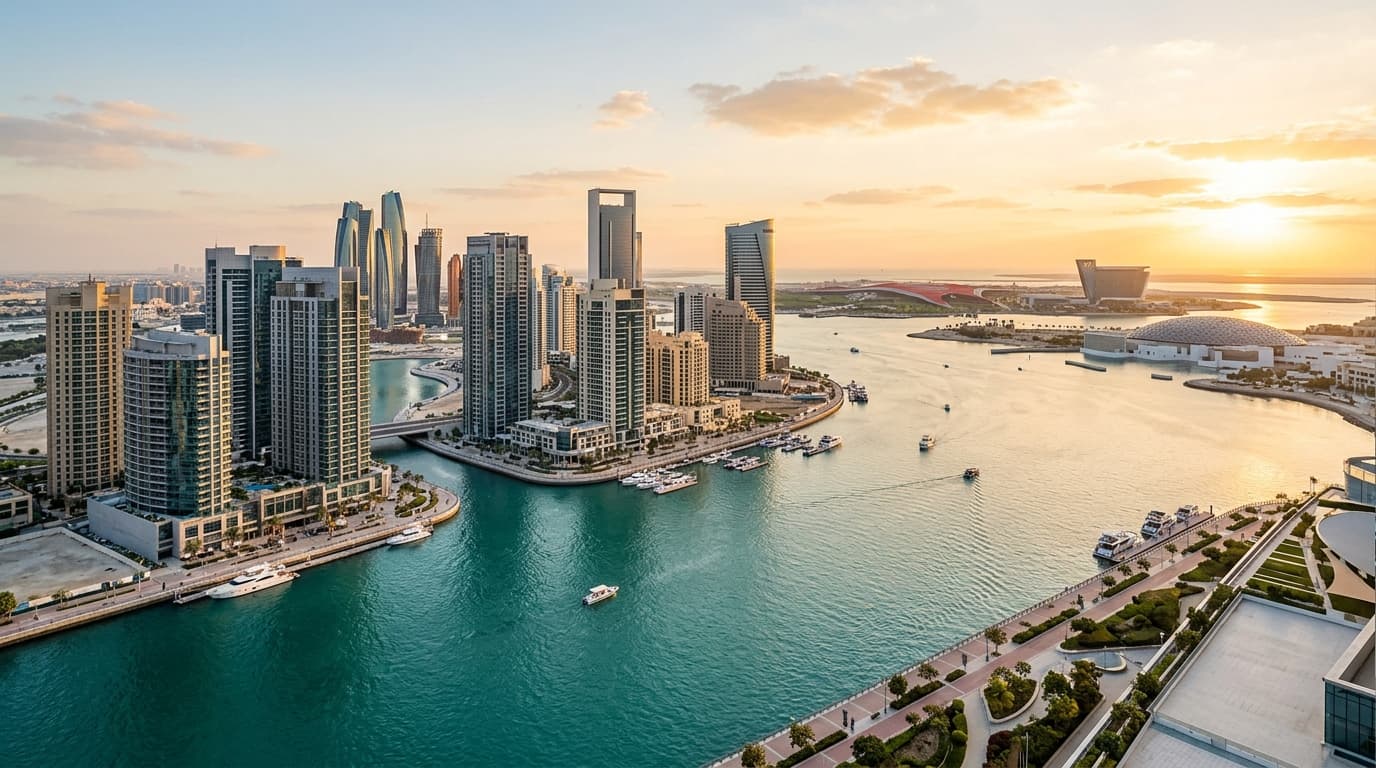
Abu Dhabi has quietly become one of the Gulf’s most liquid and transparent real estate markets, offering freehold ownership to expatriates in designated investment zones and a stable, yield-driven rental landscape. Whether you’re an end-user seeking a coastal lifestyle or an investor eyeing income and long-term capital preservation, understanding the rules, fees and process will set you up for a smooth transaction.
This guide distills how expats can buy property in Abu Dhabi in 2026—where you can own, what it typically costs, the step-by-step timeline from offer to title deed, and how to align your purchase with residency options such as the UAE Golden Visa.
Who can buy and where: Abu Dhabi ownership rules for expats
Expatriates can buy and own freehold property in Abu Dhabi within designated investment zones. A 2019 change to the property law allowed foreigners to hold full freehold ownership (including land) in these zones, bringing Abu Dhabi in line with leading global markets.
Major investment zones where expats commonly buy include:
- Al Reem Island
- Saadiyat Island
- Yas Island
- Al Maryah Island
- Al Raha Beach
- Masdar City
- Al Reef
- Al Ghadeer (on the Abu Dhabi–Dubai border)
Outside these zones, different tenure types or restrictions may apply. Always verify the project’s land tenure on the DARI (Abu Dhabi real estate) system or via your broker before committing.
Residency: Buying property does not automatically grant residency. However, qualifying property investments can support long-term residency under the UAE Golden Visa rules (see Visa section).
Typical costs and fees when buying in Abu Dhabi
Plan for one-time purchase costs and recurring ownership costs. Exact figures vary by project and bank policies, so treat the following as indicative ranges.
One-time purchase costs (ready and off-plan):
- Abu Dhabi registration fee: Typically 2% of the purchase price, payable to the Department of Municipalities and Transport (DMT)/Abu Dhabi Municipality. For off-plan, a 2% registration on the Sales & Purchase Agreement (SPA) is commonly applied.
- Agency fee: Often around 2% of the purchase price (plus VAT where applicable), subject to agreement.
- Developer NOC/admin: Commonly AED 500–5,000+ depending on developer and community.
- Conveyancing/legals: If you appoint a conveyancer or lawyer, budget an agreed fixed fee.
- Bank-related (if mortgaging): Arrangement fee often ~1% of loan amount; valuation typically AED 2,500–3,500; a government mortgage registration fee applies per DMT’s current tariff (confirm at application time).
Recurring ownership costs:
- Service charges: Apartments often fall in an indicative range of AED 10–25 per sq ft per year; villas/townhouses vary by community and plot/BUA methodology. Always request the latest service-charge schedule from the developer or Owners Association.
- Utilities: ADDC connection and consumption charges according to usage and tariff.
- Leasing costs (if renting out): Marketing, leasing, and property management fees as agreed; tenancy registration via the Abu Dhabi system (formerly Tawtheeq) is required for valid leases.
There is no annual property tax in Abu Dhabi. Registration and admin charges are generally one-off unless you transact again.
Step-by-step: How an expat buys property in Abu Dhabi
1) Pre-approval and budgeting
- If financing, secure a bank mortgage pre-approval to fix your budget and timeline. Pre-approvals commonly remain valid for a limited period (e.g., 60–90 days) subject to bank policy.
2) Shortlist and due diligence
- Verify freehold eligibility (investment zone), developer reputation, service charges, handover timelines (for off-plan), and recent comparable sales via your broker.
3) Offer and reservation
- Agree price, inclusions, and completion timeline. For ready property, parties sign a Memorandum of Understanding (MOU) and the buyer typically places a security deposit (commonly ~10%) held as agreed until transfer.
4) NOC and settlement logistics
- The seller obtains a developer NOC confirming no outstanding liabilities. The parties schedule transfer at the developer’s office or DMT service center; many steps are digitised through the DARI platform.
5) Transfer and payment
- Buyer pays the purchase balance, registration fee, and any agreed fees. For mortgaged purchases, the bank settles the seller’s mortgage (if any) and registers the buyer’s new mortgage.
6) Title deed issuance
- DMT/DARI issues the title deed electronically in the buyer’s name. For off-plan, your SPA is registered and a final title deed is issued on building completion and handover.
Tip: Keep all payment receipts and approvals (including bank valuation and final offer letters) accessible for transfer day to avoid delays.
Financing: LTVs, rates and what banks look for
UAE Central Bank loan-to-value (LTV) guidance applies across the country:
- First home for expatriates up to AED 5 million: up to 80% LTV (i.e., 20% down payment), subject to bank approval.
- First home for expatriates above AED 5 million: up to 70% LTV.
- Subsequent properties: typically lower LTVs.
Off-plan mortgages are more limited; many buyers use developer payment plans and switch to a conventional mortgage at completion if permitted. Banks will assess your debt-to-burden ratio, income stability, employer profile, and property valuation. Beyond interest rates, compare:
- Bank arrangement fee and valuation charges
- Early settlement/partial prepayment penalties
- Fixed vs variable rate periods and reversion rate
- Insurance requirements (life/property)
Allow ample time for bank valuation and compliance checks to keep your transfer timeline intact.
Off-plan vs ready property in Abu Dhabi
Both routes work for expats; your choice depends on cash flow, delivery horizon, and risk appetite.
| Factor | Off-plan | Ready/Completed |
|---|---|---|
| Entry price | Often launch incentives and staged payments | Pay in full at transfer (or mortgage) |
| Registration | SPA registration (commonly 2%) via DARI; final deed at handover | Title deed issued at transfer |
| Cash flow | Progress-linked installments; some post-handover plans | Immediate service charges and utilities |
| Rental income | Starts post-handover | Immediate rental potential |
| Price visibility | Market risk until completion | Clear comparables today |
| Snagging risk | Construction/finish timelines vary | Inspect actual unit before buying |
For off-plan, confirm escrow safeguards, construction milestones, and handover history of the developer. For ready units, review building maintenance records and Owners Association budgets.
Where to buy: Popular expat areas and investment angles
Al Reem Island: High-rise living minutes from the CBD and Al Maryah. Strong leasing demand from professionals; apartments often achieve indicative gross yields in the mid-single digits.
Saadiyat Island: Premium beachfront and cultural district. Blue-chip villas and low-rise apartments favored by end-users; capital preservation with lower yield profile relative to mid-market areas.
Yas Island: Family attractions, schools, and retail. Townhouses and apartments with community amenities; popular for both end-use and short- to medium-term rentals.
Al Raha Beach: Waterfront master community with established infrastructure; a balance of lifestyle and income potential.
Masdar City and Al Reef: Value-driven communities with competitive entry prices and historically resilient occupancy; indicative yields can be attractive for yield-focused buyers.
Always benchmark asking prices and rents with recent transactions, not just listings. Use building-level service-charge data to stress test net yields.
Visas and residency: Using property to qualify
The UAE Golden Visa (10 years) is available to property investors who meet federal thresholds—currently, property holdings of AED 2 million or more can qualify, subject to conditions such as property status and financing caps. Rules can evolve; always verify current criteria, acceptable valuations, and any mortgage limits at the time of application.
Other residency categories outside the Golden Visa may be available based on employment, business ownership, or sponsorship. Property ownership alone does not automatically grant residency unless it meets the qualifying criteria under the applicable visa program.
Taxes, regulations and landlord-tenant basics
Abu Dhabi does not levy an annual property tax. Transaction registration fees are generally one-off. If you lease your property, tenancy contracts must be registered through the emirate’s system (commonly referred to as Tawtheeq historically, now integrated in Abu Dhabi’s e-services). Security deposits, notice periods, and dispute processes are governed by Abu Dhabi regulations; use current lease templates and keep all addenda clear and signed.
Landlords should factor in insurance, planned capital expenditure (e.g., AC units, façade maintenance in OA budgets), and vacancy allowance when forecasting net yields. Consider professional property management for tenant screening, inspections, and compliance.
Common Mistakes to Avoid
- Assuming freehold everywhere. Freehold for expats applies in designated investment zones—verify project tenure on DARI before paying deposits.
- Underestimating transaction and bank fees. Budget beyond the 2% registration fee for agency, valuation, NOC, and mortgage-related costs.
- Skipping service-charge due diligence. High service charges can erode net yield; request the latest OA budget and arrears status.
- Rushing the mortgage timeline. Valuation, compliance, and final offer letters take time—align your MOU dates with realistic bank SLAs.
- Buying off-plan without escrow checks. Confirm project escrow, construction milestones, and developer delivery track record.
Conclusion
For expatriates, Abu Dhabi offers a clear path to freehold ownership in high-quality master communities, a balanced yield profile, and strong end-user appeal. Start with the right zone, confirm the true cost of ownership, and align financing and timelines before you sign. Whether you’re targeting a waterfront home on Saadiyat, a rental apartment on Al Reem, or a family townhouse on Yas, a data-led approach—and a broker who understands the DARI process—will make your purchase efficient and future-proof.