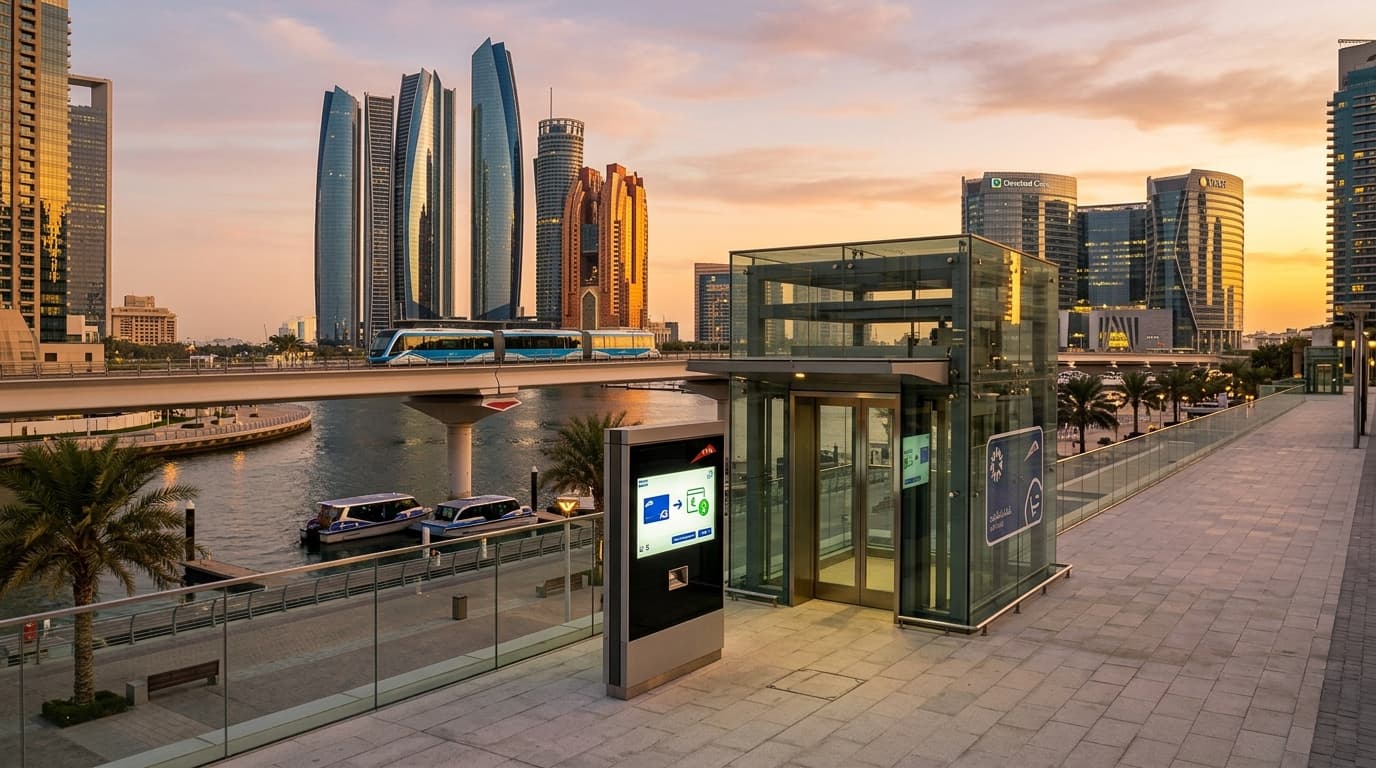
If you’re relocating to the UAE or settling into a new rental home in Abu Dhabi, mastering daily mobility is as important as choosing the right community. Abu Dhabi’s public buses run on the Hafilat smart card system managed by the Integrated Transport Centre (ITC). Keeping your card topped up means smooth, cashless commutes across the emirate.
This guide explains how to recharge your Hafilat card online and in person, how passes work, what to expect with processing times, and the small details that can save you time and money.
What is the Hafilat card and who should use it?
Hafilat is Abu Dhabi’s reloadable smart card for public bus services across the emirate. It stores either an e-purse (pay-as-you-go balance) or time-based products (such as weekly or monthly passes), depending on your travel pattern.
It is suitable for most riders: daily commuters, students, occasional users, and visitors. Concession categories (for example, students, seniors, and People of Determination) exist under ITC policy, subject to eligibility and supporting documents. Always verify current eligibility and benefits directly with ITC as they may be updated.
- Use: Tap-in on the validator when boarding and, where required, tap-out.
- Products: Pay-as-you-go balance and selected period passes.
- Availability: Sold at ticket offices, vending machines, and authorised retailers.
Where to buy or replace a Hafilat card
You can obtain a new card or replace a lost/damaged one at ITC customer happiness centres, major bus stations, and ticket vending machines located at key stops, malls, and transport hubs across Abu Dhabi. Selected authorised retailers also sell or reload cards.
To replace a lost card, bring an ID and any card details you have; replacement fees and balance transfer options are set by ITC. Report loss promptly to prevent misuse of any remaining balance.
- Bring Emirates ID/passport for named or concession cards.
- Ask staff which product (e-purse vs pass) best matches your usage.
- Keep receipts; they help with balance enquiries or disputes.
All the ways to recharge your Abu Dhabi bus card
Hafilat supports multiple top‑up channels. Choose the one that fits your routine and how quickly you need the balance to appear.
- Ticket Vending Machines (TVMs): Located at major bus stations and busy stops; accept cash and cards (subject to machine capability). Balance is typically available immediately.
- ITC Customer Happiness Centres and Ticket Counters: Staff-assisted top‑ups and product purchases; you can also resolve account issues.
- Online Portal/App: Recharge your e-purse or buy passes digitally. Online top‑ups usually require you to “activate” by tapping your card at a bus validator after purchase. Processing can take some time to sync to your card.
- Authorised Retailers and Payment Kiosks: Selected supermarkets and payment kiosks offer recharges. Availability and payment methods vary by location.
| Channel | How it works | Typical processing | Receipt/Proof |
|---|---|---|---|
| TVM (on-site) | Insert card, choose product, pay | Immediate | Printed receipt |
| Ticket counter | Hand card to agent, pay | Immediate | Printed receipt |
| Online portal/app | Pay by card and then tap on a validator to load | Short sync time; activation at next tap | Email/transaction ref. |
| Retailer/kiosk | Hand card or input card number, pay | Usually immediate; some may sync on next tap | Printed slip |
Step-by-step: Online Hafilat recharge
- Create or log in to your Hafilat/ITC account on the official portal or app.
- Add your card number and verify details.
- Choose e-purse top‑up or select a time-based pass (e.g., weekly/monthly), if available to your card type.
- Pay with a valid debit/credit card and save the transaction reference.
- Important: To complete the top‑up, present the card at a bus validator on your next ride so the balance/pass loads to the card. If you don’t tap a validator, the new value may not appear on the card yet.
If your balance doesn’t show after activation, keep the receipt and contact ITC support. Online systems may have brief delays during peak periods.
Choosing between pay-as-you-go and passes
If you ride infrequently or across varied routes, pay‑as‑you‑go (e-purse) keeps things flexible—you only pay when you travel. If you commute most days on similar routes, a time-based product can lower your average cost per trip.
Because fare rules and pass types can change, check the latest ITC schedule before purchasing. Where available, passes typically cover unlimited rides within specified zones and dates. Some riders maintain e-purse for occasional trips outside pass coverage.
- Light/irregular users: e-purse.
- Daily commuters: consider weekly/monthly passes.
- Mixed travel patterns: pass + small e-purse balance for out-of-scope trips.
Processing times, syncing and activation tips
In-person top‑ups at TVMs and counters are usually instant. Online transactions generally need one more step: tapping your card on any bus validator to write the new balance to the card chip. Depending on system sync windows, the value may take a short time to appear.
Practical tips:
- Top up a day before a critical trip when using online methods.
- After an online purchase, look for a confirmation then complete activation on your next ride.
- Keep a small buffer balance to avoid boarding delays.
- Photograph receipts or email confirmations for quick reference.
Tourists and short-stay users
Visitors can obtain Hafilat cards or temporary products at major stations and vending machines. If you don’t plan to ride frequently, load a modest e-purse and recharge only if needed. For airport transfers or hotel commutes, check bus schedules in advance and allow extra time to locate TVMs or ticket counters in busy hubs.
- Carry small denominations if a TVM is cash-only.
- Save your first receipt—it contains the card number for online help.
- Ask station staff about any visitor-friendly passes currently available.
Intercity trips and using cards across emirates
Abu Dhabi’s Hafilat system is separate from Dubai’s Nol and other emirate systems. Cards are generally not interoperable. For intercity routes, the accepted payment method depends on the operating authority and the direction of travel.
Before you travel between emirates, confirm the accepted ticketing method for that specific service on the official ITC or RTA channels. If needed, you may have to purchase a separate ticket or use the other emirate’s system for that leg.
- Hafilat ≠ Nol: keep both if you commute between Abu Dhabi and Dubai.
- Check operator websites/apps for the latest intercity payment rules.
Smart commuting for residents and new tenants
When viewing properties in Abu Dhabi, consider bus connectivity alongside rent, amenities, and commute time. Proximity to high-frequency routes and stations can materially improve daily convenience and reduce transport costs.
Ask your agent for a quick route check from the building to your workplace, school, and nearest mall. For families, confirm school bus options as a complement to public transit. A well-chosen location plus a properly managed Hafilat card is a low-stress mobility plan.
- Map your peak-hour route before signing a lease.
- Keep backup funds on your card for unplanned trips.
- Combine passes with e-purse for flexibility.
Common Mistakes to Avoid
- Forgetting to activate online top-ups. Your balance or pass appears only after tapping the card on a bus validator.
- Buying the wrong product. A pass may not cover all zones/routes you need; check coverage before purchase.
- Running the balance to zero. Keep a small buffer to avoid boarding delays during busy hours.
- Ignoring card damage or expiry. A cracked or expired card can fail at validators—replace it proactively.
- Assuming cross-emirate compatibility. Hafilat doesn’t replace Nol or other systems; check payment rules for intercity trips.
Conclusion
Abu Dhabi’s Hafilat card makes bus travel straightforward once you pick the right product and top‑up method. Use TVMs or counters for instant value, or recharge online ahead of time and remember to activate on your next tap. Whether you’re a new resident weighing neighbourhoods or a frequent commuter optimising costs, a little planning keeps every journey seamless.