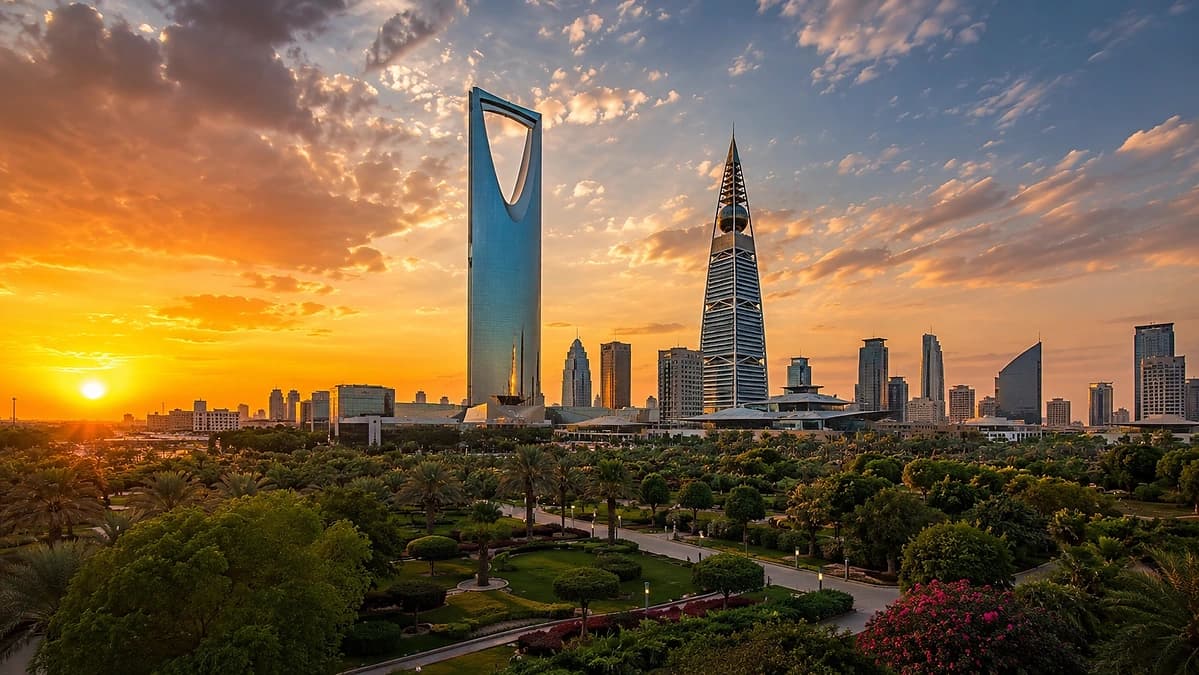
World Happiness Report 2026: GCC beats US and UK
World Happiness Report 2026 shows Saudi Arabia and the UAE rank ahead of the US and UK, reshaping perceptions of regional wellbeing.
The World Happiness Report 2026 attracted attention because it records meaningful wellbeing gains across several Gulf Cooperation Council economies, with Saudi Arabia and the UAE singled out as ranking above major Western peers. The media coverage and policy commentary that followed point to stronger social indicators and shifting soft-power perceptions for the region.
For Dubai real estate the report matters because wellbeing and quality-of-life metrics influence migration, long-stay workers, and expatriate decisions. Higher regional happiness can lift long-term housing demand, change tenant profiles, and shape developer priorities from luxury finishes to community amenities and social infrastructure.
What does the World Happiness Report 2026 say about the GCC?
What does the World Happiness Report 2026 say about the GCC? Key Data
Report
World Happiness Report 2026
Top GCC
Saudi Arabia, UAE
Compared to
US, UK
Theme
GCC wellbeing gains
The World Happiness Report 2026 places Saudi Arabia and the UAE ahead of the US and UK and flags wellbeing gains across the Gulf Cooperation Council economies.
The report's headline finding is a shift in measured life evaluations for some GCC countries compared with major Western economies, explicitly naming Saudi Arabia and the UAE as outperforming the US and UK in the 2026 rankings. Public commentary emphasised improvements in areas tied to lived experience, and regional officials linked the findings to economic and social reforms.
For real estate stakeholders the nuance matters: higher aggregate wellbeing does not automatically translate into equal housing demand across all segments. Improved wellbeing can lift demand for family-sized apartments, integrated communities and social amenities, but it can also prompt policy changes that alter visa, labour and affordability dynamics. Watch for uneven local effects between cities and neighbourhoods.
- Saudi Arabia and the UAE are named as ranking ahead of the US and UK in the report
- The World Happiness Report 2026 frames the change as broader GCC wellbeing gains
- Policy reform and social investment are cited as contributing factors
Why higher happiness matters for Dubai and regional real estate
Why higher happiness matters for Dubai and regional real estate Key Data
Impact
Migration and long-stay demand
Developer focus
Community amenities
Tenant shift
Family and lifestyle preferences
Risk
Uneven local demand
Higher wellbeing in the World Happiness Report 2026 can strengthen long-term demand drivers for Dubai and wider GCC property markets by influencing migration, tenure preferences and lifestyle choices.
When a country registers improved wellbeing it tends to attract more long-stay professionals, families and international talent who value quality of life. For Dubai that can mean stronger interest in community-led developments, amenity-rich towers and family-oriented suburbs. Developers may respond by prioritising parks, schools and healthcare access alongside residential floorspace, while landlords could see shifts in tenant expectations.
There are risks to assume a uniform effect: lifestyle-driven demand often concentrates in prime neighbourhoods and mixed-use hubs rather than across lower-income segments. Policy responses to wellbeing data can also redirect public spending toward social services, which has indirect effects on housing supply, planning approvals and infrastructure timelines.
| Country/Market | Likely demand shift | Developer response |
|---|---|---|
| Saudi Arabia | Increased interest in urban family housing and mixed-use projects | Greater focus on community amenities and transport links |
| United Arab Emirates (UAE) | Stronger demand in Dubai and Abu Dhabi for lifestyle-led developments | More investment in integrated communities and social infrastructure |
| US and UK (comparison) | Stable mature markets with different affordability profiles | Developers focus more on retrofit and densification |
"Wellbeing rankings act as a signal to long-stay professionals and families; developers and policymakers should interpret the World Happiness Report 2026 as directional rather than prescriptive."
, Binayah Research Team
- Wellbeing gains shape mid-to-long-term housing preferences
- Prime and mixed-use neighbourhoods benefit first
- Policy shifts may reallocate public spending toward social infrastructure
What should investors consider now after World Happiness Report 2026?
What should investors consider now after World Happiness Report 2026? Key Data
Investment focus
Family apartments & communities
Horizon
Mid-to-long term
Due diligence
Micro-market analysis
Risk control
Conservative underwriting
Investors should treat the World Happiness Report 2026 as a strategic signal to refine asset allocation toward housing segments that benefit from improved quality-of-life indicators.
Specifically, consider longer-hold investments in family-sized apartments, integrated communities and locations with strong schools and healthcare access, since these features align with the lifestyle preferences implied by higher wellbeing. Institutional and private investors may prefer areas where social infrastructure investment is explicit or where urban planning supports mixed-use vibrancy. At the same time, watch for changes to visas, labour rules or subsidies that accompany social policy shifts; these can change net migration flows and rental demand.
Risk management matters: wellbeing improvements often amplify existing strengths rather than create uniform market growth. That means careful micro-market analysis, underwriting conservative absorption assumptions and prioritising projects with flexible uses. Liquidity and exit planning remain essential, because sentiment-driven demand can be reweighted if policy or global conditions change.
Key Insight
Investor tip: Reassess portfolios for exposure to community-led assets and social infrastructure adjacency. Prioritise micro-market due diligence and maintain conservative rental-growth assumptions because wellbeing gains may concentrate in select neighbourhoods.
- Prioritise assets near schools, parks and healthcare
- Stress-test assumptions for migration and tenure
- Factor in likely policy shifts when modelling cashflows
Policy and market outlook for the GCC after the World Happiness Report 2026
Policy and market outlook for the GCC after the World Happiness Report 2026 Key Data
Policy lens
Social investment and reform
Market effect
Uneven across countries
Watch
Planning and budget allocations
Outcome
Gradual supply and demand shifts
The World Happiness Report 2026 is likely to reinforce policy momentum toward social investment and diversified economic strategies across the GCC, with market effects that unfold unevenly by country and sector.
Governments may use the report to justify sustained spending on healthcare, education and community amenities, and to support reforms that improve life satisfaction. For property markets, that can mean faster approvals for mixed-use projects and renewed emphasis on neighbourhood-level infrastructure. Investors should monitor policy announcements closely, because public investment priorities influence land use, planning timelines and demand composition.
Market participants should expect transition dynamics: near-term headlines may boost sentiment, but substantive supply-side changes and fiscal commitments determine medium-term housing outcomes. Track municipal and federal budget allocations and planning notices closely to identify where wellbeing-linked policy translates into tangible real estate opportunities.
- Policy responses can shape planning approvals and infrastructure
- Market effects are likely sector-specific and location-specific
- Realistic timing: Medium-term for supply-side translation
The World Happiness Report 2026 identifies Saudi Arabia and the UAE as ranking ahead of the US and UK and frames the GCC as showing notable wellbeing gains. For Dubai and regional real estate, the report is a directional signal that may increase long-term demand for lifestyle-led housing and influence policy priorities, but effects will vary by neighbourhood and sector.
Binayah Editorial
Property Market Analyst
Our editorial team researches Dubai's real estate market, tracking DLD data, developer launches, and investment trends to keep buyers and investors informed.
Ready to Invest in Dubai?
Speak with our analysts about the best opportunities in today's market, free consultation.
Related Articles
 Market Report 7 min read
Oct 14, 2026
Dubai tech property market: impact on prices and investors
 Market Report 8 min read
Oct 13, 2026
World Green Building Week: Emirates Green Building Council (EGBC) BuildItReady
 Market Report 8 min read
Oct 13, 2026