
Starlink Dubai: What its arrival means for connectivity
Starlink Dubai has arrived, promising satellite-backed internet to keep Dubai residents and properties online during emergencies and when local networks are disrupted.
Arabian Business reported that Elon Musk's Starlink internet service has debuted in the UAE, marking the first clear sign that consumer satellite broadband will be an available resilience option for the market. Satellite systems like Starlink are designed to route traffic via low-Earth orbit satellites so connectivity can continue even when ground infrastructure is impaired.
For Dubai real estate that matters because resilience is an operational benefit owners and tenants understand. From construction monitoring on remote sites to residents in high-rises concerned about outages, Starlink adds an independent connectivity layer, but it also brings installation, line-of-sight and regulatory questions that owners and investors must address.
What does Starlink arrival mean for connectivity in Dubai?
What does Starlink arrival mean for connectivity in Dubai? Key Data
Service
Satellite internet
Launch
Reported in UAE by Arabian Business
Primary benefit
Network redundancy
Requirement
Clear sky view
Starlink provides Dubai with a satellite-backed internet layer intended to maintain connectivity when ground-based networks face disruption. Satellite broadband can keep homes, offices and critical services online by routing traffic through satellites rather than relying solely on local fibre or mobile networks.
Arabian Business reported Starlink's debut in the UAE, signalling that residents and businesses in Dubai now have access to a service designed for network redundancy. That matters for operational resilience: building managers can reduce single points of failure and landlords can advertise a continuity advantage to tenants. While many day-to-day users will still rely on fixed-line ISPs, Starlink functions as an alternative path for traffic in outages and emergencies.
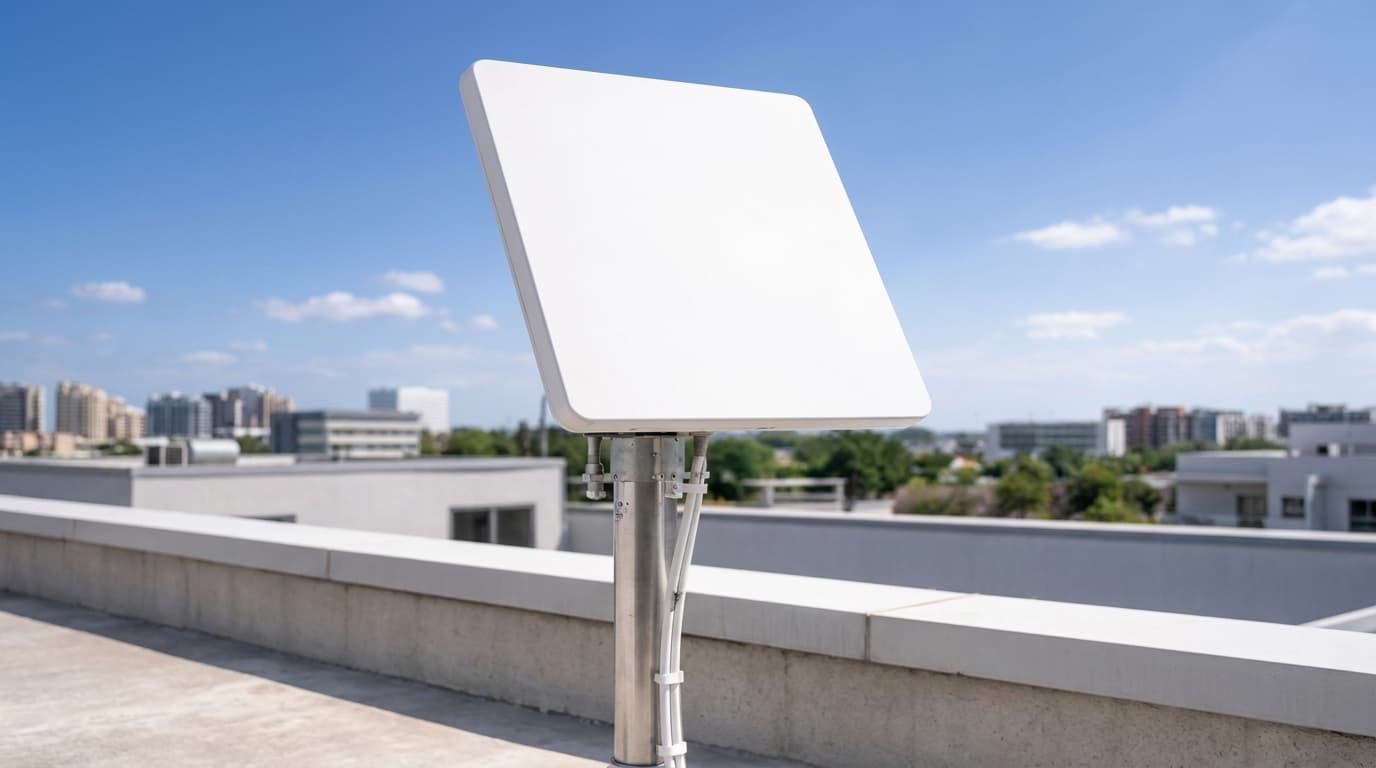
The main practical limits are physical and procedural rather than conceptual. Starlink requires a clear view of the sky and space for rooftop or external antenna placement, which can be harder in dense high-rise areas. Building owners should weigh installation logistics, local approvals and tenant demand before assuming immediate, building-wide deployment is straightforward.
How will Starlink affect off-plan projects and construction sites in Dubai?
Starlink can give construction sites and off-plan project locations a resilient communications option when on-site wired networks are incomplete or unreliable. Satellite connectivity supports site connectivity for project management, safety systems and temporary offices while permanent infrastructure is being built.
For construction sites that currently depend on temporary SIMs or local leased lines, satellite backup reduces the risk of monitoring gaps and communication blackouts. That means better uptime for remote monitoring cameras, smoother coordination of logistics and fewer delays tied to telecom outages. Developers can use satellite links for site-critical services until permanent fibre and mobile infrastructure are commissioned, improving project continuity and safety oversight.
Practical constraints include hardware siting, the need for unobstructed sky access for the antenna, and coordination with site managers to secure installation space. Projects should plan antenna placement early in site set-up and confirm any necessary approvals with landlords or freehold authorities to avoid rework during handover.
| Situation | Typical challenge | How Starlink helps |
|---|---|---|
| Remote site without fibre | No reliable wired connectivity for site systems | Provides immediate internet link for project controls and safety |
| Temporary offices and accommodation | Mobile networks can be congested or inconsistent | Offers alternate, stable link for communications and remote work |
| Testing and commissioning phases | Delays if telecom handovers are late | Maintains monitoring and coordination during handover gaps |
"Satellite connectivity can reduce on-site downtime and support remote monitoring while permanent infrastructure is being installed."
, Binayah Research Team
What should investors and landlords consider about Starlink in Dubai?
Investors and landlords should view Starlink as a value-add for operational resilience rather than a direct replacement for primary ISPs. Offering satellite-backed redundancy can enhance tenant appeal for certain asset classes, particularly serviced apartments, remote developments and sites where uptime is mission-critical.
Deciding whether to promote Starlink availability requires assessing tenant profiles, installation impact and building rules. Landlords need to consider where antennas can be installed, whether communal rooftops are available, and how to handle subscription arrangements and ongoing maintenance. For many properties the simplest approach is to enable installation for individual units while keeping building-wide systems with existing fixed-line providers.
There are also cost and contractual nuances for owners to weigh. Subscription models, equipment ownership and installation responsibilities affect total cost and tenant billing. Property owners should model who pays for hardware and service and document responsibilities in tenancy agreements to avoid disputes over service continuity and costs.
Key Insight
If you plan to market Starlink availability, confirm rooftop and façade permissions early, and decide whether the landlord or tenant will own the hardware and subscription. That choice affects lease clauses and maintenance obligations.
What regulation and practical limits affect Starlink in the UAE and who benefits most?
Starlink's UAE debut indicates that satellite broadband will operate alongside regulated local telecom services but it will still face practical and regulatory limits. Providers and users must navigate spectrum rules, import and installation approvals and any conditions set by local authorities for external antennas.
Practical limits are mostly physical: antennas require clear sky access and unobstructed mounting points, which can be challenging in dense Dubai neighbourhoods of high towers. The service is especially beneficial for locations where terrestrial links are unreliable, for temporary construction set-ups, for serviced-living schemes and for tenants who prioritise continuity. Building-scale roll-out will depend on landlord cooperation and compliance with local installation rules.
Who benefits most is clear: remote sites, developers during build phases, landlords of properties marketed for resilience, and tenants in locations with frequent outages. However, widespread uptake across all Dubai apartments will depend on how building rules, installation logistics and subscription arrangements are resolved.
- Best fit: construction sites and remote developments
- Tenant appeal: serviced apartments and business tenants
- Installation need: rooftop or external antenna with clear sky view
- Regulatory note: operations subject to local approvals
Starlink's UAE debut introduces a satellite-backed option that strengthens connectivity resilience for Dubai properties, construction sites and certain tenant groups. The key takeaway is practical: Starlink adds redundancy and operational benefits, but building-scale adoption depends on installation logistics, rooftop access and compliance with local approvals reported by Arabian Business.
Binayah Editorial
Property Market Analyst
Our editorial team researches Dubai's real estate market, tracking DLD data, developer launches, and investment trends to keep buyers and investors informed.
Ready to Invest in Dubai?
Speak with our analysts about the best opportunities in today's market, free consultation.
Related Articles
 Market Report 7 min read
Oct 14, 2026
Dubai tech property market: impact on prices and investors
 Market Report 8 min read
Oct 13, 2026
World Green Building Week: Emirates Green Building Council (EGBC) BuildItReady
 Market Report 8 min read
Oct 13, 2026