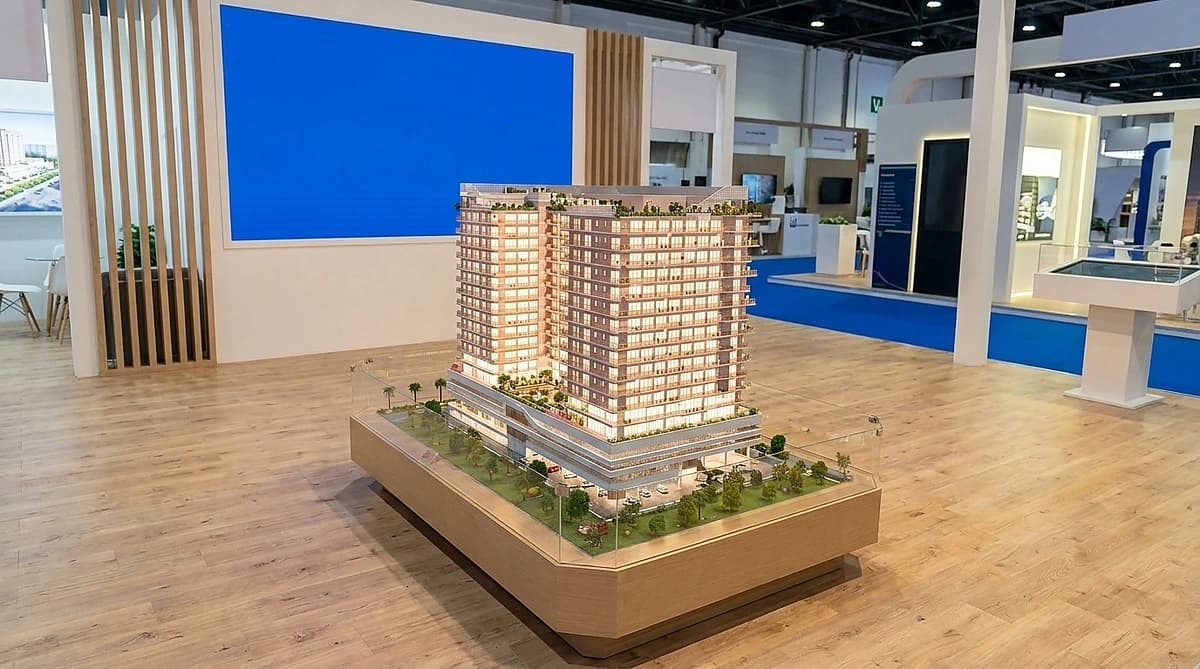
Sharjah real estate transactions: AED4 market snapshot
Sharjah real estate recorded AED4 in transactions this period, indicating renewed activity across residential and commercial markets in the emirate.
The headline figure of AED4 comes from the source report and reflects the aggregated transaction value recorded for Sharjah’s real estate sector during the reporting period. The number is presented as a single aggregate; the source does not publish a community-level or developer-level breakdown, so the AED4 figure should be read as a broad measure of overall activity rather than a granular dataset.
Local market participants will watch whether this AED4 headline accelerates into sustained sales or remains a one-off spike. With limited public detail in the source, the most actionable next steps for analysts and investors are to monitor registry updates and ask for community-level reports to understand which property types are driving the AED4 total.
How much value did Sharjah’s real estate market record this period?
How much value did Sharjah’s real estate market record this period? Key Data
Total transactions
AED4
Emirate
Sharjah
Market scope
Aggregate headline value
Data source
Published transaction report
Sharjah’s real estate sector recorded AED4 in transactions during the reported period, which is the core headline value from the source report. This single figure represents the total transactional value captured by the issuer of the summary data and is the principal measure of activity available in the published note.
Because the source provides only the AED4 aggregate, it is not possible from that note alone to separate sales by residential versus commercial, nor to produce a unit count or price-per-square-foot breakdown. The AED4 number still matters: it confirms money changed hands and can be used alongside follow-up registry releases to spot momentum. Analysts should treat AED4 as a starting data point and seek supplementary datasets for precise segment-level analysis.
Practically, AED4 as a headline figure gives investors a quick sense of activity but not the full picture. Without community or developer splits, the risk is over-interpreting the headline; investors should combine the AED4 figure with property listings movement, mortgage lending trends, and municipality records before drawing firm conclusions.

Which communities in Sharjah led the recorded transactions?
The source did not publish a community-level breakdown, so the report does not name which Sharjah communities led the AED4 in transactions. The headline AED4 is an aggregate only and the absence of a list of top neighbourhoods means the report cannot be used to identify community winners directly.
Because community details are not provided, readers should treat the AED4 total as an emirate-wide signal rather than a community signal. Practical steps for market participants are to request registry extracts or municipal transfer reports that list deeds by community, to compare the AED4 headline against on-the-ground activity in areas such as Al Majaz, Al Nahda, and Al Taawun where brokerage activity and new supply typically concentrate. Those local confirmations convert the AED4 headline into actionable insight about where demand is actually landing.
Until a community split appears, buyers and investors should assume the AED4 figure could be skewed by a small number of large commercial transfers or by clusters of residential deals; the report does not clarify which. That uncertainty is the main limitation when using the AED4 total to guide neighbourhood-level investment decisions.
| Metric | Value | Note |
|---|---|---|
| Total transactions | AED4 | Aggregate value from the published report |
| Top communities | Not specified | Community-level data not provided in source |
"The headline AED4 is useful as an activity signal but requires community-level registry data to identify where transactions occurred."
, Binayah Research Team
What does the AED4 transaction figure mean for Sharjah real estate investors?
The AED4 headline signals that Sharjah’s real estate market registered measurable transactional value during the reporting period, offering investors a prompt to reassess exposure or to seek entry points. The figure is a high-level indicator that activity exists but it does not by itself confirm price trends or yields.
For investors, the AED4 number should trigger targeted questions: which property types contributed to the AED4 total, were there large single transfers, and is mortgage financing supporting the deals? With only the AED4 aggregate available, investors should combine this headline with market actions such as new listings, price movement in neighbourhoods, and financing volumes. The AED4 figure can validate anecdotal signals of recovering demand but cannot replace granular due diligence needed for purchase or portfolio adjustments.
Strategically, prudent investors will use AED4 as a timing signal rather than a buying directive. The figure may justify fresh market checks or a staged purchase approach, but without further detail the smart move is to gather supporting registry or developer sales data before committing significant capital based solely on the AED4 headline.
- AED4: headline value to prompt follow-up
- Action: request community and deed-level records
- Investor approach: staged due diligence
What are the risks and the short-term outlook for Sharjah real estate after the AED4 report?
The primary short-term risk is data opacity: the source reports AED4 as a single aggregate without community or segment splits, which limits interpretation and raises the chance of misreading market strength. That lack of granularity is the main constraint on producing confident short-term forecasts from the AED4 number alone.
Other near-term risks tied to a headline such as AED4 include the possibility that the total is driven by a handful of large commercial deals or by administrative transfers rather than broad-based residential demand. Investors and analysts should therefore treat AED4 as a directional signal and look for corroborating registry postings, mortgage approvals, and developer sales bulletins to form a fuller picture. The short-term outlook depends on whether follow-up data shows the AED4 total accompanied by rising listings and consistent transaction counts.
If subsequent registry releases confirm sustained activity beyond the AED4 headline, the outlook would turn cautiously positive; if follow-up data is weak or absent, short-term momentum may falter. Given the one-line AED4 disclosure, the prudent stance is to monitor concrete deed-level updates before revising investment posture.
Key Insight
Investors should treat the AED4 headline as an initial signal and not as definitive proof of market-wide strength. Request deed-level registry extracts and community sales data to verify whether the AED4 total reflects broad demand or isolated large transfers.
The published report shows Sharjah’s real estate sector recorded AED4 in transactions, a clear headline signal of activity but one lacking community detail. The main takeaway is that AED4 indicates transactional momentum at emirate level while requiring registry or municipal breakdowns to translate the figure into precise investment decisions.
Binayah Editorial
Property Market Analyst
Our editorial team researches Dubai's real estate market, tracking DLD data, developer launches, and investment trends to keep buyers and investors informed.
Ready to Invest in Dubai?
Speak with our analysts about the best opportunities in today's market, free consultation.