RTA land value impact near Metro stations
RTA land value findings near Dubai Metro stations show varied effects on local property prices, rental yields and investor returns across communities.
The Roads and Transport Authority (RTA) said an increase in land value tends to push up property prices around a Metro station, while stressing that the scale of the effect differs by location and by type of property. That single-line policy observation matters because land value underpins both new development feasibility and resale price trajectories in transit corridors.
This report sets out the RTA announcement, explains how improved transport access changes neighbourhood economics, examines what investors and developers should expect, and outlines the policy and planning implications city authorities need to consider.
What did the RTA announce about land value and Metro stations?
What did the RTA announce about land value and Metro stations? Key Data
Authority
RTA
Finding
land value increases push up property prices
Variation
differs by location and property type
Focus
areas around Metro stations
The RTA announced that an increase in land value tends to push up property prices around a Metro station, but the impact varies by location and property type.
The announcement is deliberately concise: it links higher land values often sparked by improved transport access to price uplift in nearby housing and commercial markets. The RTA did not publish AED figures or percentage ranges in the statement, so the authority framed the relationship as a directional finding rather than a quantified forecast.
The nuance is important for market participants. Where land is scarce or zoning permits denser development, the uplift can translate quickly into higher sale prices and developer bids. In more peripheral or oversupplied areas the effect may be weaker, meaning the RTA message is a guide to pattern and risk, not a uniform guarantee across Dubai.
How does transport access change neighbourhood economics?
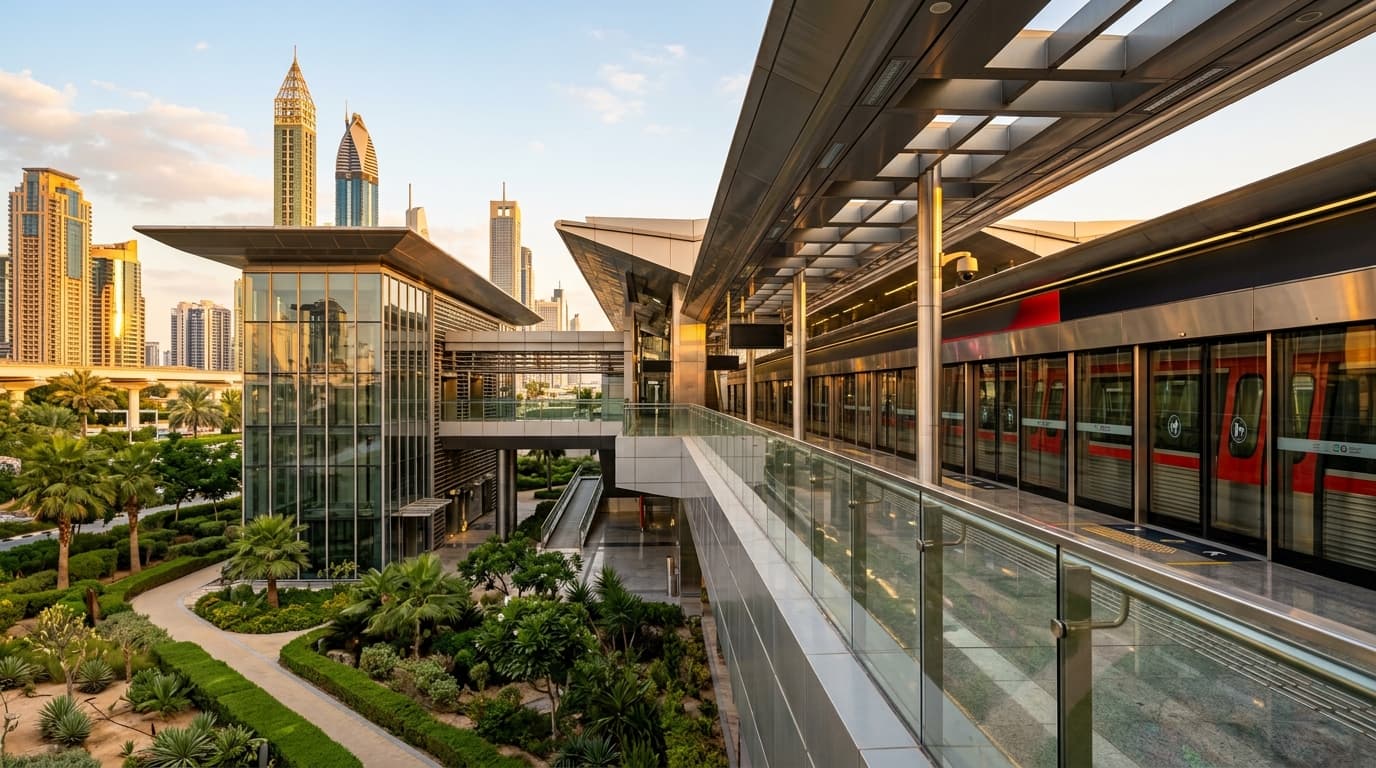
Transport access increases the utility of land and creates a demand premium that tends to lift nearby property prices, according to the RTA statement.
Improved accessibility concentrates footfall, shortens commutes and raises commercial viability, which makes land more valuable. The RTA noted that this transmission mechanism operates differently depending on urban context and property type. For example, apartments close to a Metro stop may attract stronger buyer or renter demand than low-demand peripheral plots, while commercial spaces can benefit from higher daytime activity. The RTA emphasised pattern and variation rather than a single numeric uplift.
This effect interacts with local supply, zoning rules and development timelines. If zoning allows higher density, landowners and developers will bid more aggressively for plots near stations. Where supply is loose or the station serves a less dense catchment, the premium will be smaller, and price movement may lag the infrastructure opening.
| Economic channel | Effect near Metro | RTA note |
|---|---|---|
| Land value uplift | Higher property prices in adjacent areas | RTA: increases in land value push up nearby prices |
| Accessibility premium | Stronger buyer and renter demand | RTA: impact varies by location and property type |
"Transport improves land utility; the RTA finding confirms that accessibility can be the catalyst for localized price uplift, but the pattern is uneven across different neighbourhoods."
, Binayah Research Team
What does the RTA land value finding mean for investors and developers?
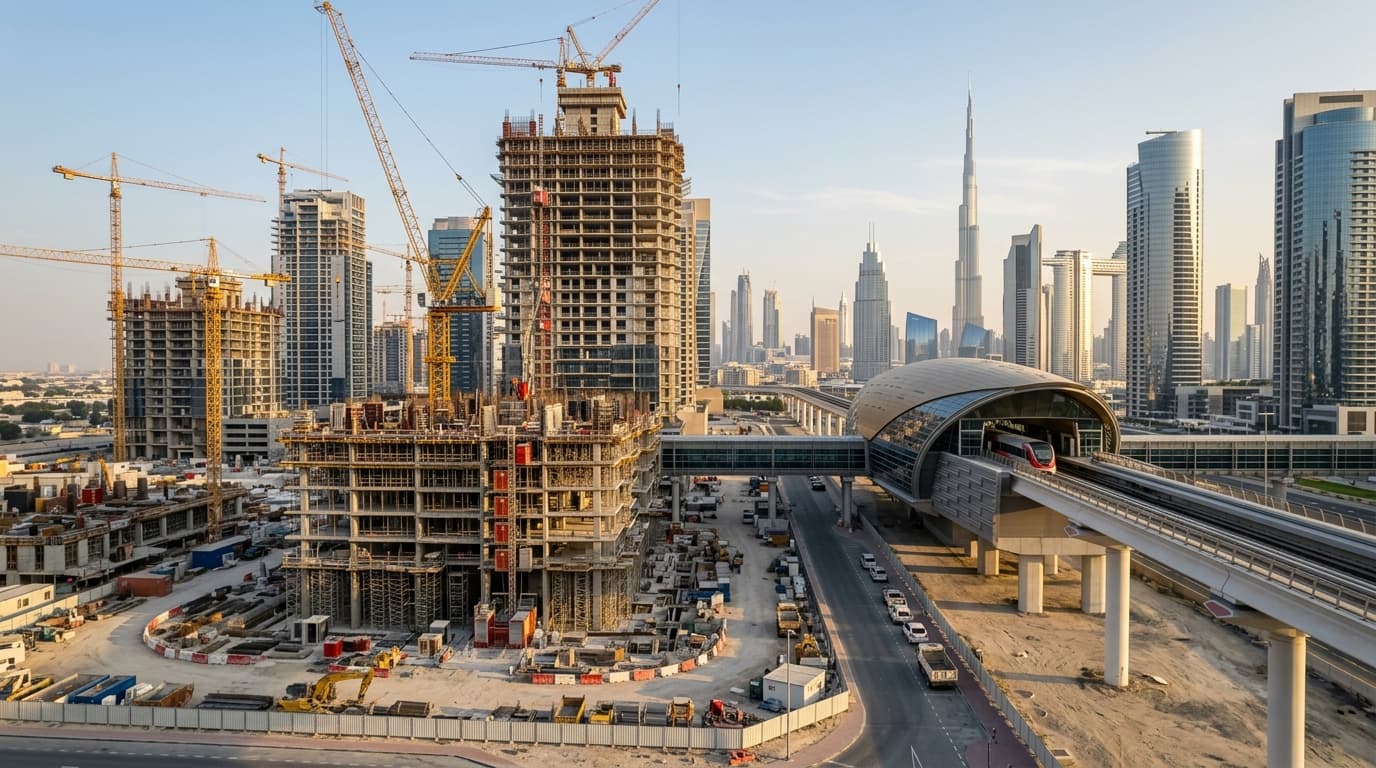
Investors and developers should expect higher land bids and localized price appreciation around Metro stations, while recognising that the RTA flagged significant variation by location and property type.
For developers, the RTA statement implies a need to factor transit premiums into land acquisition models and feasibility testing. Where zoning allows higher density, the willingness to pay for strategically located plots will rise; where zoning is restrictive, uplift may be captured via redevelopment or densification strategies. For investors, the practical implication is to assess micro-location, catchment demographics and property type rather than relying on proximity alone.
Risks remain: uplift can be priced in before completion, and markets can differentiate sharply between premium corridors and nearby streets. The RTA note underlines that timing, planning permissions and supply-side responses will determine whether the expected price moves materialise or are absorbed elsewhere.
Key Insight
Investors should treat proximity to Metro as one factor among many. Account for zoning, current supply, and developer pipeline in your valuation assumptions. Expect localized premiums, not uniform increases across an entire neighbourhood.
What are the policy and planning implications of the RTA announcement?
The RTA finding implies planners need to coordinate land-use, zoning and infrastructure investment to manage uplift and protect affordability around Metro stations.
When transport raises land value, a hands-off approach can lead to sharp price rises in desirable corridors. The RTA statement therefore signals a need for policy tools such as coordinated zoning reviews, strategic land releases, or value-capture approaches so uplift supports public objectives. The authority’s wording focusing on variation by location and property type also suggests targeted, context-specific policy responses rather than broad-brush regulation.
Practical planning measures include aligning density permissions with station capacity, phasing infrastructure to manage speculative demand, and considering mechanisms that share uplift with the public realm. The RTA’s observation is a technical prompt to integrate transport planning and property policy more tightly to balance growth with neighbourhood stability.
- Coordinate zoning near stations with transport planning
- Consider targeted value-capture, not blanket measures
- Phase infrastructure to manage speculative pressure
The RTA’s core finding is clear: increases in land value around Dubai Metro stations tend to push up nearby property prices, but the authority emphasised that the effect differs by location and property type. That single statement points market participants toward micro-location analysis, coordinated planning and careful feasibility work rather than blanket assumptions about transit-driven gains.
Binayah Editorial
Property Market Analyst
Our editorial team researches Dubai's real estate market, tracking DLD data, developer launches, and investment trends to keep buyers and investors informed.
Ready to Invest in Dubai?
Speak with our analysts about the best opportunities in today's market, free consultation.