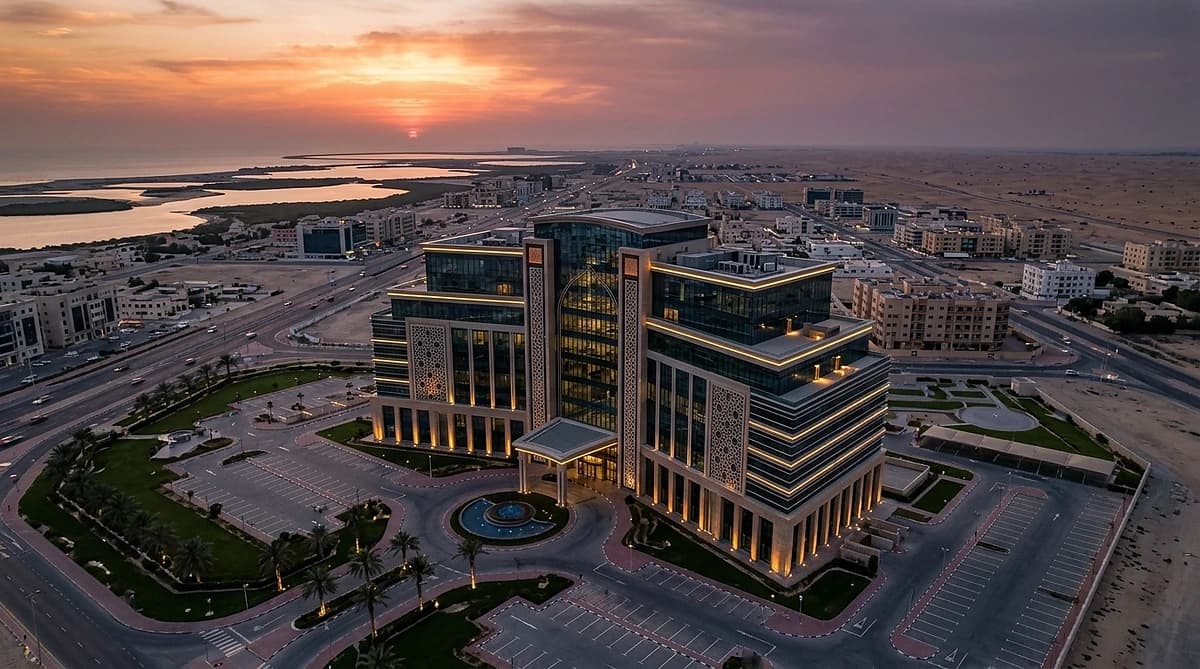
Lender quarterly results: interest income up 11% to AED 781m
Lender quarterly results show interest income rose 11% to AED 781 million in January-September 2026 amid a resilient balance sheet despite geopolitical uncertainty.
The lender said its balance sheet remains strong even as external risks linger, reporting total interest income of AED 781 million for January to September 2026, an 11 percent increase versus the comparable period. That single line figure anchors the quarterly narrative: revenue from lending operations is growing while management describes capital and liquidity as robust. Investors and market watchers focus on whether higher interest income reflects volume, pricing or both; the lender has not broken down those components publicly in the brief statement.
For property markets and developer finance, the headline matters because stronger net interest income usually supports lending capacity and loan covenant flexibility. Higher interest income can translate into more appetite for mortgages and construction financing, or it can reflect higher rates passed to borrowers. The lender’s note that the balance sheet is strong suggests provisioning and liquidity are currently sufficient, but credit quality details and provisioning levels were not disclosed in the brief release.
Quarterly results summary: what do the lender quarterly results mean?
Quarterly results summary: what do the lender quarterly results mean? Key Data
Interest income
AED 781m
Growth
11%
Period
Jan-Sep 2026
Balance sheet
Strong
The lender reported total interest income of AED 781 million for January-September 2026, an increase of 11 percent, and described its balance sheet as strong despite geopolitical uncertainty.
That 11 percent rise to AED 781m is the core takeaway: interest receipts from loans and deposits grew year on year in the first nine months of 2026, giving the lender more top-line revenue to cover costs and impairments. The statement emphasised balance sheet strength but did not provide a full breakdown of net profit, loan-loss provisions, or net interest margin, so the precise drivers of the AED 781m figure are not fully transparent. For markets, the immediate signal is healthier inorganic income from lending activity, which can support capital buffers and lending capacity.
The nuance is that headline interest income growth does not automatically equal improved asset quality. If higher interest income comes from wider lending spreads amid tighter credit, the lender could also be facing higher borrower stress. Conversely, if the increase is volume-driven from performing business lending, it points to recovery in loan demand. Analysts will want to see provisioning levels, non-performing loan ratios and liquidity coverage before concluding the balance sheet strength is sustainable.
- AED 781m interest income reported for Jan-Sep 2026
- 11% year-on-year growth in interest income
- Balance sheet described as strong by the lender
Is credit quality recovering and what does that mean for property finance?
Credit quality recovery cannot be confirmed from the headline alone, because the lender released only interest income (AED 781m) and a statement that the balance sheet remains strong without detailed provisioning or non-performing loan data.
Interest income rising by 11 percent to AED 781m suggests lending activity and/or pricing improved through January-September 2026, which can relieve pressure on margins and support provisioning if sustained. For property finance, that higher income can increase banks’ capacity to extend construction and mortgage loans, subject to internal limits and regulator rules. However, credit recovery is visible only when impairments fall, loan arrears decline and provisioning coverage is stable; the lender’s public note did not include those metrics, so lenders and developers should treat the headline as encouraging but incomplete.
If the improvement is pricing-led rather than asset-quality-led, borrowers could face higher rates that squeeze serviceability, slowing demand for new mortgages and development lending. Developers will watch loan approval terms and covenant flexibility, while investors should monitor published provision ratios and non-performing loan trends once the lender releases detailed quarterly figures.
| Metric | Value | Notes |
|---|---|---|
| Total interest income | Dh781m | January-September 2026 |
| Year-on-year change | 11% | Increase reported by the lender |
| Balance sheet | Strong | Described by the lender; no numeric ratios provided |
"An 11% rise in interest income to Dh781m points to lending momentum that can support developer finance, but the absence of provisioning and NPL details limits a full credit assessment."
, Binayah Research Team
How do the lender quarterly results affect investors and developers?
For investors and developers the immediate effect is positive signalling: AED 781m of interest income and an 11% increase indicate the lender’s core lending business is generating more revenue and the balance sheet remains described as strong.
Investors should read the AED 781m and 11% figures as a liquidity and earnings signal but not a full risk readout. Higher interest income can support dividend capacity and capital buffers if impairment trends are stable, which benefits bond and equity holders. Developers may see slightly improved access to credit if the lender converts stronger income into willingness to lend, particularly for performing assets. That said, access will depend on underwriting, collateral quality and covenant settings rather than headline income alone.
The risk for developers is that lending appetite tightens again if macro or geopolitical shocks worsen, or if higher income is driven by rate passthrough that raises borrowing costs. Investors should wait for the lender’s detailed quarterly disclosures especially provision coverage and non-performing loan ratios before adjusting allocations based on the AED 781m headline.
Key Insight
Investor note: AED 781m interest income and 11% growth are positive signals for lending capacity, but confirm with published provisioning and NPL ratios before assuming improved credit availability. Treat the headline as an indicator, not proof, of sustained balance sheet improvement.
- Interest income: AED 781m supports earnings
- Growth: 11% may ease lending capacity
- Developers: watch covenant and underwriting changes
What near-term risks should investors and lenders watch after these results?
Near-term risks include weaker asset quality, higher borrowing costs for clients, and geopolitical shocks that could reverse the positive headline despite AED 781m in interest income and an 11% rise.
The lender’s statement notes a strong balance sheet but lacks granular figures such as non-performing loan ratios, provisioning levels, net interest margin and liquidity ratios. Those are the next items to watch: if provisions rise materially in coming quarters, the AED 781m interest income may be partly offset by higher impairment charges. If, instead, provisions and NPLs fall or remain steady, the interest income growth becomes a clearer signal of recovery.
Investors and lenders should monitor upcoming regulatory filings and quarterly disclosures for specific ratios rather than relying solely on the headline. Also watch lending terms and rate passthrough: if higher interest income reflects higher rates passed to borrowers, demand could soften and stress could appear among marginal borrowers.
- Risk: rising provisions could offset AED 781m headline
- Risk: higher borrower rates may reduce demand
- Monitor: published NPL and coverage ratios
The lender’s Jan-Sep 2026 results headline shows interest income of AED 781 million, up 11%, and management describes the balance sheet as strong. That combination is a constructive signal for lending capacity, but the absence of detailed provisioning and NPL metrics means investors and developers should await full disclosures before changing risk positions.
Binayah Editorial
Property Market Analyst
Our editorial team researches Dubai's real estate market, tracking DLD data, developer launches, and investment trends to keep buyers and investors informed.
Ready to Invest in Dubai?
Speak with our analysts about the best opportunities in today's market, free consultation.