Famous Dubai Landmarks: 10 Icons, Origins and Stories
These 10 famous Dubai landmarks reveal the city’s dramatic shift from trading creek to global skyline in vivid architecture and public life.
Dubai’s landmarks tell two overlapping stories: a pre-oil urban fabric shaped around trade and community, and a modern phase driven by engineered islands, record-breaking towers and large public venues. The list of 10 landmarks mixes both eras so you can see how traditional souks and mosques sit alongside the Burj Khalifa and Palm Jumeirah.
Readers will get concise origin notes, practical visiting facts and cultural context across six focused sections that explain why each site matters to residents, visitors and anyone studying Dubai’s rapid transformation.
What are these 10 famous Dubai landmarks and where did they originate?
What are these 10 famous Dubai landmarks and where did they originate? Key Data
Total landmarks
10
Article sections
6
Origin span
Pearling to modern development
Named examples
Burj Khalifa, Palm Jumeirah
These 10 famous Dubai landmarks come from two clear origins: the trading estuary culture of the creek and the engineered ambitions of modern development. The article groups them to show contrasts between traditional places of trade and faith and staged modern attractions.
The landmarks include Dubai Creek, Burj Khalifa, Palm Jumeirah, Dubai Mall and Jumeirah Mosque among the ten featured sites. The number 10 frames the guide so readers can quickly compare old and new: five named landmarks appear in the section headings and five more round out the full list of 10. That structure helps beginners and repeat visitors navigate the city’s layers.
Understanding the origin of each landmark helps with practical choices: whether to plan a mosque visit for cultural insight, a creek abra ride to see older architecture or a Palm Jumeirah walk to experience engineered coastline. Each choice carries different crowds, access and sensory experiences that matter when you schedule a visit.
- 10 curated landmarks blending heritage and modernity
- Six sections to structure origins, context and visiting notes
- Five headline landmarks are discussed in dedicated sections
- Useful for first-time visitors and urban-history readers
Why is Dubai Creek considered the city that began as a trading estuary?
Why is Dubai Creek considered the city that began as a trading estuary? Key Data
Total landmarks
10
Named here
Dubai Creek
Historic role
Trading estuary
Cultural value
Urban origin point
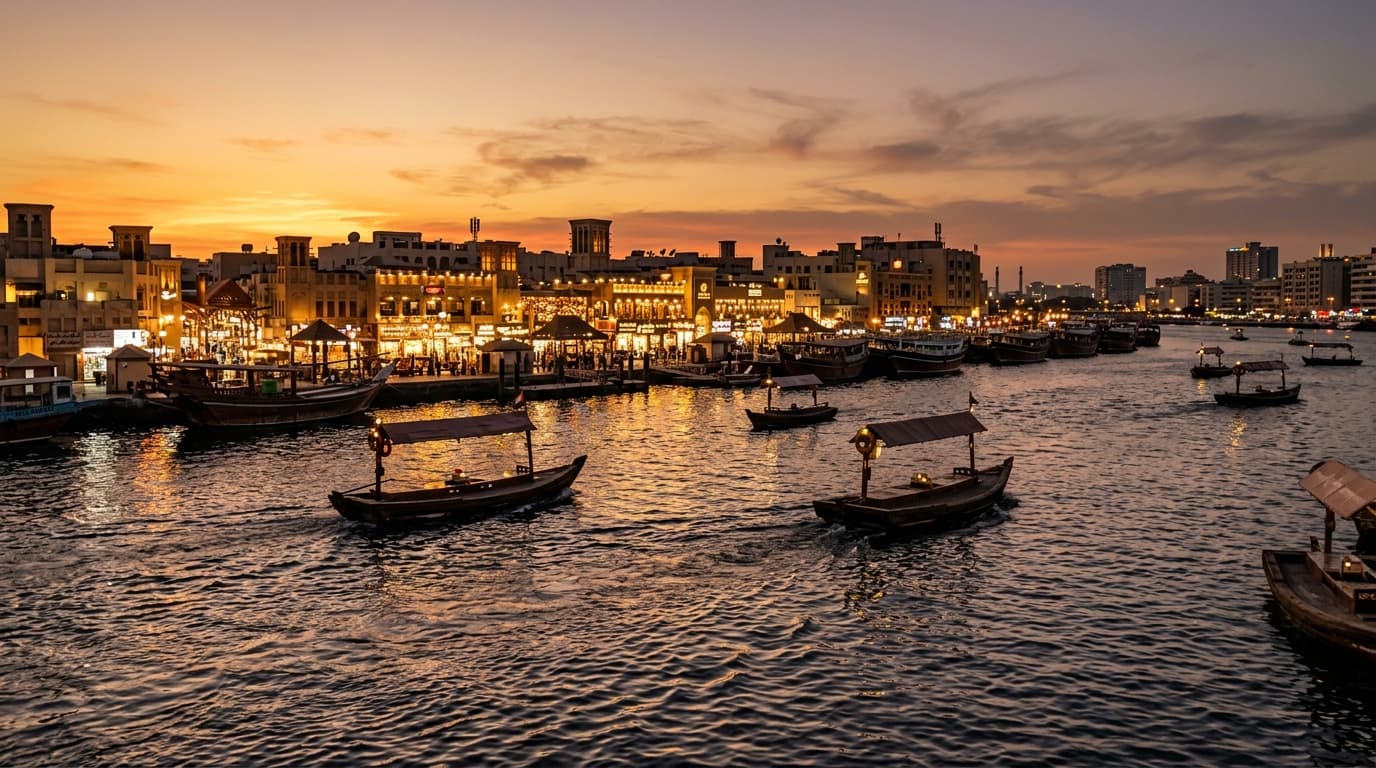
Dubai Creek is the historic trading estuary where the city’s maritime and pearling trade concentrated and from which modern Dubai expanded. Its role as a natural sheltered harbour made it a focal point for boats, merchants and settlement during the city’s early period.
The creek’s importance is cultural and practical: it anchored marketplaces, served as a transport axis and provided access for dhow trade that linked Dubai to the Gulf and the Indian subcontinent. The creek remains the common origin for many of the other landmarks on the list of 10 famous Dubai landmarks because it was the original urban spine before engineered expansions such as Palm Jumeirah.
Today the creek neighborhood is where you can still read older layers of the city in built fabric and street life. For visitors, creek-side areas offer calmer scenes than the ultra-modern districts, and the contrast highlights why Dubai’s landmarks span from traditional to purpose-built modern attractions.
| Landmark | Type | Location |
|---|---|---|
| Dubai Creek | Historic estuary | Dubai |
| Burj Khalifa | Skyscraper | Dubai |
| Palm Jumeirah | Engineered island | Dubai |
| Dubai Mall | Retail and leisure complex | Dubai |
| Jumeirah Mosque | Religious and cultural site | Dubai |
| Remaining landmarks | Various types | Across Dubai (5 remaining) |
"Dubai Creek is where the city’s maritime trade created a living urban core that modern developments later expanded around."
, Binayah Research Team
Key Insight
If you want quieter, historical scenes, plan creek visits earlier in the day when markets and traditional boats are most active; evenings are busier near newly developed waterfronts.
- Creek anchored early urban growth
- Five headline landmarks trace back to this maritime culture
- Useful start point for heritage walking routes
What makes Burj Khalifa a vertical emblem of ambition among Dubai landmarks?
What makes Burj Khalifa a vertical emblem of ambition among Dubai landmarks? Key Data
Total landmarks
10
Featured landmark
Burj Khalifa
Role
Modern skyline emblem
Visitor note
High footfall areas
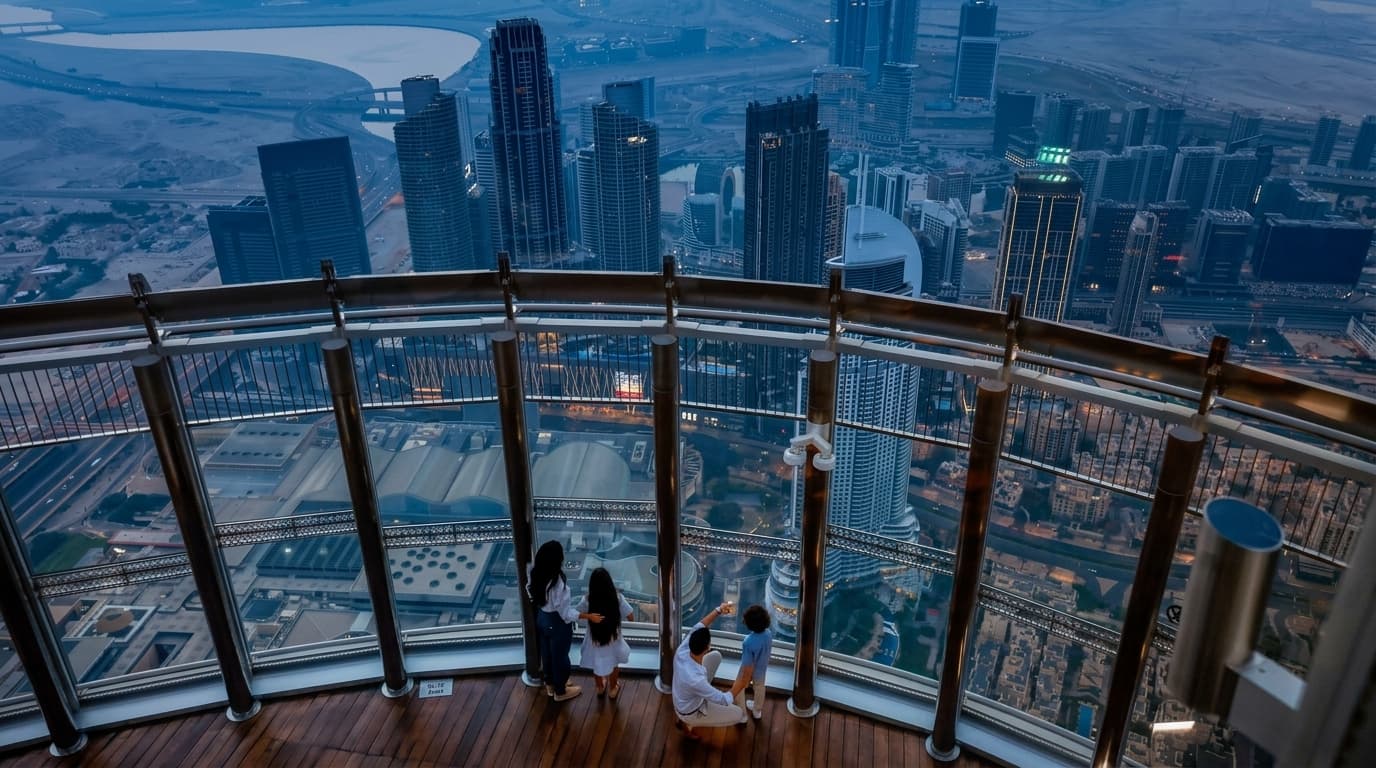
Burj Khalifa is presented as the vertical emblem of ambition that anchored Dubai’s modern skyline and symbolised a new development era. Its prominence in the list of 10 famous Dubai landmarks is cultural: it signifies the shift from horizontal trade nodes to vertical urban statements.
As a focal point the Burj Khalifa reshaped nearby public spaces and visitor patterns, turning Downtown Dubai into one of the city’s busiest nodes. The tower’s symbolic role means it features heavily in narratives about Dubai’s rapid transformation, and appears prominently across guides that contrast old and new landmarks. For travellers this centrality affects timing, crowding and the types of experiences you can expect around the site.
The risk for visitors is planning without accounting for peak times: the Burj Khalifa area draws large crowds for views and events. For those studying urban change, the tower offers a clear case of how a single landmark can create new public space, commercial gravity and a global image within the list of 10 famous Dubai landmarks.
Key Insight
Expect heavy foot traffic around Burj Khalifa during evenings and major events; consider early morning visits for clearer views and shorter queues.
- Symbolic centre of modern Dubai
- Drives high visitor numbers in Downtown Dubai
- Key contrast to creek-era landmarks
How was Palm Jumeirah engineered and why is it an iconic Dubai landmark?
How was Palm Jumeirah engineered and why is it an iconic Dubai landmark? Key Data
Total landmarks
10
Featured landmark
Palm Jumeirah
Type
Engineered island
Visitor focus
Waterfront leisure
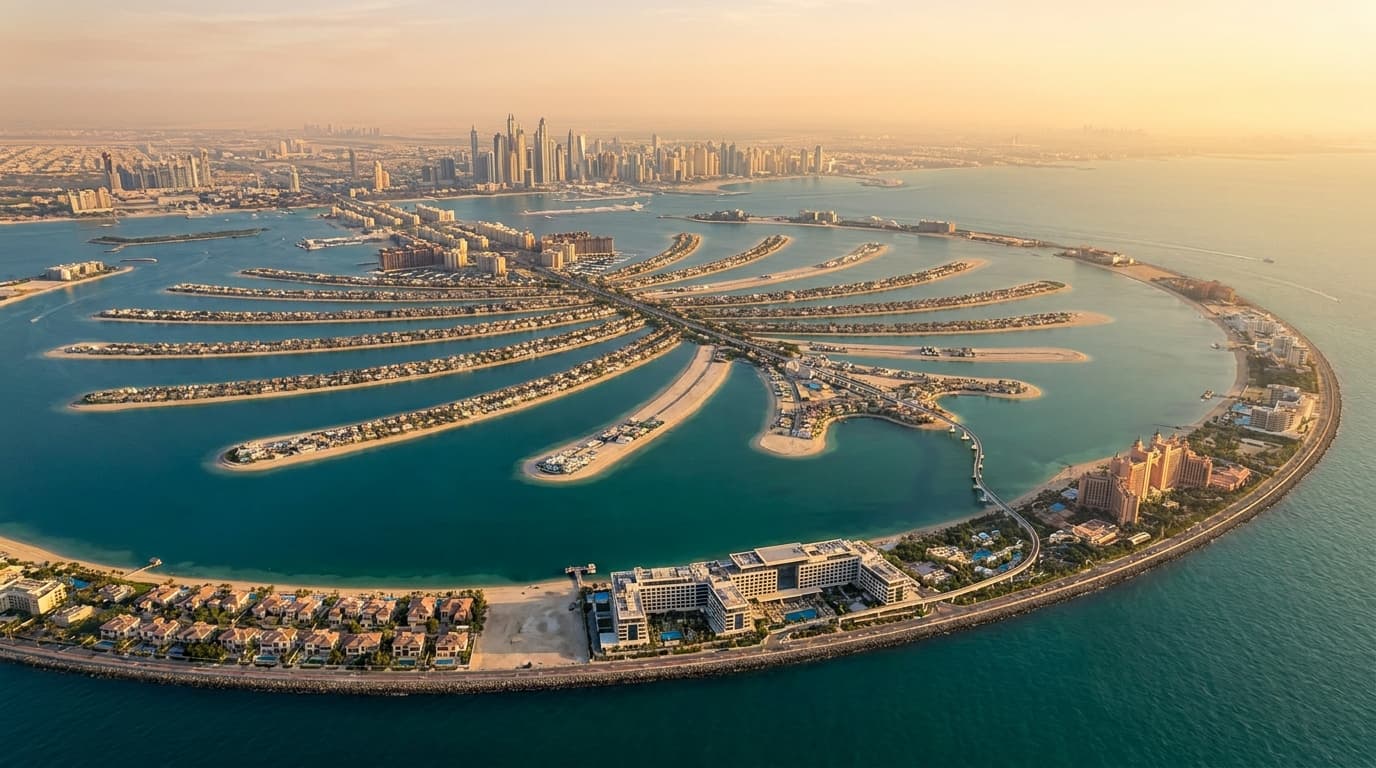
Palm Jumeirah was engineered as an artificial island project that reinvented Dubai’s coastline and became a global symbol of man-made coastal development. Its appearance on the list of 10 famous Dubai landmarks highlights how engineered landforms became part of the city’s identity.
The Palm changed the geography of access, leisure and luxury residence by creating new waterfront promenades and destination resorts. As one of the ten landmarks, Palm Jumeirah represents the era of large-scale, engineered developments that followed earlier trading origins. For visitors and residents the Palm offers distinct experiences from creek-side areas: engineered beaches, shaped vistas and planned leisure infrastructure.
From an urban perspective the Palm introduces trade-offs: it expanded high-end tourism and residential capacity while creating maintenance and access complexity that differs from older, walkable districts. The island’s presence in the top ten emphasises Dubai’s willingness to transform coastline into designed public and private environments.
Key Insight
If you prefer quieter seaside strolls, visit Palm Jumeirah boardwalks outside weekend peak hours when resort access is less crowded.
- Represents engineered coastal expansion
- Distinct visitor experiences from historic creek areas
- Key example of Dubai’s development ambition
Why is Dubai Mall described as more than shopping and a social stage?
Why is Dubai Mall described as more than shopping and a social stage? Key Data
Total landmarks
10
Featured landmark
Dubai Mall
Role
Multi-use public venue
Visitor tip
Plan multi-hour visits
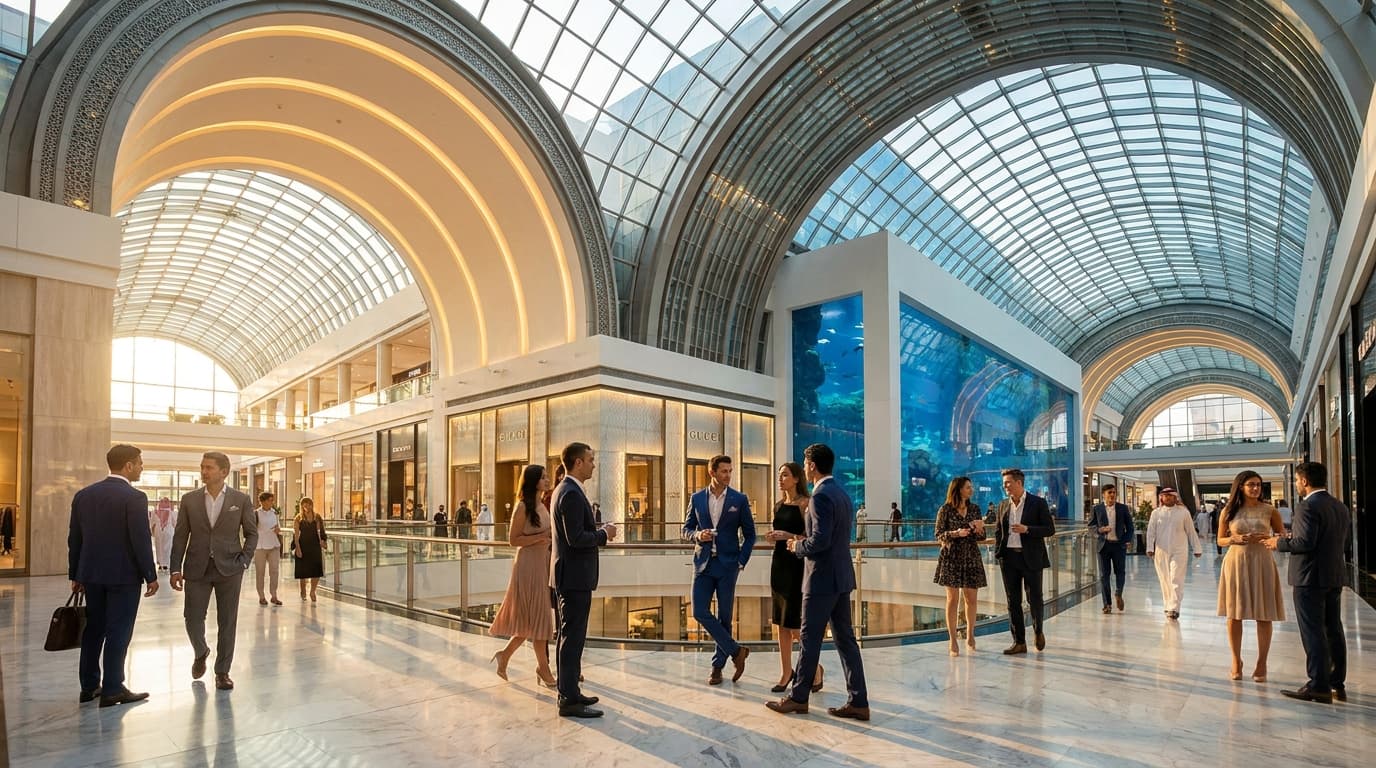
Dubai Mall functions as a social stage where retail, leisure and public spectacle coexist, making it more than a conventional mall and a central entry in the list of 10 famous Dubai landmarks. Its design and programming turn simple shopping trips into full-day urban experiences.
The mall’s role on the list is to illustrate how modern landmarks incorporate multiple functions: retail, aquarium exhibits, large-scale events and public viewing areas all sit under one roof. That mix attracts diverse audiences and shapes how Downtown and its surrounding landmarks operate. For visitors this means Dubai Mall is often part of a combined itinerary that also includes nearby Burj Khalifa and public promenades.
Planners and visitors should note that large multi-use venues require time management: the mall is best experienced with a clear plan because its breadth of offerings can easily consume a half-day or more when paired with adjacent attractions from the ten-landmark list.
Key Insight
Block out at least a half-day if you want to combine Dubai Mall attractions with a Burj Khalifa visit to avoid rushing either experience.
- Functions as retail, leisure and public stage
- Often paired with Burj Khalifa for full-day itineraries
- Shows modern landmark multi-functionality
What makes Jumeirah Mosque a symbol of openness within Dubai landmarks?
What makes Jumeirah Mosque a symbol of openness within Dubai landmarks? Key Data
Total landmarks
10
Featured landmark
Jumeirah Mosque
Role
Cultural and religious site
Visitor note
Guided visits available
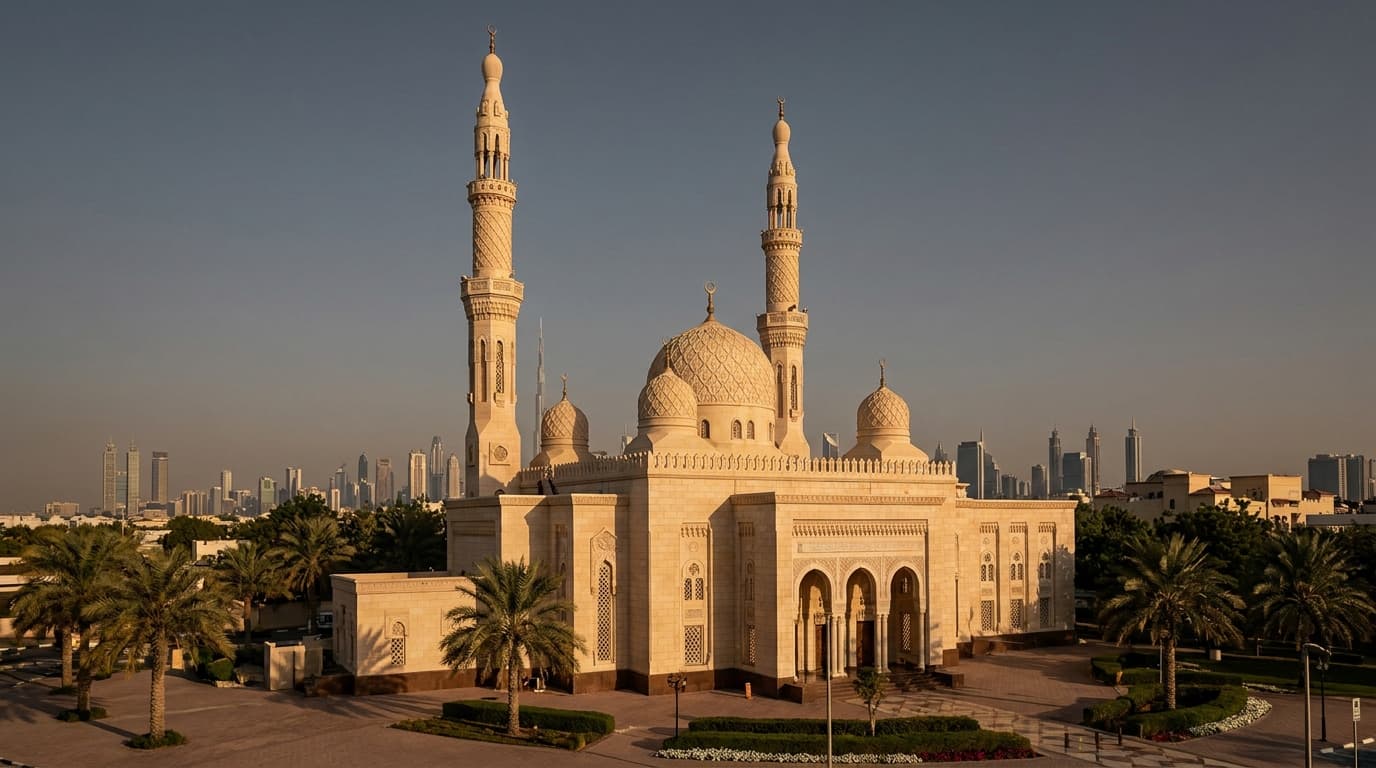
Jumeirah Mosque stands out among the ten landmarks as a built expression of religious tradition and a site often used for cultural exchange, which is why it is framed as a symbol of openness. Its inclusion highlights the civic and cultural side of Dubai’s public places.
The mosque is frequently referenced in guides because it allows non-Muslim visitors to enter on guided tours at set times, providing direct cultural context compared to more touristic landmarks. For the list of 10 famous Dubai landmarks, Jumeirah Mosque represents how heritage sites remain active parts of city life rather than static monuments.
For visitors the key nuance is respect and timing: mosque visits involve dress codes and set visiting hours, so planning matters. As one of the ten landmarks in this guide, Jumeirah Mosque connects the city’s public identity to living traditions that predate the modern skyline.
Key Insight
Check guided visit times and dress-code guidance before planning a mosque visit to ensure respectful and smooth access.
- Represents religious and cultural continuity
- Frequently available for guided cultural visits
- Balances the list of modern and traditional landmarks
The guide organises these 10 famous Dubai landmarks into six focused sections that trace origins from Dubai Creek to engineered icons such as Burj Khalifa and Palm Jumeirah. The key finding is clear: the city’s landmarks are best understood as a paired narrative of traditional maritime roots and deliberate modern design that visitors can experience across heritage and contemporary sites.
Binayah Editorial
Property Market Analyst
Our editorial team researches Dubai's real estate market, tracking DLD data, developer launches, and investment trends to keep buyers and investors informed.
Ready to Invest in Dubai?
Speak with our analysts about the best opportunities in today's market, free consultation.