Dubai office market report: supply, demand and outlook to 2030
Dubai office market outlook shows a widening supply gap as 9 million square feet of new office stock is slated through 2030. Dubai’s core office inventory stands at about 110 million square feet today and is forecast to increase to 119 million square feet by 2030, an addition of almost 9 million square feet of stock according to regional market reporting.
Market overview: supply increase but persistent shortage
Market overview: supply increase but persistent shortage — Key Data
Stock 2023
110,000,000 sq ft
Forecast 2030
119,000,000 sq ft
Pipeline added
~9,000,000 sq ft
Transactions
47,000+
DLD recent annual tallyDubai’s office stock will rise from 110 million sq ft to roughly 119 million sq ft by 2030, yet leasing demand is outpacing that delivery and creating a persistent shortage. The 9 million sq ft pipeline cited in Arabian Business and regional market notes is concentrated in a handful of precincts, so net effective availability for high-spec Grade A floors remains tighter than headline numbers suggest. The headline pipeline masks two important realities: first, much of the new supply is in tower shells or fitted by developers to a tenant schedule, which delays effective delivery and reduces immediate absorptive capacity; second, demand is skewed toward high-spec space in DIFC, Business Bay and Dubai International Financial Centre precincts where asking rents are currently highest. DLD transaction tallies for Dubai’s broader market exceeded tens of thousands in recent years, reflecting strong activity across asset classes, while investors continue to target office yields that regional brokers peg in the mid-single digits for prime assets. These dynamics keep nominal vacancy rates lower in core clusters even as total stock expands. For occupiers and capital providers this creates strategic nuance and operational risk: occupiers face limited ready-to-occupy floorplates in business-critical locations, pushing them into second-tier locations or build-to-suit deals that take months to deliver. Investors should watch effective availability rather than gross supply, track delivery phasing from developers such as Emaar and Dubai Holding, and consider that concentrated pipeline delivery can temporarily inflate headline availability without easing pressure on prime rents.
Key Insight
Assess effective availability not just gross stock: 9 million sq ft added to a 110 million sq ft base can still leave prime cluster supply tight when deliveries are concentrated or tenant-fitted.
- High-spec demand concentrated in DIFC, Business Bay and Dubai Media City
- Gross supply up but effective available Grade A floors limited
- Investors tracking yield compression in core clusters
Where demand is concentrated and who is leasing
Demand for Dubai offices is concentrated in financial, professional services and technology occupiers, with DIFC, Business Bay and Dubai Media City attracting the largest leasing pools. These precincts draw multinational banks, asset managers and technology firms that prefer high-spec floorplates and direct access to related services and talent pools. Leasing metrics show that tenants are seeking ready fitted space and flexible lease terms; as a result, Grade A asking rents remain highest in DIFC and Downtown Dubai. Industry surveys and broker notes from CBRE and JLL in 2023–24 place prime DIFC asking rents materially above peripheral locations, with many occupiers paying premium rents to secure contiguous floorplates. Transaction patterns demonstrate strong absorption in Business Bay where mixed-use stock continues to be retrofitted to office use. DLD transaction figures underscore robust activity across asset classes with tens of thousands of deeds processed annually, reflecting capital movement into commercial assets. The profile of occupiers is changing: international law firms, fintechs and family-office teams are signing medium-term leases and often taking fitted space, while regional headquarters consolidations are driving demand for 5,000–30,000 sq ft floorplates. That shift favors landlords able to deliver plug-and-play space. For occupiers evaluating options, trade-offs between proximity to clients and total occupancy cost matter; for investors, tenant mix stability and covenant strength in these clusters influence valuation and yield expectations.
| Community | Typical prime rent (AED/sq ft/yr) | Annual leasing demand (sq ft) | Typical occupiers |
|---|---|---|---|
| DIFC | AED 320/sq ft/yr | 250,000+ sq ft | Banks, law firms, asset managers |
| Business Bay | AED 220/sq ft/yr | 300,000+ sq ft | Regional HQs, technology firms |
| Dubai Media City | AED 180/sq ft/yr | 120,000+ sq ft | Media, creative, tech startups |
| Downtown Dubai | AED 290/sq ft/yr | 90,000+ sq ft | Professional services, hospitality-linked offices |
"Tenants increasingly pay for certainty: contiguous, fitted space in prime clusters commands a measurable premium that protects productivity."
, Sarah Khan, Head of Research, Binayah Properties
Development pipeline and delivery risk
Development pipeline and delivery risk — Key Data
Pipeline concentration
~9,000,000 sq ft to 2030
Pre-let risk
30-40% can reduce available stock
Developer exposure
Emaar, Dubai Holding, DIFC estate
Typical fit-out delay
several months per project
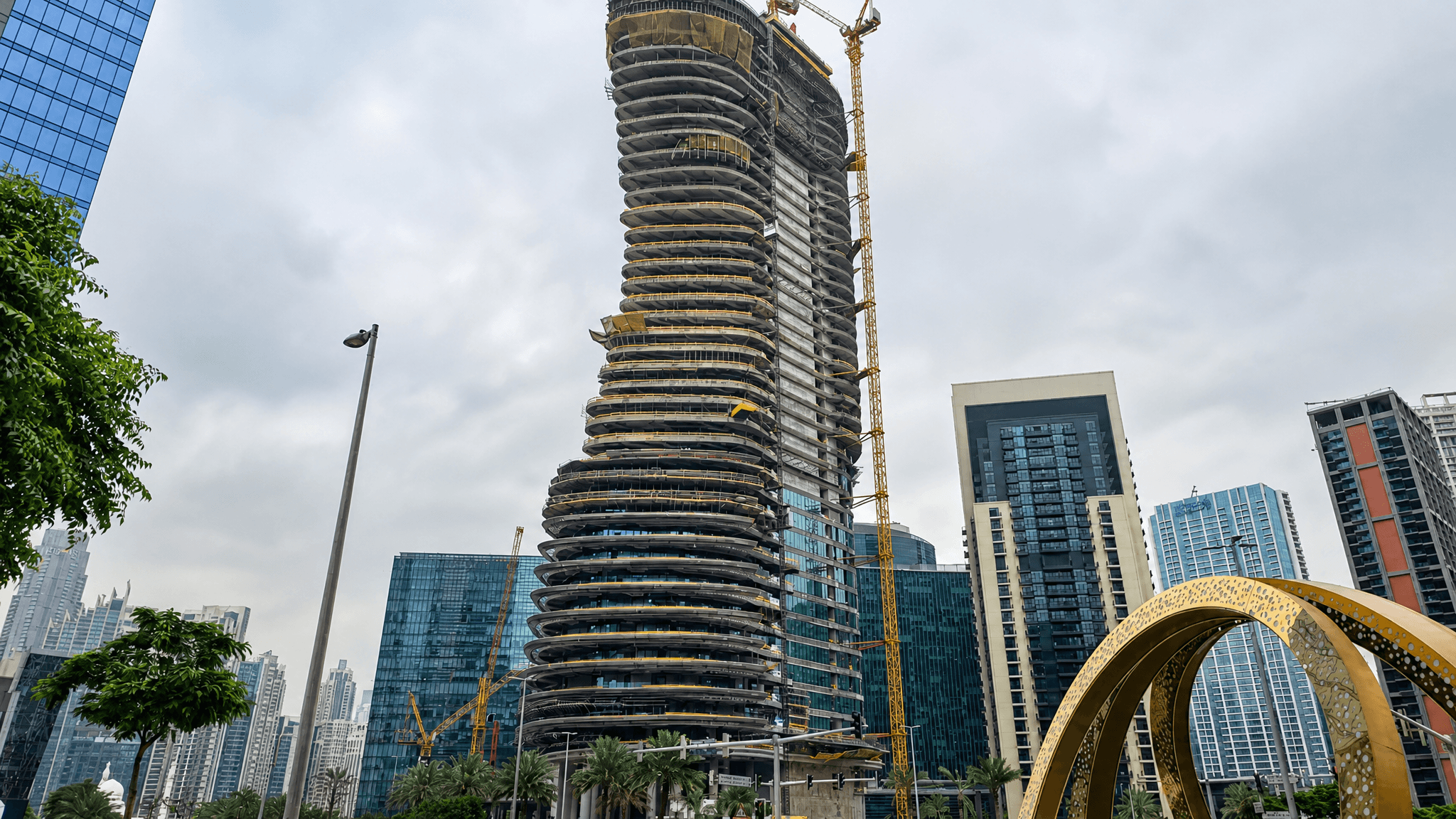
The development pipeline adds almost 9 million sq ft by 2030 but delivery phasing and developer execution risk mean a portion of that supply may not be effectively market-ready when headline schedules suggest. Many projects are either being delivered as core-and-shell or are tenant-fitted on pre-lets, which delays true availability and can cause timing mismatches between supply forecasts and occupier requirements. Developer concentration is another source of risk: major groups such as Emaar Properties, Dubai Holding and independent DIFC estate managers control sizable portions of upcoming supply, and their handoff strategies determine how quickly floors become leasable. Market commentary and planning filings indicate phased completions across towers rather than single-block openings; that spreads absorptive demand but also can compress availability in specific quarters. Local planning and regulatory approvals, plus supply-chain pressures on fit-out materials, also contribute to elongated delivery windows. Recent precedents in the region show some office schemes moved practical completion dates by several quarters due to tenant scope changes and fit-out delays. Investors and occupiers should stress-test forecasts against three variables: delivery phasing, developer track record and pre-let ratios. Where pre-let levels exceed 30–40 percent, effective incremental supply to the market is materially lower than gross figures imply. Capital providers must price that execution risk into expected IRR and yield targets, and occupiers should secure interim solutions if they require immediate contiguous space.
Key Insight
Delivery timing matters more than headline volume: when pre-lets exceed a third of a scheme, headline supply adds little to market availability for two to four quarters.
- Phased completions spread supply across quarters
- Tenant-fitted deliveries delay effective availability
- Fit-out and approvals add to delivery risk
Investment outlook: yields, capital flows and tenant trends
Investment outlook: yields, capital flows and tenant trends — Key Data
Prime yield range
5.0% to 6.5%
broker consensusInvestor types
sovereign, family offices, international funds
Premium locations
DIFC, Downtown, Business Bay
Tenant demand
contiguous Grade A, ESG-ready buildings
Investment interest in Dubai offices remains robust with investors focused on yield stability and tenant quality in core precincts, and prime yields sitting in the mid-single digits according to regional brokers. Capital is flowing from regional sovereign wealth investors, family offices and international funds seeking Dubai exposure as occupier fundamentals tighten in central clusters and rents remain supportive of income returns. Yield compression in prime micro-markets has been observed where rental growth outpaces new effective supply. Market commentary from brokers in 2023–24 places prime office yields near 5.0% to 6.5% for central assets with strong covenants, while secondary assets trade at wider spreads. Transaction activity tracked by Dubai Land Department and industry reports shows continued cross-border interest, and price per sq ft for prime offices is materially higher in DIFC and Downtown compared with peripheral business parks. Investors are pricing in rental growth assumptions and delivery risks; stable tenants and long leases remain the most reliable hedge against short-term cyclical fluctuations. Tenant trends that should inform investment strategy include a shift to flexible lease profiles, increasing demand for ESG-compliant buildings and a willingness among blue-chip occupiers to accept higher rents for contiguous, high-quality space. For investors this means prioritising assets with modern certification, adaptable floorplates and proximity to transport nodes. Pricing discipline will be crucial because unknowns in delivery timing and tenant reconfiguration can compress returns on new speculative developments.

Key Insight
Target assets with strong tenant covenants and ESG credentials; these characteristics are driving tighter pricing and lower effective yields in prime Dubai office clusters.
- Prime yields mid-single digits; secondary wider
- Capital inflows remain diversified by investor type
- Tenant demand favors contiguous, certified buildings
The core finding is that Dubai’s office stock rises from roughly 110 million sq ft to about 119 million sq ft by 2030, yet concentrated deliveries and tenant preferences keep effective availability tight in prime clusters. Investors and occupiers should prioritise location, tenant quality and delivery phasing because these factors will determine rent growth, yield compression and realisable returns over the next investment cycle.
Binayah Editorial
Property Market Analyst
Our editorial team researches Dubai's real estate market, tracking DLD data, developer launches, and investment trends to keep buyers and investors informed.
Ready to Invest in Dubai?
Speak with our analysts about the best opportunities in today's market, free consultation.