
AD Ports Group 2025 results: $5.65bn revenue, $564m profit
AD Ports Group 2025 results show $5.65bn revenue and $564m profit, signaling stronger global trade, rapid expansion and higher port volumes affecting regional markets.
AD Ports Group reported a record $5.65 billion in revenue and a $564 million profit for 2025, with profits up 16 percent year on year. Those headline figures reflect wider global trade growth and the group’s expansion in new geographies, according to the published summary that attracted investor attention across the Gulf.
For property markets, ports matter because they drive goods flows, industrial demand and logistics land use. Higher port revenues and rising profitability can translate into more leased warehousing, stronger industrial values and incremental demand for residential housing near major logistics hubs, especially in Dubai and northern emirates.
What do AD Ports Group's 2025 figures show?
What do AD Ports Group's 2025 figures show? Key Data
Revenue
$5.65bn
Profit
$564m
Profit change
16%
Reporting year
2025
AD Ports Group's 2025 figures show record revenue of $5.65bn and a net profit of $564m, with profits up 16% year on year. These are the core, verifiable outcomes reported for the full year and they mark a strong operating performance driven by trade volumes and geographic expansion.
The $5.65bn revenue figure and $564m profit reflect both higher throughput and the impact of new international terminals and logistics contracts that AD Ports has announced. The firm explicitly reported a 16% rise in profit, which is a useful measure of margin improvement and operating leverage even if revenue growth rates were not disclosed as a percent. For investors, the profit rise shows capacity to fund reinvestment, dividends and further expansion without immediate reliance on external capital.
The risk to watch is that port profits can be cyclical with global trade patterns. A strong 2025 can be followed by slower years if trade growth softens or freight rates decline. Investors and market-watchers should therefore treat the $564m profit and $5.65bn revenue as a current-strength indicator, while tracking cargo volumes, terminal contracts and cross-border trade trends for confirmation.
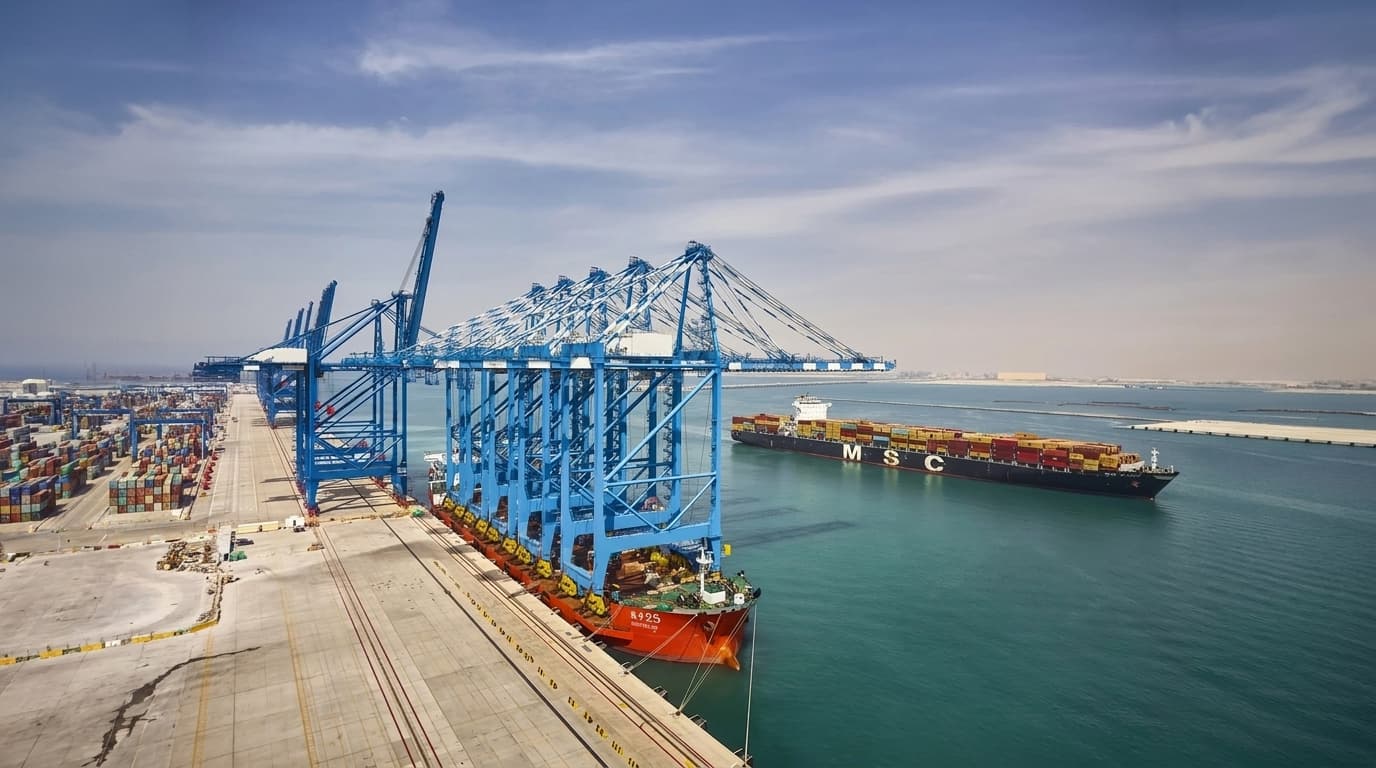
Why do investors watch port operator results for property markets?
Investors watch port operator results because port revenue and profitability signal demand for logistics, industrial land and trade-related services that drive property demand. Strong port performance typically precedes higher leasing activity in warehouses and industrial estates, and that linkage is why AD Ports' $5.65bn revenue and $564m profit matter to property investors.
Ports are anchor pieces of infrastructure. When a port operator reports higher revenue and profit, it often means increased container volumes, more shipping calls and growth in value-added logistics services. That in turn raises demand for warehouses, last-mile logistics space and specialised industrial buildings near ports. AD Ports’ 2025 profit rise of 16% suggests stronger cash flow to invest in terminals and logistics hubs, which supports more leasing activity and can push industrial land values in adjacent emirates.
The main nuance is timing and location. Port-led demand benefits industrial zones closest to terminals faster than residential areas. Residential impacts are secondary and longer term, driven by employment growth in logistics and supporting services. Investors should therefore map which communities sit within practical commuting or transport corridors from AD Ports’ key terminals before making property decisions.

| Metric | Value | Relevance |
|---|---|---|
| Revenue | $5.65bn | Indicator of trade volumes and terminal activity |
| Profit | $564m | Signals cashflow for terminal and logistics investment |
| Profit change | 16% | Year-on-year margin improvement affecting reinvestment capacity |
"Port results are an early signal for logistics demand; when revenue and profit rise, expect stronger industrial leasing rather than immediate residential price moves."
, Binayah Research Team
How will AD Ports Group's 2025 results affect residential and industrial outlooks?
AD Ports Group’s strong 2025 performance is more immediately positive for industrial property than for residential markets. The $5.65bn revenue and $564m profit, with a 16% profit rise, point to stronger logistics demand and possible land-use pressure around terminals, which supports industrial rents and valuations first.
For industrial landlords, higher port volumes typically translate into greater occupancy and tighter vacancy in warehouses, distribution centres and cold-chain units. AD Ports’ reported profitability improves the operator’s ability to expand terminals and add logistics services, which can create a pipeline of leased space and increase demand for nearby industrial plots. Residential effects follow through employment growth, new business activity and higher local spending, but those impacts take longer to materialise and are location-specific.
A risk for residential investors is assuming a direct, immediate correlation between port profits and home prices. Residential markets depend on broader employment, migration and mortgage/credit conditions. The practical implication is that industrial investors should prioritise sites within direct transport corridors to AD Ports terminals, while residential buyers should look for neighbourhoods with demonstrable job growth tied to logistics and trade expansion.
What are practical takeaways for Dubai property buyers and investors from AD Ports Group 2025 results?
What are practical takeaways for Dubai property buyers and investors from AD Ports Group 2025 results? Key Data
Focus
industrial near terminals
Short-term impact
industrial rents
Medium-term impact
residential job-driven demand
Profit rise
16%
Practical takeaways are to prioritise industrial exposure near key terminals and to treat residential opportunities as a medium-term play. AD Ports’ $5.65bn revenue and $564m profit, with profits up 16%, strengthen the case for logistics-led investment strategies that capture near-term demand for leased space and yard land.
Buyers should map AD Ports’ terminal locations and planned expansions, then target industrial assets within the most direct freight corridors. For residential buyers, focus on neighbourhoods with emerging employment hubs tied to logistics and supply chains rather than expecting immediate price jumps. The 16% profit increase signals capacity to reinvest, which can create multi-year tailwinds for industrial land values.
Investor warnings: do not overpay on expectation alone, and monitor global trade indicators and freight rates. A concentrated bet on a single logistics node carries execution and market risk, so diversify across locations and asset types where possible to capture upside from AD Ports’ growth while limiting exposure to cyclical trade shifts.

Key Insight
Map logistics corridors and prioritise sites within direct transport routes to AD Ports terminals; expect industrial rent improvements before residential price movements.
- Target warehouses and distribution centres near AD Ports terminals
- Assess tenant mix for cargo-related industries
- Evaluate residential areas only after clear employment growth
AD Ports Group’s 2025 results $5.65bn revenue and $564m profit, with a 16% profit increase point to stronger trade-led demand that benefits industrial property first. For Dubai markets, the practical implication is clearer demand signals for logistics and warehouse space, while residential effects are secondary and require sustained job growth to materialise.
Binayah Editorial
Property Market Analyst
Our editorial team researches Dubai's real estate market, tracking DLD data, developer launches, and investment trends to keep buyers and investors informed.
Ready to Invest in Dubai?
Speak with our analysts about the best opportunities in today's market, free consultation.