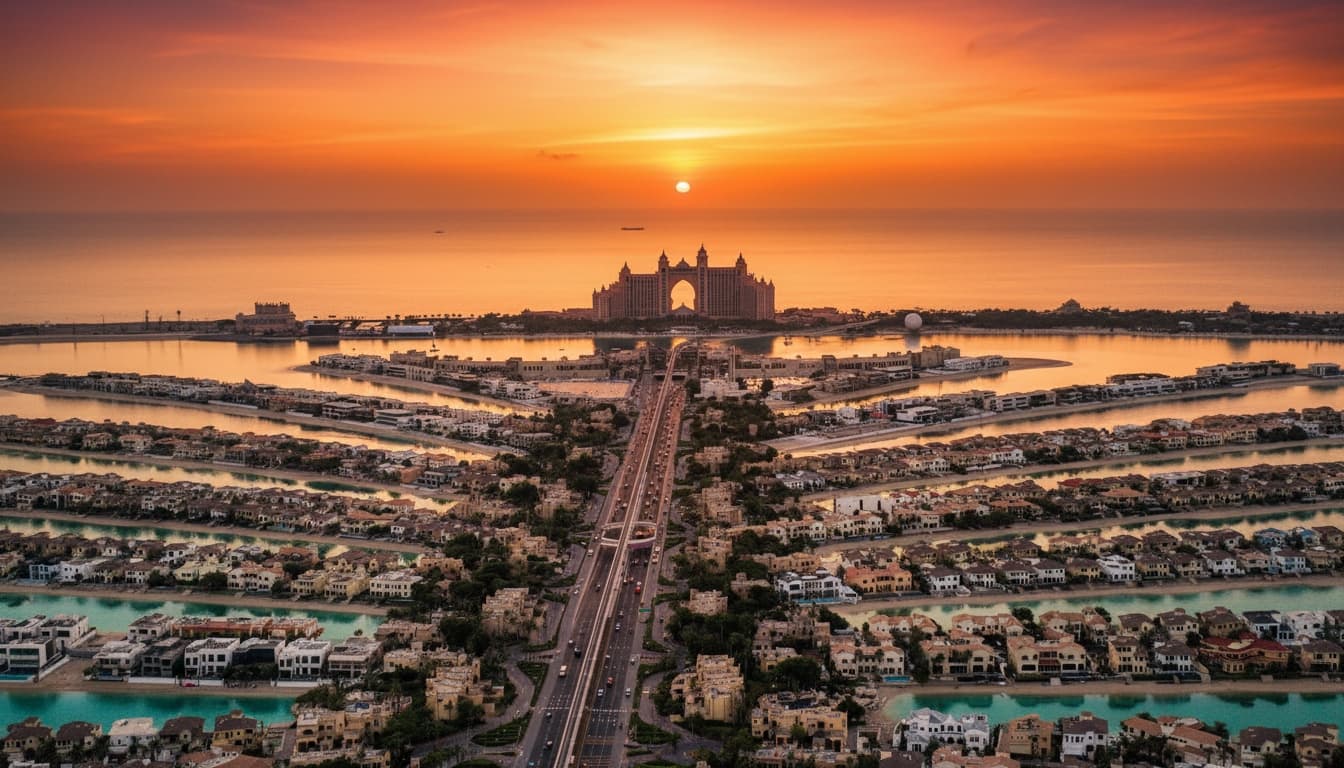
The Two Palms at a Glance
Nakheel now has two palm-shaped islands off the Dubai coast, and buyers are increasingly weighing one against the other. Palm Jumeirah is the original — an early-2000s icon that is fully built, densely populated and globally famous. Palm Jebel Ali is the far larger sequel, relaunched in 2023 after years on hold, and is roughly twice the size of Palm Jumeirah. It is designed to add on the order of 13.4 km of new coastline across 7 fronds, with the first villa handovers expected from around 2027.
In short, you are choosing between a mature, liquid, ready community and a large-scale off-plan frontier that is still taking shape. Both are freehold and both qualify buyers for Dubai's Golden Visa. Both also carry the Nakheel name and the same palm-shaped, waterfront DNA — but they sit at opposite ends of the property lifecycle, which is exactly why the comparison is worth making carefully before you commit capital.
| Palm Jebel Ali | Palm Jumeirah | |
|---|---|---|
| Size | ~2x Palm Jumeirah; 7 fronds; ~13.4 km new coastline | The original; ~4 km trunk, established |
| Status | Off-plan; first handovers ~2027 onward | Fully built and mature |
| Location | Far south-west coast, near Al Maktoum airport, Expo City & Dubai South | Central New Dubai, near Dubai Marina |
| Entry price | Beach Villas / Coral Collection villas from ~AED 18M | Apartments from ~AED 1.5–2M; villas ~AED 15M–100M+ |
| Product | Villa-led so far (~5–7 bed) | Apartments, villas, hotels, retail |
| Best for | Long-horizon capital growth, early-mover buyers | Ready lifestyle, rental income, resale liquidity |
Location & Lifestyle
Location is where these two islands diverge most. Palm Jumeirah sits in the heart of New Dubai, minutes from Dubai Marina, JBR and the business districts, with Atlantis, beach clubs, hotels and a full retail scene already operating. You can move in and plug straight into a mature lifestyle, complete with schools, clinics and restaurants a short drive away.
Palm Jebel Ali lies much further south-west, closer to Al Maktoum International Airport, Expo City and the growing Dubai South corridor. That positions it near the city's projected future centre of gravity, but today the surrounding infrastructure is still developing. Early residents will be buying into a vision rather than a finished neighbourhood — spacious, waterfront and lower-density by design, but without the ready amenities that define Palm Jumeirah right now.
The bet on Palm Jebel Ali is essentially a bet on south-west Dubai. As Al Maktoum airport expands and Dubai South builds out over the coming years, the island's location could shift from "far out" to "well connected." For a family that wants beach frontage and space immediately, though, Palm Jumeirah's central position is hard to match.
Price & Entry Point
Palm Jumeirah offers a far wider range of entry points because of its product mix. Apartments can start from roughly AED 1.5–2M, giving buyers a way onto the island without villa-level budgets, while signature villas span from around AED 15M to well over AED 100M.
Palm Jebel Ali, so far, is villa-led. The initial Beach Villas and Coral Collection homes — typically 5 to 7 bedrooms — have launched from around AED 18M. There is currently no low-entry apartment tier, so the island skews toward high-net-worth buyers. If your budget sits below the villa threshold, Palm Jumeirah is realistically the only one of the two you can enter today.
Ready Now vs Off-Plan
This is the core trade-off. Palm Jumeirah is a ready, secondary-market proposition: you can view the actual home, take handover immediately and rely on years of transaction history to gauge value. Its resale market is highly liquid, which matters if you may want to exit.
Palm Jebel Ali is off-plan with a long horizon. Buyers commit on payment plans against a handover that begins around 2027 and rolls out over subsequent phases. That introduces the usual off-plan considerations — construction timelines, phased delivery and less established pricing — in exchange for early-mover positioning on a landmark project. Your capital is committed for years before the island matures, so it suits buyers who do not need liquidity in the near term.
Rental Income vs Capital Growth
Because Palm Jumeirah is complete, it can generate rental income today, from both long-term leases and short-stay demand driven by its tourism pull. Yields on apartments there are generally healthier than on trophy villas, and the deep resale market supports a clear entry-and-exit path.
Palm Jebel Ali is a capital-growth play. There is no rental income until villas hand over and the community fills out, so returns depend on appreciation between today's launch pricing and a mature future market. Early buyers on Palm Jumeirah two decades ago saw substantial uplift as the island established itself; Palm Jebel Ali offers a similar bet, though — as always — past performance is no guarantee and the horizon is long. The two islands can therefore play complementary roles in a portfolio: one for cash flow, the other for future value.
Which Should You Choose?
- Choose Palm Jumeirah if you want a ready home, rental income now, a lower entry point via apartments, and the reassurance of a liquid resale market.
- Choose Palm Jebel Ali if you are a cash-comfortable, long-horizon buyer chasing capital growth and want to secure a villa on a landmark island before it matures.
Many investors ultimately hold across both: Palm Jumeirah for stability and income, Palm Jebel Ali for upside. There is no single right answer — it comes down to your timeline, budget and appetite for off-plan risk. A short conversation with an advisor such as Binayah can help match the right island to your goals.
For a deeper look at pricing, phases, payment plans and the investment case for Nakheel's newer island, read our fuller Palm Jebel Ali Investor Guide.