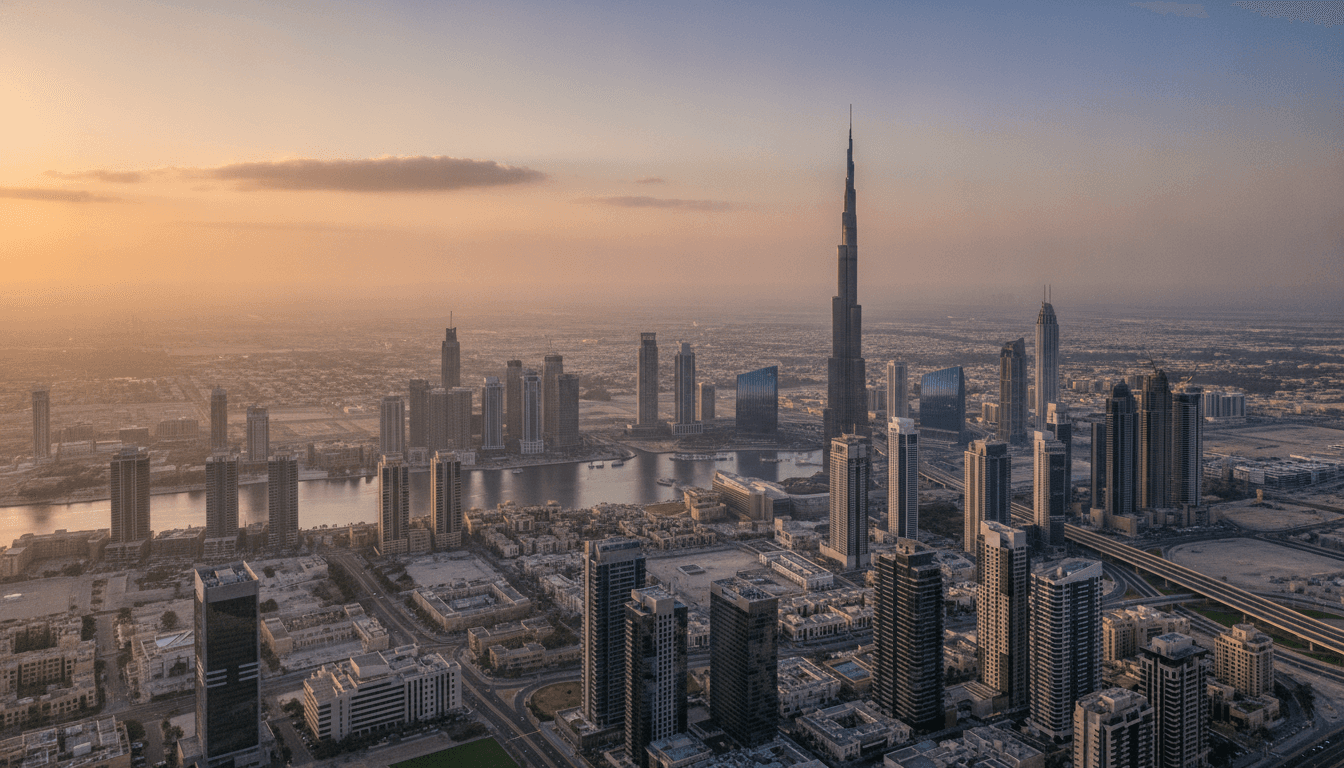
Dubai's property market in 2026 is operating at an elevated but not irrational level. Transaction volumes, price appreciation, and developer launches have all hit records in the preceding 24 months, driven by a structural shift in who moves to Dubai and why. This guide provides a balanced assessment of where the market sits and where it's heading.
The Structural Shift Behind the Run-Up
The 2020-2026 Dubai property cycle is different from previous Dubai cycles (2003-2008, 2012-2014) for one fundamental reason: the buyers are end-users and long-term investors, not speculative flippers.
In 2024 and 2025, 60-65% of Dubai residential transactions were for owner-occupation or long-term tenanted investment, versus 35-40% in the 2012-2014 cycle. This means the market is not relying on a "greater fool" to sustain prices. Buyers are staying.
Why are people buying? Three primary forces:
- Population growth: Dubai's population grew from 3.1M (2019) to 3.8M (2025), 700,000 additional residents requiring housing.
- Wealth migration: Russia, EU, UK, India, and China have all experienced net wealth emigration since 2020. Dubai is the primary beneficiary, receiving estimated $4-6 billion/year in inbound HNW capital.
- Business relocation: 10,000+ companies relocated or established UAE entities in 2022-2025, bringing employees who need housing.
Price Performance: What the Data Shows
Dubai residential prices (average price/sqft across all units) have increased approximately:
- 2021: +18%
- 2022: +21%
- 2023: +15%
- 2024: +12%
- 2025: +9%
Cumulative 5-year appreciation: approximately 90-95% for the broad market. Premium sub-segments (Palm Jumeirah villas, Downtown super-prime) have appreciated 120-160%.
The rate of appreciation is decelerating. 2025's +9% was the slowest pace since 2021. This is not a red flag, it represents a market transitioning from rapid re-pricing to more sustainable annual appreciation.
Supply vs. Demand: The Critical Variable
Supply is the key risk in 2026 and beyond. Estimates suggest 50,000-75,000 residential units will complete in Dubai annually in 2025-2027, up from 30,000-40,000 in 2022-2023.
Counter-argument: Dubai absorbed 40,000+ units/year in 2023 and 2024 without price correction. Binayah's data shows that luxury and community villas remain structurally undersupplied despite the large pipeline. The oversupply risk is concentrated in:
- Studio and 1BR apartments in suburban communities (JVC, Dubai South, Dubai Industrial City) where large off-plan pipelines are completing simultaneously
- Satellite communities without established infrastructure and transport links
Segment Outlook
Luxury villas (AED 5M+): Still structurally undersupplied. New freehold land is limited; masterplan communities take 5+ years to build. Pricing expected to hold +5–10% in 2026–2027.
Prime apartments (Marina, Downtown, DIFC, Palm): Supported by HNW demand. Limited new supply of comparable quality in established locations. Appreciation +5–8% expected.
Mid-market apartments (Business Bay, JLT, Al Jaddaf): Best value in 2026. Yields of 6–7.5% with lower appreciation risk than prime. Suitable for income-focused investors.
Off-plan (delivery 2027–2029): Price growth of 15–30% from booking to handover has been achievable in prime projects. Selectivity matters: branded projects by Emaar and Sobha in undersupplied locations vs. unbranded bulk production in oversupplied zones.
The Interest Rate Variable
UAE mortgage rates are tied to EIBOR (Emirates Interbank Offered Rate), which follows US Fed Funds rate. The Fed's rate cycle matters for Dubai:
- High rates (2022-2024): Squeezed mortgage affordability, but Dubai's cash-heavy buyer base buffered the impact
- If US rates decline in 2025-2026: Lower UAE mortgage rates could stimulate demand and sustain/accelerate appreciation
- Risk: If US rates stay high or increase, mortgage demand softens, cash buyers dominate anyway
International Comparison: Is Dubai Still Good Value?
Price/sqft comparison (luxury apartments, central locations, 2026):
- London: AED 6,000-14,000/sqft
- New York: AED 7,000-18,000/sqft
- Paris: AED 4,000-9,000/sqft
- Singapore: AED 5,000-12,000/sqft
- Dubai: AED 1,500-3,500/sqft
On a price-per-sqft basis, Dubai remains 50-80% cheaper than comparable global alpha cities, despite the 5-year run-up. The yield gap reinforces this: London prime yields 2-3%, New York 3-4%, Dubai 4.5-6.5%. The relative value argument is intact.
Risks to Watch
- Oversupply in budget segment: Studio and 1BR apartments in satellite communities. If supply materially exceeds demand, price corrections of 10-20% in specific sub-markets are possible.
- Oil price: UAE economy is diversified but oil still matters for GCC regional sentiment and government spending.
- Regional geopolitical risk: Dubai has been remarkably resilient to MENA conflicts, but it's not immune.
- Developer insolvency: With 200+ developers active in the off-plan market, quality varies enormously. A significant developer default would cause sentiment damage broader than the specific project.
Conclusion: Buy, Hold, or Rent?
For end-users: The lifestyle case for Dubai in 2026 is compelling. Buy in your price range in a community that suits your life, don't time the market.
For yield investors: The best opportunities are in mid-market properties (Business Bay, JLT, Al Jaddaf) where gross yields of 6.5-8% are achievable with lower capital required than prime.
For capital growth investors: Luxury villas and prime water-facing apartments continue to have structural support. The 2026-2028 outlook is more modest than 2021-2024, but 5-12% annual appreciation in selected segments is the consensus expectation.