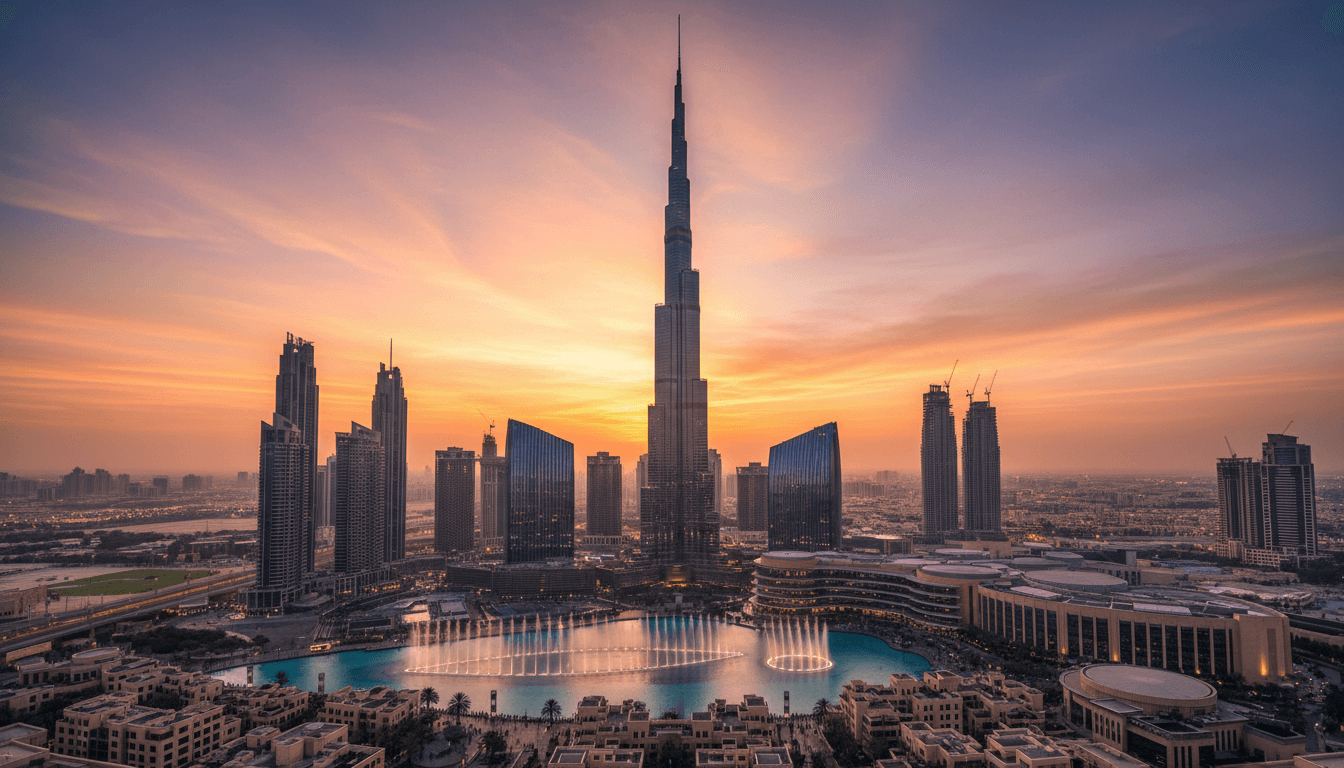
Downtown Dubai: The Emirate's Flagship District
Few addresses in the world carry the instant recognition of Downtown Dubai. Master-planned and developed by Emaar Properties, this is the district that defines the city's skyline and, for many, defines Dubai itself. It is home to the Burj Khalifa, the tallest building on earth; The Dubai Mall, one of the most-visited retail and leisure destinations globally; Dubai Opera, the cultural anchor of the Opera District; and Burj Park, the green stage for the city's headline events and the celebrated Dubai Fountain shows.
For an investor, Downtown is less a neighbourhood and more a brand. It is a fully realised, high-density urban core where residential towers, five-star hotels, world-class dining and flagship retail sit within a single walkable master plan. The live data panel at the top of this page shows the current price-per-sqft, gross yield and recent transaction activity for the community. This guide covers everything the numbers cannot: the character of the district, who it suits, and the trade-offs of owning a home at the centre of Dubai.
Location and Connectivity
Downtown Dubai occupies the geographic and commercial heart of the city, wrapped along Sheikh Zayed Road, the emirate's primary arterial highway. That position is one of its most durable advantages: from Downtown, the Dubai International Financial Centre (DIFC), Business Bay, City Walk and the wider business core are minutes away by car.
Connectivity is a core part of the appeal:
- Metro: The Burj Khalifa/Dubai Mall station on the Red Line links the district directly to the financial district, the airport and the length of Sheikh Zayed Road, with an air-conditioned pedestrian link into The Dubai Mall.
- Road network: Direct access to Sheikh Zayed Road and Financial Centre Road places the airport, Jumeirah and the marina districts all within a comfortable drive.
- Walkability: Within the master plan, residents move on foot between residences, retail, dining, the waterfront promenade around Burj Lake and the park. This internal walkability is rare in Dubai and a genuine differentiator.
That central, transit-served location underpins the district's long-term liquidity. When an area is this easy to reach and this recognisable, both tenants and future buyers are never in short supply.
Who Downtown Dubai Suits
Downtown is a prime, prestige district, and the buyers it attracts reflect that. It tends to suit three overlapping profiles:
- Prestige and capital-preservation buyers. Purchasers who want a trophy address in a globally recognised location, and who prioritise the resilience of a blue-chip district over maximising rental income. Downtown property is often held as a long-term store of value.
- Owner-occupiers who want the city at their door. Executives and international buyers who value living steps from the mall, the opera and the business core, with no reliance on a car for daily life.
- Short-let and holiday-home investors. Downtown's tourist pull is enormous. Proximity to the Burj Khalifa, the fountain and the mall makes furnished apartments highly attractive on the short-stay market, subject to holiday-home licensing.
If your priority is the highest possible yield, more affordable communities elsewhere in Dubai will typically out-earn a prime district on a percentage basis. Downtown's case is built on prestige, tenant quality and capital resilience rather than headline yield.
Unit Types and the Built Environment
Downtown offers one of the broadest ranges of residential product in the city, almost all of it apartments rather than villas:
| Unit type | Typical buyer / use |
|---|---|
| Studios & 1-bed | Short-let operators, single professionals, entry into the district |
| 2–3 bed apartments | Executive tenants, small families, long-term holds |
| Penthouses | Ultra-prime end-users and trophy investors |
| Branded & serviced residences | Buyers wanting hotel-grade service and a recognised name on the door |
The district is notable for its concentration of branded and serviced residences — homes associated with luxury hospitality names that carry premium pricing and premium service charges. At the top end, penthouses and full-floor units in the landmark towers trade as genuine trophy assets. This range means an investor can enter Downtown at very different budget levels, though every tier sits at the higher end of the Dubai market.
Off-Plan vs Ready in a Built-Out District
Downtown is, by Dubai standards, a mature and largely built-out master community. That shapes the off-plan versus ready decision differently than it would in an emerging area:
- Ready stock dominates. The majority of opportunity is in completed, income-producing towers with established service standards, visible rental track records and immediate handover. For most investors, this is the core of the Downtown market.
- Off-plan is more selective. New launches do still appear — infill towers, redevelopment plots and premium branded projects on the fringes of the master plan. These can offer developer payment plans and the newest specifications, but supply is far more limited than in Dubai's growth corridors.
- Implication: Because Downtown is not reliant on a wave of future supply to prove itself, ready buyers benefit from a known quantity. Off-plan buyers here are usually paying for a specific new address rather than for early-stage discount to an unproven district.
Our team can walk you through both current ready listings and any live off-plan launches in the district so you can compare handover timing, payment terms and specification side by side.
Rental Demand and Tenant Profile
Rental demand in Downtown is deep and diverse, which is one of the strongest arguments for the district. The tenant base splits broadly into two streams:
- Long-term executive tenants. Senior professionals working in DIFC, Business Bay and the wider central business core who want to live within minutes of the office in a prestige address. This is a stable, high-quality tenant pool that values the location premium.
- Short-stay and holiday-home guests. Downtown is one of Dubai's premier tourist destinations in its own right. Licensed holiday homes benefit from year-round visitor demand driven by the Burj Khalifa, The Dubai Mall, Dubai Opera and the fountain, often supporting stronger gross returns than long lets for owners willing to manage the operation.
The combination gives owners genuine flexibility: a unit can be positioned for a stable annual tenant or operated as a furnished short-let depending on the strategy and licensing. The live panel above reflects current rental performance for the community.
The Prime-District Trade-Off
The central investment question in Downtown is a trade-off, not a flaw. As a trophy district, its gross rental yield tends to sit below the citywide average gross yield of around 4.7%, because entry prices are high relative to rent. Affordable communities elsewhere in the emirate will usually show higher yields on paper.
What Downtown offers in exchange is meaningful:
- Prestige and recognition that supports both resale demand and premium tenant appeal.
- Capital resilience. Blue-chip, land-constrained prime districts have historically held value and recovered more reliably than peripheral areas through market cycles.
- Liquidity. A globally known address with constant buyer and tenant interest is easier to exit when the time comes.
For a capital-preservation or prestige-led buyer, that exchange is exactly the point. For a pure yield-maximiser, it is a reason to look at the numbers in the panel carefully and weigh Downtown against higher-yielding communities before committing.
Key Risks and Considerations
Downtown is a high-conviction district, but it is not without considerations:
- High entry price. This is one of the most expensive residential markets in Dubai. Capital requirements are significant, and the AED 2M Golden Visa threshold is easily cleared here — though so is the cost of getting in.
- Service charges. Prime towers, and especially branded and serviced residences, carry higher service charges that directly reduce net yield. Always model the net figure, not the gross.
- Paying a premium in trophy towers. The most famous addresses command a brand premium. Ensure the price reflects genuine value — floor, view, layout and building quality — rather than name alone.
- Yield compression. Because prices are high, mispricing a purchase hurts returns more than in cheaper areas. Disciplined buying matters.
Using an independent valuation — our online valuation tool is a good starting point — helps sense-check any specific unit against the wider market before you offer.
How to Buy in Downtown Dubai
Foreign buyers can own freehold property in Downtown Dubai, and the purchase process is well established:
- Define the strategy. Decide between a long-term hold, an executive long-let, or a licensed holiday home — this drives which unit and building make sense.
- Arrange financing. Mortgage LTV caps allow expats to borrow up to 80% of value on a first home up to AED 5M, 70% above that and 60% on a second or investment property, and banks typically lend less to non-residents; the balance plus fees is payable upfront.
- Budget for transaction costs. Expect the 4% DLD transfer fee, roughly 2% agency commission, plus mortgage registration and any service-charge apportionment. Dubai levies no annual property tax and no capital-gains tax, which materially improves net holding economics.
- Reserve and contract. Sign the MOU (Form F) and pay the deposit; for off-plan, follow the developer's payment plan.
- Transfer ownership. Complete at the DLD or a registration trustee, where the title is transferred and residence-visa applications can follow (DLD's Taskeen 2-year investor residence visa for a title-deeded property of any value, or a co-owned share worth at least AED 400,000; AED 2M for the 10-year Golden Visa).
Downtown Dubai rewards buyers who go in clear-eyed: prestige, resilience and liquidity in exchange for a premium entry price and a yield that trades below the city average. If that balance fits your goals, our team can guide you through current Downtown listings, live off-plan launches and the full buying process from first viewing to handover.