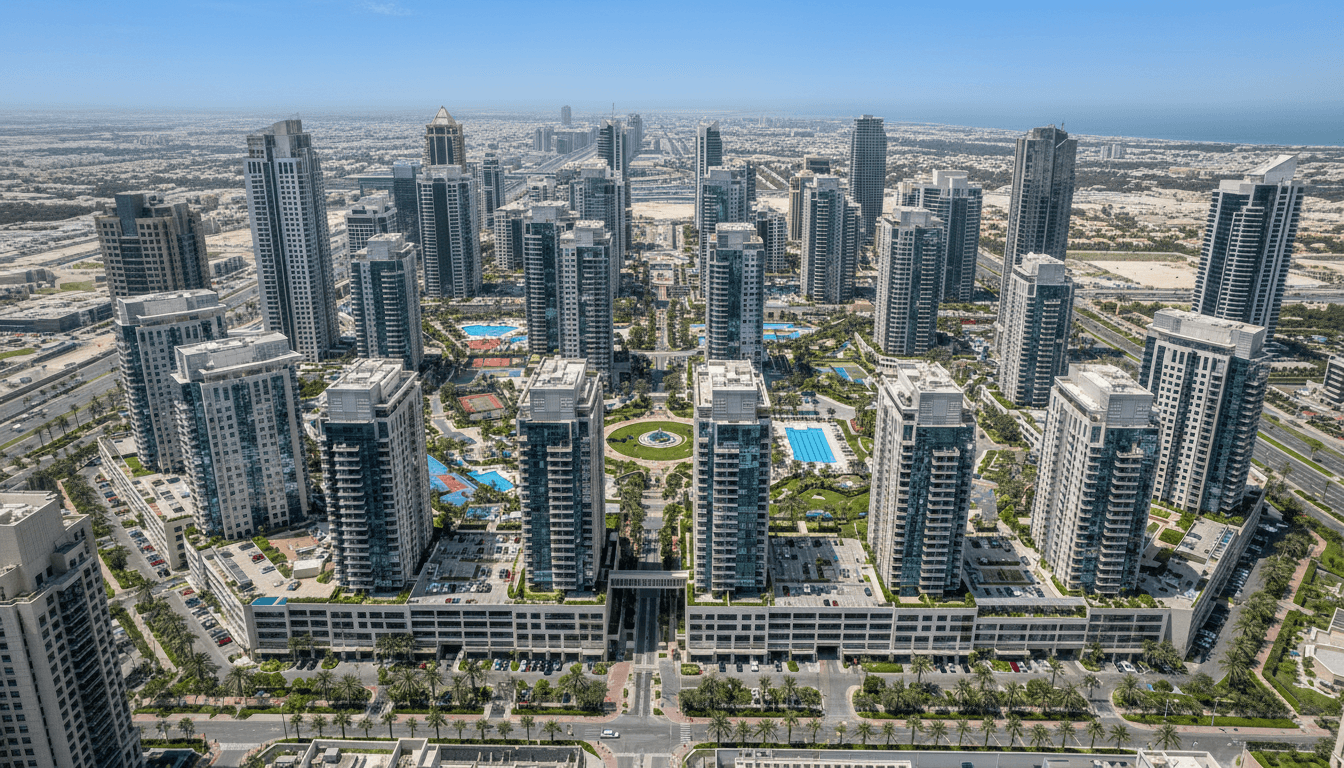
Rental yield is the number that separates a trophy address from a working investment. In Dubai, where there is no annual property tax, no capital-gains tax and no income tax on rental earnings, the rent a property collects flows to the owner far more directly than in most global cities. That tax structure is exactly why yield-focused buyers pay such close attention to which communities actually put cash in the bank each year — and why the glamorous waterfront tower is not always the smart buy.
This guide explains what drives rental yield, why affordable communities and smaller units tend to out-yield prime addresses, which community archetypes are known for stronger returns, and how to measure yield properly before you sign anything.
What actually drives rental yield
Gross rental yield is simply the annual rent divided by the purchase price, expressed as a percentage. If the rent is high relative to what you paid, the yield is high. That means yield is driven by two moving parts pulling in opposite directions: the rent tenants are willing to pay, and the capital cost of acquiring the unit.
Across Dubai as a whole, the citywide average gross rental yield sits at around 4.7% (latest DLD and market data). Treat that figure as your benchmark. Anything materially above it is an above-average yielder; anything materially below it is a property you are likely holding for capital appreciation or lifestyle rather than income.
Several forces push a specific property's yield above or below that citywide line:
- Purchase price per square foot. The citywide average sale price is around AED 1,879 per square foot. Communities priced well under that average start with a structural yield advantage, because the denominator in the yield equation is smaller.
- Tenant demand depth. Areas with a large, stable pool of renters — workers, young families, commuters — keep occupancy high and voids short.
- Unit size and ticket price. Smaller units let a wider band of tenants afford the rent, which supports pricing and keeps demand liquid.
- Supply pipeline. Heavy ongoing off-plan delivery in a community can cap rent growth for a period; off-plan makes up around 72% of the market right now, so supply timing matters.
- Service charges and running costs. These do not affect gross yield but hit net yield hard, and they vary enormously by building quality and amenities.
Why affordable communities and smaller units yield more
There is a consistent, structural reason prime waterfront addresses tend to yield less than mid-market communities: rents do not scale up as fast as prices do.
When you buy in an ultra-prime waterfront location, you pay a large premium for the view, the address and the scarcity of the land. Tenants will pay more to live there too — but not proportionally more. A unit that costs twice as much to buy rarely commands twice the rent. The result is a lower yield, with more of the investment case resting on capital appreciation and prestige.
Affordable and mid-market communities work the other way. The purchase price is modest, but the rent is anchored to real, everyday tenant demand — people who need a well-located home near work, schools and transport at a price they can sustain. That combination of a low denominator and a resilient numerator is what produces above-average yields.
Smaller units amplify the effect. Studios and one-bedroom apartments have a lower total ticket price, so a much wider slice of the rental market can afford them. On a per-square-foot basis, small units typically rent for more than large ones, and they are easier to re-let quickly when a tenant leaves. That is why, within almost any given community, the studio or one-bed will usually out-yield the three-bed or the villa.
The trade-off is that smaller, cheaper units in high-supply areas often see slower capital growth than scarce prime assets. You are choosing income over appreciation — which is a perfectly valid strategy, as long as you choose it deliberately.
Community archetypes known for stronger yields
The communities below are the archetypes yield-focused investors in Dubai return to again and again. The point here is the *character* of each area — its tenant base, price positioning and demand drivers — not a specific yield percentage. Current figures move constantly, so verify live numbers (our tools can help — see below) rather than trusting any headline you read.
Jumeirah Village Circle (JVC)
Centrally located between Dubai's main highways, JVC is one of the city's most active mid-market apartment communities. It offers a huge and varied stock of studios and one- and two-bedroom apartments at accessible price points, plus townhouses and villas. The tenant base is broad — young professionals, couples and small families who want a central location without central prices. Deep, liquid demand and continual leasing activity make it a perennial favourite for income-focused buyers, though its large ongoing supply pipeline means you should watch delivery timing.
Dubai South
Built around Al Maktoum International Airport and the Expo legacy district, Dubai South is a master-planned growth corridor positioned for the city's long-term expansion southward. Prices per square foot are among the most accessible in Dubai, and the area draws tenants tied to aviation, logistics and the expanding commercial zones nearby. It suits investors who want a low entry price and are comfortable with an emerging-district profile rather than an established one.
Discovery Gardens
An established, mature apartment community known for green, low-rise garden-style buildings and genuinely affordable rents. With its own metro connection and proximity to the Ibn Battuta area, it attracts long-staying tenants — often families and professionals who value the price and stability. Being an older, fully-delivered community, it has limited new supply, which supports steady occupancy.
International City
One of Dubai's most affordable residential districts, with themed clusters of low-rise apartments and one of the lowest entry prices in the city. It houses a large, stable population of workers and value-conscious tenants, which keeps occupancy high and demand consistent. It is a classic high-yield, income-first play — buyers come here for cash flow, not for prestige or rapid appreciation.
Dubai Sports City
A self-contained community organised around sporting venues and academies, offering mid-market apartments at reasonable prices alongside good amenities and open space. It appeals to families and active professionals who want a lifestyle-led but affordable base. The mix of accessible pricing and a distinct community identity gives it solid, sustained rental demand.
Other communities in a similar mould — accessible pricing, deep tenant pools, plenty of smaller units — tend to behave the same way. The archetype matters more than the postcode.
The yield versus capital-growth trade-off
This is the central strategic decision for any Dubai investor, and it is worth stating plainly: the highest-yielding property and the highest-appreciating property are rarely the same property.
- High-yield assets — smaller units in affordable, high-demand communities — pay you strong income year after year, but their capital value typically grows more slowly because supply is more elastic and the address carries no scarcity premium.
- High-growth assets — scarce, prime, waterfront or landmark property — often yield below the citywide average, but can appreciate more strongly over time because the land and location cannot be replicated.
Neither is objectively "better." The right answer depends on your goal. If you want the property to fund your lifestyle or service its own mortgage, prioritise yield. If you are parking long-term capital and expect to sell into a stronger market later, you may accept a lower yield for growth potential. Many experienced investors blend both across a portfolio. What you should never do is buy a low-yield prime unit *expecting* high income, or a high-yield affordable unit *expecting* rapid appreciation — that is how expectations get mismatched with reality.
How to actually measure yield before you buy
Most yield numbers quoted in listings and headlines are gross — annual rent divided by purchase price, nothing subtracted. Your real return is the net yield, after the costs of owning and running the property. The gap between the two can be substantial, and it is where naive investors get caught.
Net yield subtracts the recurring costs from your annual rent before dividing by your all-in purchase price. The big items to model are:
- Service charges. Charged per square foot per year and paid to the building's owners association. Amenity-heavy towers cost far more per square foot than simple low-rise buildings — one reason a modest community can beat a glossy tower on *net* yield even when their gross yields look similar.
- Voids. The weeks a unit sits empty between tenants earn nothing. Budget realistically for turnover, especially in high-supply areas.
- Maintenance and management. Repairs, and a management fee if you are not self-managing.
- One-off acquisition costs spread over your holding period: the DLD transfer fee of 4% of the purchase price, agency commission of around 2% plus 5% VAT, and minor items like Ejari tenancy registration at around AED 220.
A worked example (illustrative only)
The figures below are a hypothetical to show the method — they are not market data for any specific unit.
| Line item | Hypothetical figure |
|---|---|
| Purchase price | AED 800,000 |
| Annual rent | AED 55,000 |
| Gross yield | 6.9% |
| Less service charges | (AED 8,000) |
| Less void allowance (approx. 3 weeks) | (AED 3,200) |
| Less maintenance and management | (AED 4,000) |
| Net annual income | AED 39,800 |
| Net yield | ~5.0% |
In this illustration a headline gross yield near 6.9% becomes a net yield around 5.0% once real costs are included. Always run this calculation with your own numbers on the actual unit before committing.
Because these figures move with the market, our yield tools and community leaderboard can show current gross and net yield estimates by area and unit type, so you can compare live rather than relying on a static example.
Common mistakes to avoid
- Quoting gross yield as if it were take-home return. Service charges, voids and management can shave well over a percentage point off the headline number.
- Ignoring service charges when comparing buildings. A cheaper tower with lower charges can beat a pricier, amenity-loaded one on net yield.
- Buying the biggest unit you can afford. Larger units usually yield less; two smaller units often out-earn one large one and spread your void risk.
- Chasing a prime address for income. Prime waterfront generally yields below the citywide average — buy it for growth or lifestyle, not cash flow.
- Underestimating supply. Heavy off-plan delivery in a hot community can suppress rents for a period; check the pipeline before you assume rent growth.
- Forgetting acquisition costs. The 4% DLD fee and around 2% commission plus VAT are real capital that dilutes your first-year return.
- Never modelling voids. Assuming 100% occupancy overstates every yield you calculate.
Conclusion
High rental yield in Dubai is not a secret list of magic postcodes — it is the predictable outcome of a simple structure: affordable price per square foot, deep and durable tenant demand, and smaller units that a wide band of renters can afford. Communities such as Jumeirah Village Circle, Dubai South, Discovery Gardens, International City and Dubai Sports City keep appearing on yield-hunters' shortlists because they share that DNA, not because of any single number.
Anchor your expectations to the citywide average gross yield of around 4.7%, decide honestly whether you are buying for income or for growth, and always convert gross to net before you commit — subtracting service charges, voids and running costs on the specific unit in front of you. When you are ready to compare current yields community by community, our yield tools and leaderboard can put today's numbers side by side, and our RERA-certified team can help you pressure-test any deal before you buy.