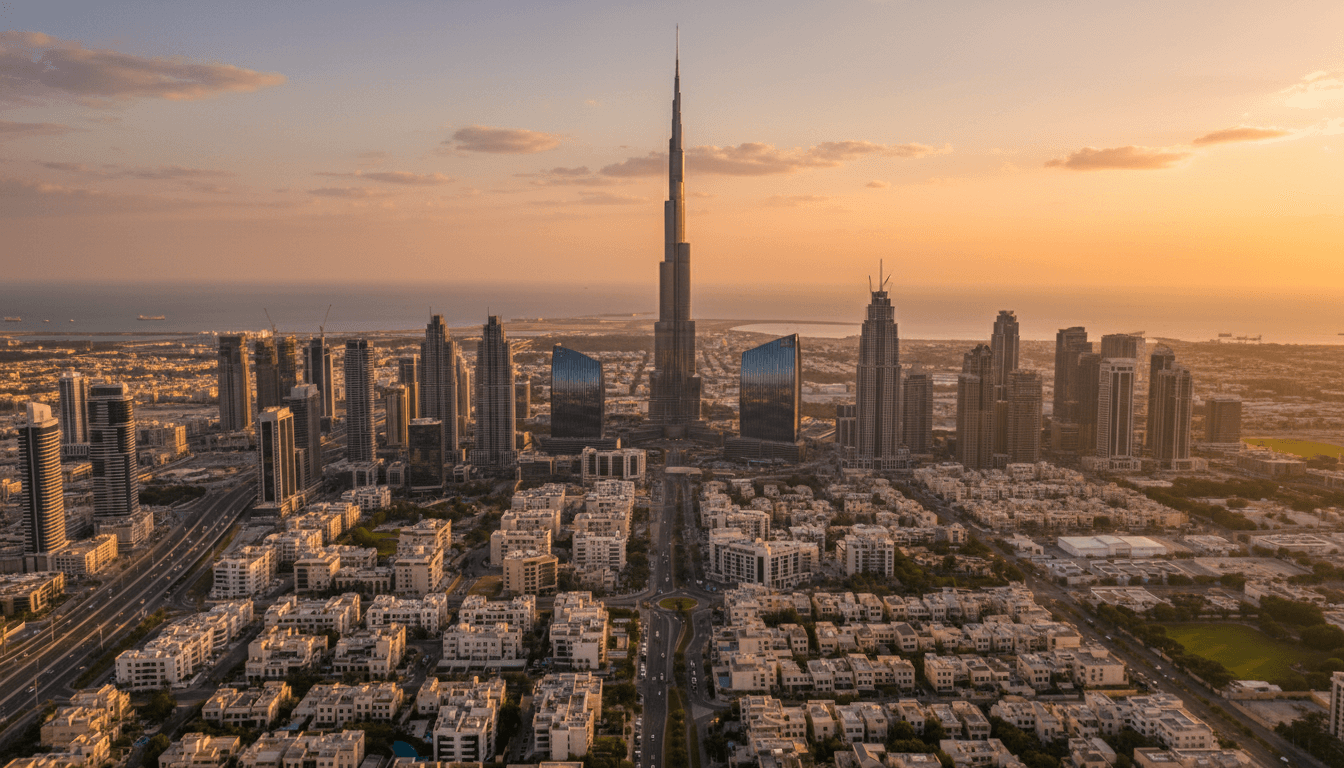
Dubai's property market in 2026 is defined by a clear divide: communities that have crossed the liquidity threshold, where enough off-plan stock has completed to create a self-sustaining secondary market, and those still building toward it. Knowing which side a community sits on shapes your investment strategy entirely.
The question "where is the best area to buy in Dubai?" has no single answer, and any adviser who gives you one is selling inventory rather than advice. The honest answer is that the best area is the one that matches your objective, your holding period, and your tolerance for illiquidity. This guide walks through the communities that stand out in Binayah's transaction data, then gives you a repeatable framework for judging any area, including ones not covered here.
How to Evaluate an Area Before You Buy
Before looking at any specific community, it helps to fix the lens you are looking through. Four questions separate a disciplined purchase from an expensive mistake.
- Liquidity. How easily can you convert the asset back into cash? A community with a deep, active secondary market lets you exit on your timeline. A thin one forces you to accept whatever a single buyer offers, or to wait.
- Yield versus growth. These two goals pull in opposite directions. High-yield communities tend to appreciate slowly; high-growth communities tend to yield modestly. Trying to maximise both usually means achieving neither.
- Developer and delivery risk. In off-plan and emerging areas, you are underwriting a developer's ability to finish on time and to the promised standard. A strong completion track record is worth paying for.
- Community lifecycle. Every district moves through a curve: launch, construction, handover, maturity. Where a community sits on that curve determines both its risk and its remaining upside.
Hold these four in mind as you read. The communities below each occupy a different point on the risk-and-return spectrum.
Business Bay: The Consistent Performer
Business Bay has been the most dependable performer in Binayah's data for three consecutive quarters. Average price per sqft sits around AED 1,450-1,600, with rental yields of 6.2-7.1% depending on unit size and floor. The community benefits from its proximity to Downtown Dubai while offering meaningfully lower entry points, a 1-bedroom in a mid-tier tower can be acquired for AED 900K-1.2M, versus AED 1.5M+ for a comparable Downtown unit.
What makes Business Bay compelling in 2026 is its depth of liquidity. Over 200 transactions recorded in Q1 alone, with an average deal size of AED 1.38M. The holding period for resellers averages 18 months, which suggests the market is active rather than speculative. For yield-seekers, 1-bedroom and 2-bedroom units in completed towers leasing for AED 75K-110K per year represent the sweet spot.
The qualitative case is just as strong as the numbers. Business Bay is a mature, walkable business district with a canal frontage, a broad tenant pool of professionals working in and around Downtown, and enough completed stock that you are rarely the only seller or the only landlord. That maturity is precisely what gives it the resilience it shows quarter after quarter. It is the natural default for a first Dubai purchase: liquid enough to exit, yielding enough to carry itself, and central enough that demand rarely evaporates.
Dubai Marina: Premium Price, Premium Demand
At AED 1,700-2,200 per sqft, Dubai Marina sits in premium territory. Rental demand is among the strongest in the city, occupancy rates in well-managed buildings exceed 94%. The investor calculus here is not yield (gross yield is typically 5.5-6.5%) but capital growth. Marina prices have appreciated 18-24% over 24 months, driven by undersupply of quality stock and persistent demand from European and Russian buyers.
For the right buyer, long horizon, cash-heavy, prioritising capital preservation, a Marina unit remains a defensible hold. The risk is entry price: overpaying in a trophy building absorbs years of appreciation before you break even on resale.
Marina's strength is that it is a genuinely finished, lifestyle-led waterfront address with international name recognition, which keeps its tenant and buyer pool wide and its occupancy high. The counterpoint is that "prime" cuts both ways: the same brand premium that supports demand also means the price already reflects a lot of good news. Discipline on the purchase price matters more here than in almost any other community, because in a growth play the margin you protect is the margin you make.
Jumeirah Village Circle: Highest Yield in the City
JVC remains the yield leader in Binayah's market data at 7.2-8.5% gross. Entry prices of AED 700-900 per sqft make it one of the most accessible investment communities. The trade-off is capital growth: JVC has historically appreciated more slowly than premium waterfront communities, though the 2025 spike in off-plan sales suggests developer confidence is high.
For investors who prioritise cash flow over appreciation, pension substitutes, income portfolios, JVC is the most direct answer Dubai offers.
The reason JVC yields as it does is structural: low entry prices paired with steady tenant demand from value-conscious residents who want a self-contained community at an affordable rent. That same affordability is why appreciation lags the waterfront, the buyer pool is more price-sensitive and there is more land still to build on. For an income investor that is not a flaw but the whole point. You are buying a cash-flow stream, and JVC delivers one of the strongest in the city at one of the lowest capital outlays.
Emerging Picks: Dubai Creek Harbour and Sobha Hartland
These communities are in the middle innings of their development arc. Dubai Creek Harbour has the infrastructure of a major urban district but transaction volumes that are still building. Sobha Hartland benefits from its developer's finish quality and a price point that has held firmer than broader mid-market. Both carry more illiquidity risk than mature communities but offer higher upside for 5-7 year holds.
The way to think about these is as bets on the community reaching maturity. If Dubai Creek Harbour's secondary market thickens as more towers complete, early buyers are rewarded for having accepted the thin-liquidity phase. Sobha Hartland's edge is developer-led: buyers pay for finish quality and a controlled masterplan, which is what has kept its pricing firmer than the broader mid-market. Neither is a place to park money you might need back quickly, both reward patience and a genuine multi-year horizon.
Matching an Area to Your Objective
The single most useful exercise is to name your objective first, then let it point you to a community, rather than falling in love with a building and reverse-engineering a justification.
| Buyer objective | Priority | Natural fit |
|---|---|---|
| Yield seeker | Cash flow over appreciation | JVC, then Business Bay |
| Growth seeker | Long-horizon capital gain | Dubai Marina |
| Balanced first buyer | Liquidity plus reasonable yield | Business Bay |
| Patient upside hunter | 5-7 year appreciation | Dubai Creek Harbour, Sobha Hartland |
- The yield seeker wants the income statement to work from day one. JVC's 7.2-8.5% gross is the most direct answer; Business Bay's 6.2-7.1% offers a slightly lower yield in exchange for far deeper liquidity.
- The growth seeker is underwriting appreciation and can wait for it. Dubai Marina's track record and demand depth suit this, provided the entry price is disciplined.
- The end-user or first-time buyer usually values the ability to exit and a unit that carries its own costs. Business Bay's balance of liquidity and yield makes it the sensible default.
- The patient upside hunter accepts illiquidity today for a larger payoff if an emerging district matures on schedule. Dubai Creek Harbour and Sobha Hartland are built for this profile.
Common Mistakes to Avoid
- Chasing the highest yield without checking liquidity. A strong yield in a thin market is only strong until you need to sell.
- Buying growth and income at once. Expecting a premium waterfront unit to also throw off top-tier yield leads to disappointment on both fronts. Pick one primary goal.
- Overpaying in a trophy building. In a growth play, the purchase price is the risk. Years of appreciation can be absorbed simply by entering too high.
- Ignoring the developer in off-plan. In emerging communities, delivery risk is real. The developer's completion record is part of the asset you are buying.
- Skipping the holding-period math. Business Bay's 18-month average reseller hold is a signal of a working market. Match your own horizon to the community's; do not buy an emerging area if you might need the cash in a year.
The Comparison Framework
When evaluating any community in 2026, apply three filters in order:
- Liquidity: Can you exit within 6 months if needed? Communities with fewer than 20 transactions per quarter carry real exit risk.
- Yield vs. growth: Pick one primary objective. Communities optimised for yield (JVC, Dubai South) underperform on appreciation. Premium waterfront optimises for growth.
- Developer risk: Off-plan in emerging communities adds delivery risk. Factor in the developer's completion track record before committing.
Conclusion
The data is clear: the best area depends entirely on your objective. There is no universally "best" community, only the best match for your return requirement, time horizon, and risk tolerance. Fix your objective first, run each candidate through the liquidity, yield-versus-growth and developer-risk filters, and be honest about how long you can leave your capital in place. Do that, and "the best area to buy in Dubai in 2026" stops being a slogan and becomes a decision you can defend.