Tawazun Council chiplet facility in UAE announced
Tawazun Council will partner with Lockheed Martin to build a domestic chiplet facility in the UAE as announced at Make it in the Emirates 2026.
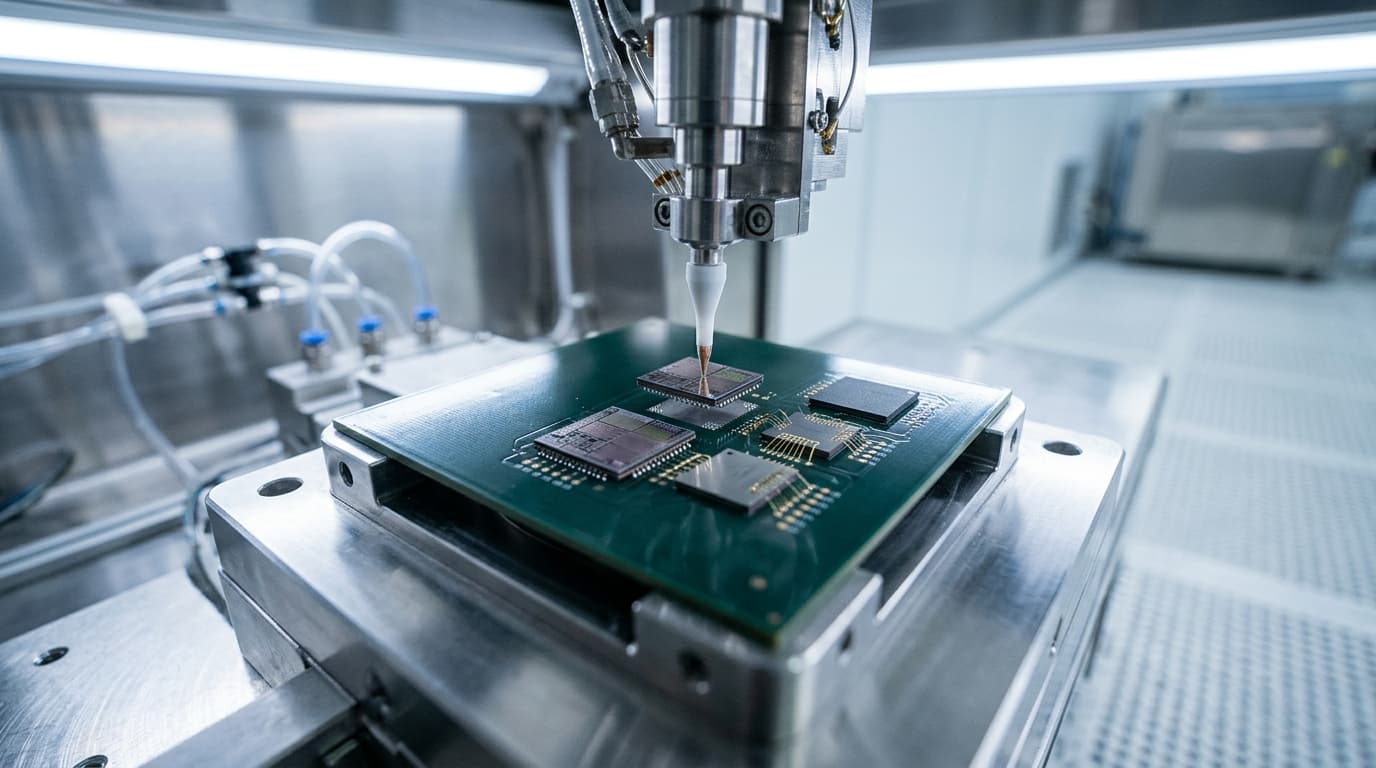
The agreement signed on May 7, 2026 creates a single microelectronics design and assembly facility in the UAE focused on chiplets. Chiplets are small, modular semiconductor components used to combine functions inside a package rather than relying on one large monolithic chip.
What is the Tawazun Council chiplet facility in the UAE?
What is the Tawazun Council chiplet facility in the UAE? Key Data
Agreement date
May 7, 2026
Facility count
1
Partners
2
Event
Make it in the Emirates 2026
The Tawazun Council signed an agreement with Lockheed Martin to establish a domestic microelectronics design and assembly facility focused on chiplets in the UAE, formalised on May 7, 2026.
The core fact is one facility will be created under a single signed agreement between Tawazun Council and Lockheed Martin announced at Make it in the Emirates 2026. The arrangement names Tawazun Council as the UAE partner and Lockheed Martin as the global contractor; both parties were present when the agreement was formalised. The source statement limits public disclosure to the existence of the agreement, the partners, and the event where it was announced, so no financial or capacity figures were provided at signing.
Strategically, this one facility creates a domestic design-and-assembly node rather than instant full-scale wafer fabrication. That reduces reliance on foreign-sourced module integration and can be scaled later, subject to further investment decisions and regulatory approvals. Risks include the time needed to develop skilled local talent and the requirement for secure technology transfer arrangements that comply with export controls and national security safeguards.

Why do chiplets matter for industry and national security?
Chiplets matter because they enable modular semiconductor design and faster integration of specialised functions, which improves resilience for defence and advanced industries.
Chiplets let manufacturers assemble systems from smaller validated blocks instead of relying on a single complex die. For governments and defence suppliers this reduces lead times and exposure to single-source disruption. The Tawazun Council agreement with Lockheed Martin establishes one local design-and-assembly capability that supports these aims, though the public announcement did not list investment amounts or production capacity. By creating a domestic node the UAE gains nearer-term control over integration and testing, which strengthens security of supply without immediately requiring large-scale wafer fabs.
The security nuance is clear: national control of design and assembly reduces dependency on long international logistics chains and on third-party certification paths. That said, chiplet ecosystems still rely on specialized materials, IP licensing, and testing equipment, so the one facility must be paired with talent development, supplier contracts, and export-control compliance to deliver meaningful security improvements.
| Entity | Role | Noted at |
|---|---|---|
| Tawazun Council | UAE partner and host | Make it in the Emirates 2026 |
| Lockheed Martin | Global contractor and technical lead | Make it in the Emirates 2026 |
"Establishing a domestic chiplet design and assembly facility is a pragmatic step to shorten defence electronics supply chains while the broader semiconductor ecosystem matures."
, Binayah Research Team
What are the economic and industrial implications for the UAE?
What are the economic and industrial implications for the UAE? Key Data
Facility count
1
Agreement date
May 7, 2026
Strategic aim
supply-chain resilience
Programme
Make it in the Emirates 2026
The immediate economic implication is the creation of one domestic microelectronics design and assembly node that can anchor further industrial activity in the UAE.
Although the announcement did not disclose capital expenditure or job numbers, the agreement between Tawazun Council and Lockheed Martin signals public-private collaboration to onshore certain semiconductor capabilities. For industry, this lowers integration risk for advanced systems and opens pathways for local firms to participate in supply chains. For policymakers, a domestic facility supports broader Make it in the Emirates 2026 goals by keeping higher-value design and assembly steps within national jurisdiction.
Potential industrial risks include the need for sustained follow-on investment, workforce development, and supplier ecosystems for test equipment and specialised materials. The one facility is a strategic start, not a finished industrial ecosystem; its value depends on follow-up commitments, scaled partnerships, and the pace at which local engineers and firms can be upskilled to work with chiplet technologies.

Key Insight
For investors and planners: a single design-and-assembly facility improves near-term supply control but requires subsequent capital, talent programmes, and supplier agreements to scale into a full microelectronics cluster.
What comes next and practical considerations after the Tawazun Council deal?
Next steps will focus on technical implementation, workforce plans, and regulatory arrangements following the signing of one agreement on May 7, 2026 between Tawazun Council and Lockheed Martin.
Practically, the partners must agree on site selection, technology scope, IP rules, export-control measures, and timelines before production activities begin. The public announcement confirms the intent and the parties involved but does not include definitive schedules or investment figures, so stakeholders should expect further memoranda of understanding and commercial contracts to appear as the project moves from announcement to delivery.
Key risks to monitor are the pace of domestic skills development, clarity on permitted technologies under export controls, and the degree to which the facility will rely on foreign-sourced tooling and materials. Clear roadmaps for training, supplier development, and governance will determine whether the single facility becomes a sustainable industrial capability.

- Signed agreements: 1 (Tawazun Council with Lockheed Martin)
- Announcement date: May 7, 2026
- Focus: design and assembly
The Tawazun Council agreement with Lockheed Martin, announced on May 7, 2026 at Make it in the Emirates 2026, establishes one domestic microelectronics design and assembly facility in the UAE. The deal creates a local integration node for chiplet technologies that can strengthen supply-chain resilience, but its ultimate industrial and economic impact depends on subsequent investment, training, and supplier development.
Binayah Editorial
Property Market Analyst
Our editorial team researches Dubai's real estate market, tracking DLD data, developer launches, and investment trends to keep buyers and investors informed.
Ready to Invest in Dubai?
Speak with our analysts about the best opportunities in today's market, free consultation.