First Air Taxi station Dubai: strategic milestone for urban mobility
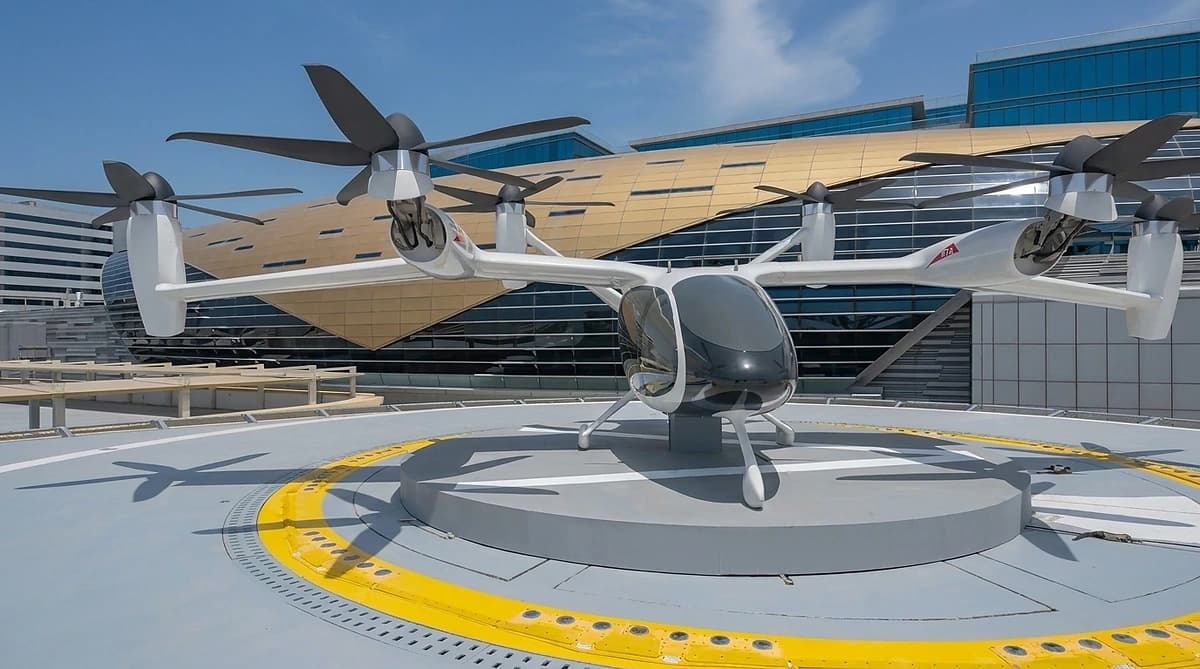
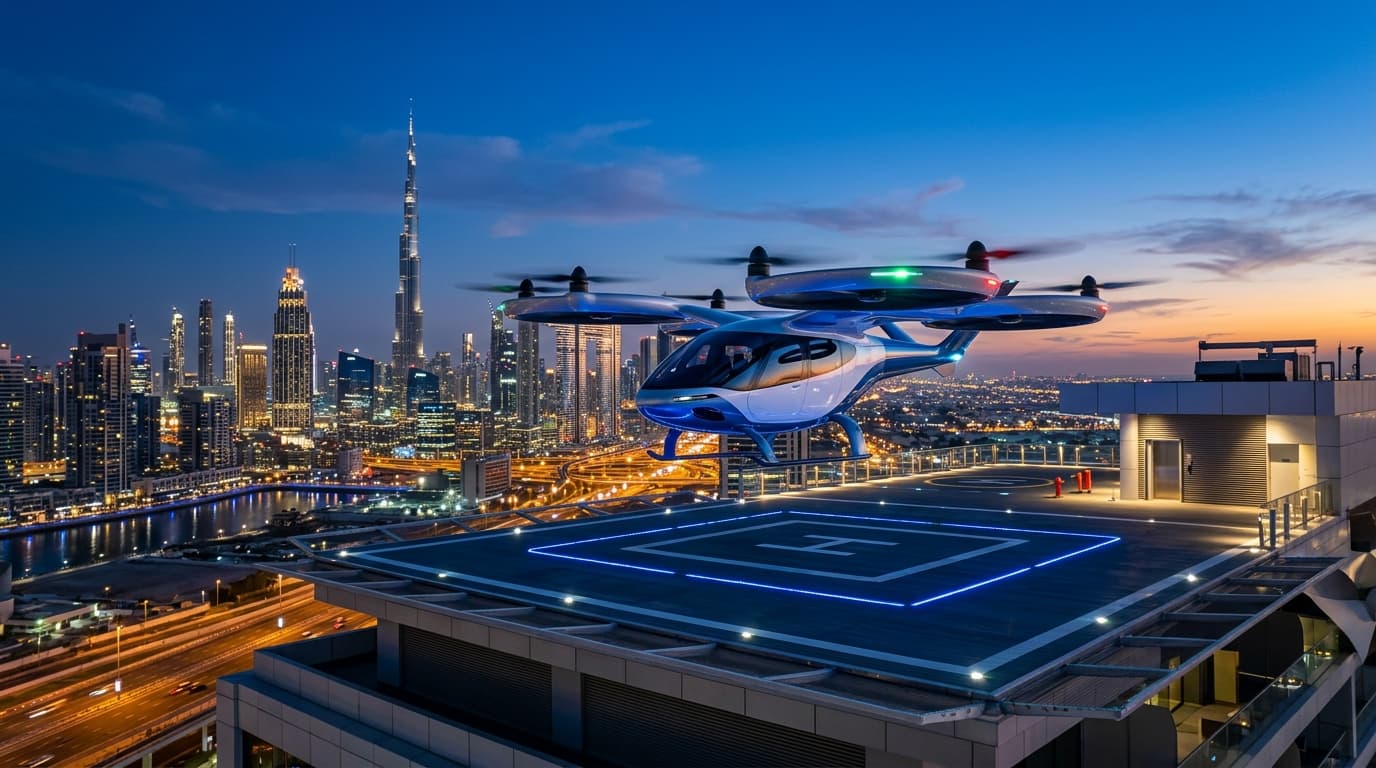
The first Air Taxi station in Dubai marks a new transport era, accelerating the emirate's shift to advanced urban air mobility and integrated transit.
Dubai's Crown Prince, H.H. Sheikh Hamdan bin Mohammed bin Rashid Al Maktoum, publicly affirmed the station's completion as a strategic leap in the city's development. His statement linked the project to the vision of H.H. Sheikh Mohammed bin Rashid Al Maktoum, noting the work supports Dubai's wider objective to lead the future of urban mobility.
The announcement frames the station not as an isolated test but as a visible, planned step within the emirate's transport strategy. For residents, developers and planners this milestone signals new mobility options and an accelerant for technical integration between ground and aerial transport systems in Dubai.
Why is the first Air Taxi station in Dubai a symbolic milestone for urban mobility?
Why is the first Air Taxi station in Dubai a symbolic milestone for urban mobility? Key Data
Project
First Air Taxi station in Dubai
Status
Completed
announcement affirmedAffirmed by
H.H. Sheikh Hamdan bin Mohammed bin Rashid Al Maktoum
Vision linked to
H.H. Sheikh Mohammed bin Rashid Al Maktoum
The first Air Taxi station in Dubai is a symbolic milestone because Dubai's leadership framed its completion as a strategic leap toward future urban mobility. H.H. Sheikh Hamdan bin Mohammed bin Rashid Al Maktoum affirmed the station's completion and linked it directly to the emirate's broader transport ambitions.
The station's public completion communicates several clear messages: a commitment to testing and deploying aerial transit, readiness to integrate new modes into the city fabric, and political backing at the highest level. The source statement ties the station to the vision of H.H. Sheikh Mohammed bin Rashid Al Maktoum, implying leadership endorsement and prioritisation rather than an experimental pilot with no follow-up.
Symbolically, a completed physical station makes the abstract idea of air taxis real for residents, regulators and investors. That visibility reduces uncertainty about intent and timeline even if technical, regulatory and operational steps remain; it also raises attention on safety standards, airspace management and how the new mode will connect with existing transport hubs.
- Makes aerial mobility tangible to the public and stakeholders
- Signals high-level political commitment to new transport modes
- Strengthens the case for integrating air taxi routes with ground networks
How does the first Air Taxi station in Dubai fit the leadership's vision for future transport?
The first Air Taxi station in Dubai fits the leadership's vision by embodying the stated goal to lead the future of urban mobility and to reinforce Dubai's strategic position. The Crown Prince described the station's completion as aligned with H.H. Sheikh Mohammed bin Rashid Al Maktoum's vision, linking the project directly to government priorities.
That explicit connection matters because it moves the project from a technology demonstration into a policy signal with weight. When senior leaders say a project embodies a wider vision, the implication for agencies and developers is clear: resources, regulatory attention and integration work are more likely to follow. The source text names both H.H. Sheikh Hamdan bin Mohammed bin Rashid Al Maktoum and H.H. Sheikh Mohammed bin Rashid Al Maktoum, showing leadership continuity and a top-down endorsement of Air Taxi Dubai initiatives.
Risks remain practical rather than political: integrating air taxis requires updated airspace rules, certification regimes and infrastructure links to roads and transit hubs. Leadership endorsement lowers political risk but does not remove technical, operational and safety hurdles that authorities and operators must resolve before scaled commercial services begin.
| Leader | Message | Strategic implication |
|---|---|---|
| H.H. Sheikh Hamdan bin Mohammed bin Rashid Al Maktoum | Affirmed completion as a strategic leap | Signals government backing for deployment and integration |
| H.H. Sheikh Mohammed bin Rashid Al Maktoum | Vision to reinforce Dubai's standing in future mobility | Frames air taxis as part of national/regional leadership goals |
"the completion of the first Air Taxi station in Dubai is a strategic leap in the emirate's journey towards leading the future of urban mobility"
, H.H. Sheikh Hamdan bin Mohammed bin Rashid Al Maktoum
What are the practical implications of the first Air Taxi station in Dubai for transport and development?
The practical implications of the first Air Taxi station in Dubai include accelerating planning for airspace, infrastructure links and multimodal connections. The announcement moves the conversation from concept to implementation, prompting agencies and developers to coordinate on landing sites, charging or refuelling logistics and passenger transfer points.
For urban planners and developers, a visible station creates a planning trigger: zoning, access roads and integration with metro, tram or bus services must be considered near station locations. The source links the station to Dubai's broader vision, which suggests authorities will prioritise policy and regulatory frameworks that enable operational trials and phased rollouts. The statement does not detail timelines or operating models, so practical steps remain to be clarified by transport authorities and operators.
From a development perspective, proximity to a designated air taxi node may influence future masterplans and mixed-use projects because it changes accessibility assumptions. At the same time, precise impacts on property values, commuter patterns and service pricing depend on regulatory choices, operational frequency and network design yet to be published by relevant agencies.
Key Insight
The station's completion signals priority but does not guarantee immediate commercial service; investors and planners should watch regulatory updates and integration plans closely before assuming operating schedules or ridership patterns.
- Triggers planning for airspace management and safety standards
- Prompts infrastructure links to ground public transport
- May inform future zoning and mixed-use development near nodes
What to watch next for the Dubai air taxi rollout?
Watch for regulatory updates, operator announcements and deployment plans after the first Air Taxi station in Dubai completion. The leadership statements make strategic intent clear, but implementation depends on agencies publishing technical rules, safety frameworks and operational licences.
Key items to follow include formal approvals from transport and aviation authorities, announced trial routes or operator partners, and published standards for station siting, passenger processing and emergency procedures. The source communicates political support, which typically speeds coordination, but it does not list the specific agencies, timelines or commercial partners responsible for next steps.
Stakeholders should monitor official communications from Dubai government bodies for those details, and expect phased testing before full commercial services. Attention should focus on how stations link to existing transport hubs, how airspace for low-altitude vehicles is managed, and which commercial operators meet the technical and safety requirements.
- Regulatory approvals and safety frameworks
- Operator and trial route announcements
- Integration with existing transit hubs
The completion of the first Air Taxi station in Dubai is presented by leadership as a strategic leap that aligns with H.H. Sheikh Mohammed bin Rashid Al Maktoum's vision to strengthen Dubai's position in future urban mobility. The public affirmation by H.H. Sheikh Hamdan bin Mohammed bin Rashid Al Maktoum turns an abstract plan into a visible milestone, while regulatory and operational details remain to be published.
Binayah Editorial
Property Market Analyst
Our editorial team researches Dubai's real estate market, tracking DLD data, developer launches, and investment trends to keep buyers and investors informed.
Ready to Invest in Dubai?
Speak with our analysts about the best opportunities in today's market, free consultation.