
UAE UN Security Council response to Hormuz vote
UAE expressed disappointment at the UN Security Council after a proposed Hormuz resolution failed to secure backing, according to Arabian Business.
The draft resolution was put forward by Bahrain on behalf of the UAE, Saudi Arabia, Kuwait, Qatar and Jordan and did not receive the backing its sponsors hoped for. Arabian Business reported the UAE reaction as one of disappointment, highlighting diplomatic friction at the Security Council level.
The lack of backing matters beyond a single vote because it signals unresolved differences among Security Council members and regional actors. For investors and market watchers in Dubai, the immediate concern is whether heightened diplomatic tensions will translate into increased regional risk perceptions or short-term market volatility.
What happened at the UN Security Council vote on the Hormuz resolution?
What happened at the UN Security Council vote on the Hormuz resolution? Key Data
Sponsor
Bahrain
Backers
UAE; Saudi Arabia; Kuwait; Qatar; Jordan
Outcome
Not backed by UN Security Council
Reported by
Arabian Business
The UN Security Council did not back a proposed Hormuz resolution put forward by Bahrain on behalf of the UAE, Saudi Arabia, Kuwait, Qatar and Jordan, and the UAE publicly expressed disappointment, according to Arabian Business. The proposal failed to secure the support its sponsors sought, leaving the text without the council backing intended to amplify its message.
Bahrain formally tabled the resolution on behalf of the five Gulf and Jordanian backers, and Arabian Business reported the UAE response as disappointment. The available reporting does not list vote counts or which members opposed or abstained, so the precise council arithmetic is not public in that report. What is clear is that the sponsors did not achieve the formal Security Council endorsement they sought.
The immediate diplomatic takeaway is the visible mismatch between the sponsors' objectives and the Security Council outcome, which can complicate collective regional messaging. For policy makers and investors this outcome increases the need to watch follow-up statements from the UAE and its partners, because subsequent diplomacy or bilateral actions will determine whether this remains a symbolic setback or a trigger for deeper coordination changes.
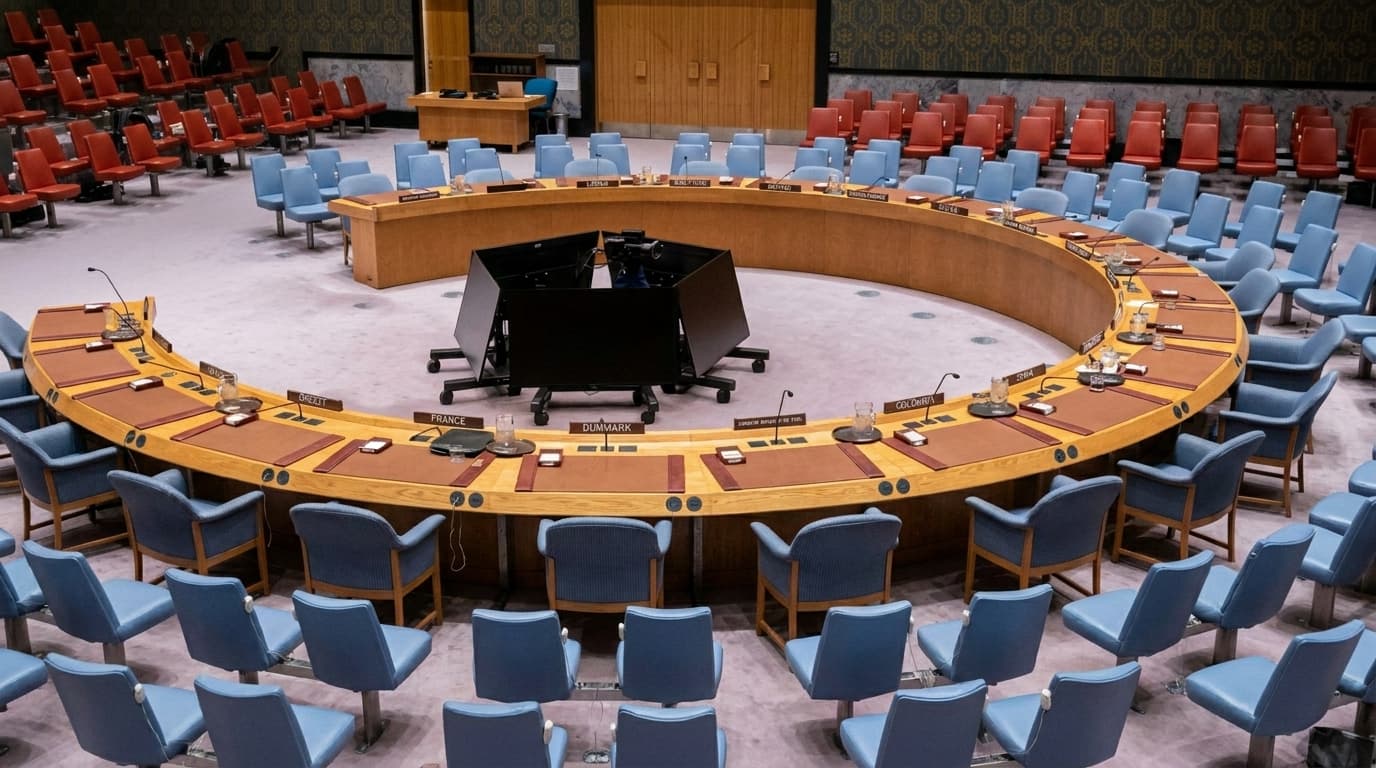
Why does this diplomatic setback matter for Gulf risk premiums?
It matters because a failed Security Council text signals unresolved diplomatic divisions that can raise perceived regional risk, which in turn influences investor sentiment and cost-of-capital assessments across Gulf markets. The UAE explicitly voiced disappointment, making the diplomatic fallout a visible event for market-watchers.
A failed resolution removes one channel for unified international pressure or endorsement, leaving sponsors to rely on other diplomatic tools. For markets, the consequence is higher uncertainty about policy coordination among Gulf states and with international partners. That uncertainty can show up in capital flows, insurance and financing conversations even if immediate market moves are muted; the reported facts do not include numeric measures of market impact, only the diplomatic outcome itself.
The degree to which perceived risk premiums rise depends on follow-up actions by the UAE and its partners, plus responses from major global players. Investors should therefore watch official communiques, subsequent diplomatic outreach and any announcements tied to regional security cooperation, since those steps will determine whether this diplomatic setback becomes a sustained pricing factor.
| Sponsor | Backing countries | Outcome |
|---|---|---|
| Bahrain | UAE; Saudi Arabia; Kuwait; Qatar; Jordan | Not backed by UN Security Council |
"A failed Security Council resolution increases diplomatic uncertainty and can translate into higher perceived regional risk for investors."
, Binayah Research Team
What are the short term market signals for Dubai buyers and investors?
What are the short term market signals for Dubai buyers and investors? Key Data
Public reaction
UAE expressed disappointment
Immediate signal
Increased diplomatic monitoring
Investor action
Caution on discretionary moves
Data status
No transaction or price figures reported
Short term signals are heightened monitoring of official statements, more cautious sentiment among risk-sensitive buyers, and increased attention to any diplomatic follow-up from the UAE and its partners. The UAE's expressed disappointment makes communication risk a primary signal to watch for in the coming days.
Investors often respond to diplomatic uncertainty by pausing large discretionary moves and by scrutinising news flow for concrete policy changes. For Dubai buyers that can mean slower decision timetables and a tilt toward liquidity until clarity returns. The available reporting does not provide transaction counts or price moves tied to this vote, so immediate market effects should be inferred only from shifts in sentiment, not from reported data.
A practical short-term reading is to treat this outcome as a signal, not a market mandate: watch for official UAE statements, any allied diplomatic actions, and commentary from major international partners. If those follow-ups remain limited, the risk premium impact may fade; sustained or escalatory rhetoric would be the signal that sentiment and pricing could shift more materially.
How should investors respond now to the failed UN Security Council vote?
How should investors respond now to the failed UN Security Council vote? Key Data
Immediate action
Monitor UAE and allied statements
Risk step
Reassess near-term regional exposure
Liquidity
Maintain reserves for short-term flexibility
Evidence
Outcome confirmed; no follow-up policies reported
Investors should monitor official UAE and allied statements, reassess near-term exposure to regional geopolitical risk, and avoid knee-jerk portfolio changes based solely on this single council outcome. The UAE's public disappointment is important context, but the report does not describe immediate market-moving policies.
Practical steps include verifying exposure to sectors most sensitive to geopolitical risk and ensuring liquidity for short-term needs. Rebalancing to reduce concentration in regionally exposed positions is a sensible choice for risk-averse investors, while long-term investors may prefer to wait for clearer diplomatic trajectories. The source reporting lists the sponsors and backers and confirms the outcome, but it does not provide follow-up policy measures, so action should be driven by subsequent official moves.
The prudent stance is to combine close news monitoring with measured portfolio checks rather than abrupt repositioning. If the UAE, Bahrain or their partners announce concrete policy shifts after this vote, those developments would justify faster reallocation; absent such steps, this remains a diplomatic setback with uncertain market translation.

The core fact is clear: Bahrain tabled a Hormuz resolution on behalf of the UAE, Saudi Arabia, Kuwait, Qatar and Jordan, and the UN Security Council did not back it, prompting an expressed UAE disappointment. The immediate market implication is heightened diplomatic uncertainty that should be monitored closely rather than assumed to produce immediate measurable changes in prices.
Binayah Editorial
Analyste du marché immobilier
Notre équipe éditoriale étudie le marché immobilier de Dubai, en suivant les données du DLD, les lancements de promoteurs et les tendances d'investissement pour tenir les acheteurs et investisseurs informés.
Prêt à investir à Dubaï ?
Discutez avec nos analystes des meilleures opportunités sur le marché actuel, consultation gratuite.