Al Shindagha Corridor project: Al Khaleej Street Tunnel update
Al Shindagha Corridor project reaches an 80% milestone as the Al Khaleej Street Tunnel advances to speed up Dubai commutes and access.
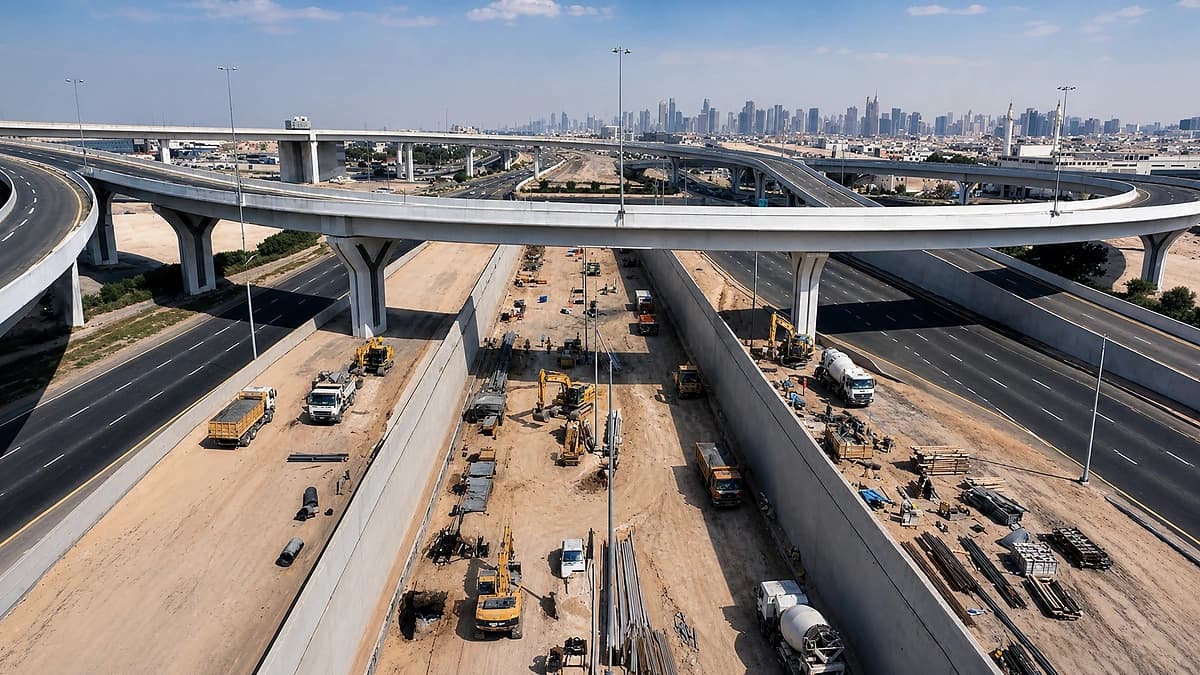
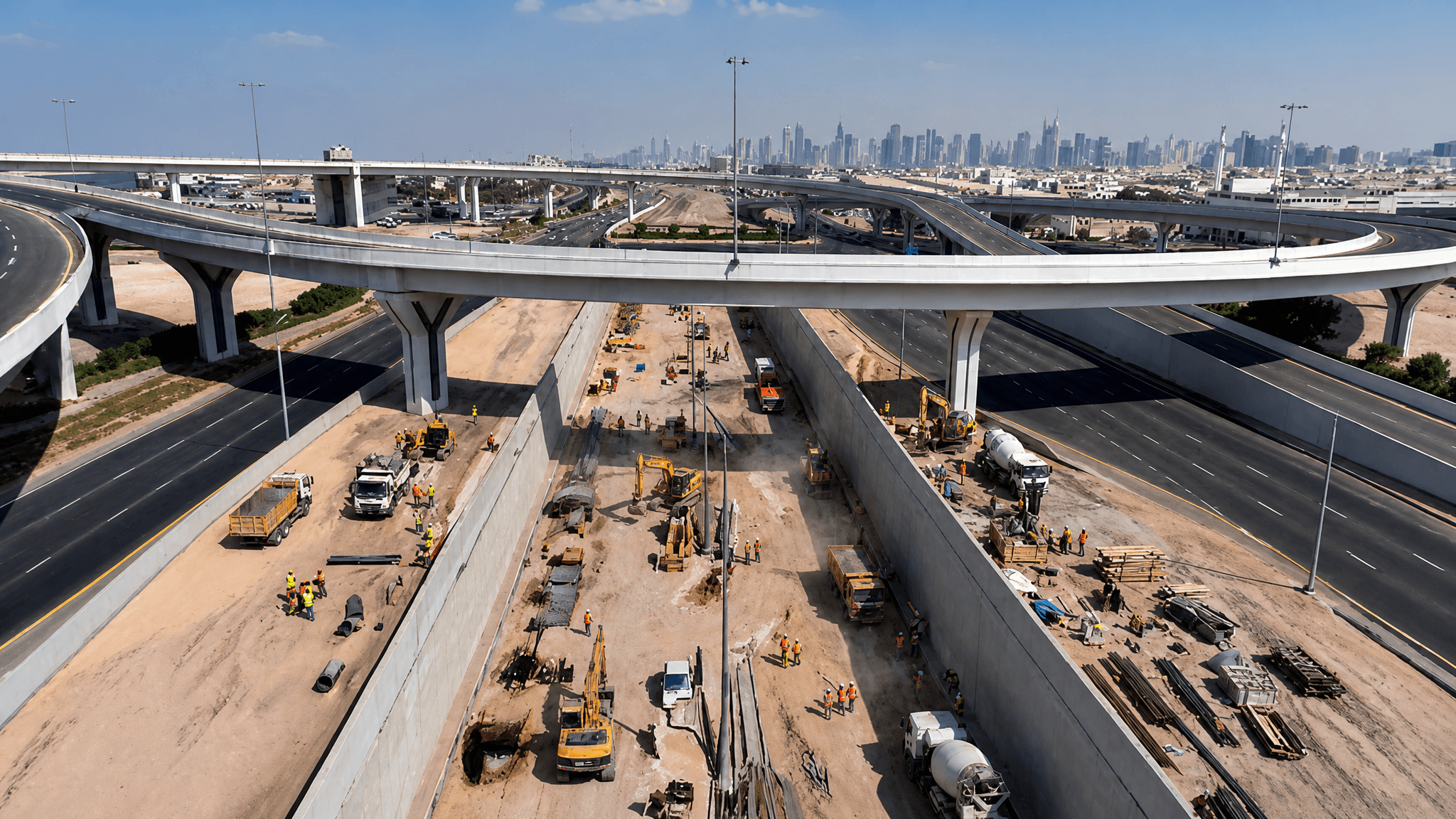
The Al Shindagha Corridor project is a city-scale upgrade spanning roughly 13 kilometres across Sheikh Rashid Street, Al Mina Street, Al Khaleej Street and Cairo Street, with 15 intersections being upgraded to unlock faster connections across Deira, Bur Dubai and Dubai Harbour. The new Al Khaleej Street Tunnel itself runs 1,650 metres from the Infinity Bridge ramp to Al Wuheida, with three lanes each way and a rated capacity of up to 12,000 vehicles per hour both directions.
RTA reports the corridor will serve around one million people and cut through-journey times dramatically, reducing a reported route time from 104 minutes to 16 minutes by 2030. Work on a parallel bridge linking Bur Dubai and Dubai Islands is also underway, designed with four lanes each direction plus dedicated pedestrian and cycling tracks and scheduled for completion in the fourth quarter of this year.
What does the Al Shindagha Corridor project include?
What does the Al Shindagha Corridor project include? — Key Data
Completion
80%
Length
1,650 m
Capacity
12,000 vehicles per hour
Intersections upgraded
15
The Al Shindagha Corridor project is a package of road upgrades centred on the 1,650 metre Al Khaleej Street Tunnel, three lanes in each direction and capacity for up to 12,000 vehicles per hour both ways, and wider intersection improvements across a 13 km corridor. RTA reported the tunnel construction is 80% complete and the corridor work includes 15 upgraded junctions.
The scheme covers multiple discrete interventions: the Al Khaleej Street Tunnel between Infinity Bridge and Al Wuheida, upgraded junctions on Sheikh Rashid Street, Al Mina Street and Cairo Street, and new linkages to Dubai Islands and Dubai Harbour. The corridor length is 13 km and the RTA expects the completed improvements to serve around one million people, with the tunnel itself handling peak flows of 12,000 vehicles per hour in both directions once operational. The project is scheduled for final completion in the fourth quarter of this year according to RTA updates.
Operationally the package unblocks pinch points by creating free-flowing sections and new grade-separated links, but construction phasing and traffic management remain material risks for near-term travel times. Temporary diversions and staged junction closures will concentrate congestion on alternate routes during the final 20% of works; local businesses and logistics operators around Waterfront Market, Port Rashid and Dubai Maritime City should plan for intermittent delays while benefiting from the completed corridor’s capacity gains.
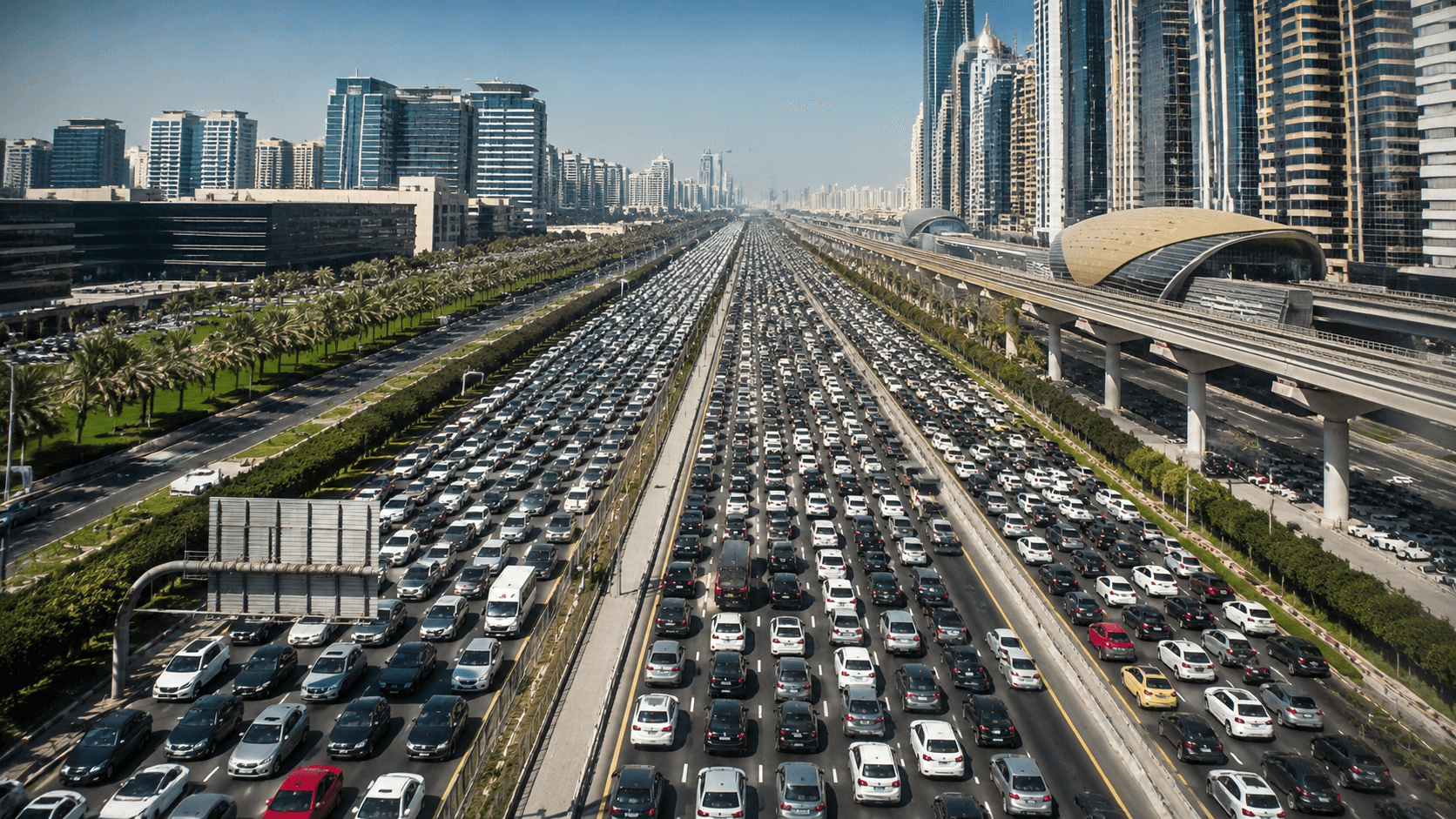
How will the Al Khaleej Street Tunnel reshape travel times and commuting patterns?
The tunnel will dramatically cut route times, with RTA reporting an expected reduction from 104 minutes to 16 minutes on the corridor by 2030, reshaping daily commutes and logistics journeys. The design capacity of the tunnel is up to 12,000 vehicles per hour in each direction and the infrastructure is already 80% complete, which points to near-term benefits once the final works are finished.
Reducing a single corridor’s peak end-to-end travel from 104 minutes to 16 minutes compresses effective commuting catchments and changes where residents and workers can locate without increasing door-to-office travel time. For example, retail and residential areas around Dubai Islands and Port Rashid will move inside what becomes an effective 20-minute commuting band, increasing day-time footfall and delivery frequency. RTA forecasts the corridor will serve roughly one million people; that scale of access improvement typically raises demand pressures on nearby housing and short-stay rentals and shifts freight timing into off-peak windows to exploit the 12,000 vph capacity.
Practical effects for motorists will include fewer signalised stops and more sustained free-flow movements between Infinity Bridge and Deira, but behavioural change is phased: many drivers only adapt over months as travel-time reliability proves out. Until then, peak hour volumes could temporarily reassign to adjacent routes, and developers should factor a transition period when projecting rental or capital-value uplifts based on the corridor’s improved 16-minute target.
| Feature | Value | Notes |
|---|---|---|
| Tunnel length | 1,650 metres | From Infinity Bridge ramp to Al Wuheida |
| Reported capacity | 12,000 vehicles per hour | Both directions combined capacity per hour |
| Corridor span | 13 km | Sheikh Rashid St, Al Mina St, Al Khaleej St, Cairo St |
| Intersections upgraded | 15 | Total junctions across corridor |
"Free-flowing traffic between Infinity Bridge and Deira will materially improve access to Abu Hail, Al Wuheida and Al Mamzar and relieve pressure on inner-city junctions."
— Mattar Al Tayer, RTA Director-General
What are the economic ripple effects for communities and developers?
What are the economic ripple effects for communities and developers? — Key Data
People served
1,000,000
Capacity
12,000 vehicles per hour
Corridor span
13 km
Intersections
15
The Al Shindagha Corridor project will boost economic activity by widening access to waterfront districts and commercial hubs, with RTA estimating the corridor will serve roughly one million people and relieve peak congestion that currently produces 104-minute link times. Developers and communities around Dubai Islands, Waterfront Market, Dubai Maritime City and Port Rashid stand to gain improved footfall and faster logistics resulting from the tunnel’s 12,000 vehicles-per-hour capacity and the corridor’s staged upgrades.
Improved access typically accelerates rental demand and commercial occupier interest within the new 10-to-20 minute catchment band; shorter, more reliable travel times enable businesses to widen recruitment and customer catchments. For logistics, the removal of junction delays reduces operating costs and route-cycle times for delivery fleets, supporting higher frequency deliveries into waterfront retail and fresh-market precincts. While RTA has not published direct property uplift figures, comparable Dubai corridor projects that cut travel times sharply have historically led to local rental yield compression and capital-value appreciation as accessibility becomes the dominant locational attribute.
Risks remain: construction-phase disruption compresses short-term retail revenues around key markets and may push warehousing demand to peripheral zones until the corridor stabilises. Developers should map financial models with a transition window that recognises the 80% completion milestone is followed by a phase of final works, traffic rebalancing and tenant relocation before full economic benefits materialise.
Key Insight
Investors should allow for a 6-to-18 month transition after construction completion when modelling rental or sales uplifts; the corridor’s quoted 104-to-16-minute improvement will take time to translate fully into sustained demand and price appreciation.
- Shorter commutes expand tenant catchments for residential projects
- Retail around Waterfront Market should see higher day-time footfall
- Logistics operators can run higher-frequency delivery routes
- Developers must model a temporary disruption period during final works
Design, art and the public realm: what will travellers experience?
Design, art and the public realm: what will travellers experience? — Key Data
Artwork
Maryam Hathboor
Tunnel length
1,650 m
Bridge lanes planned
4 each direction
Completion window
Q4 2026
Travellers will experience a functional tunnel with an integrated public-realm element, including a large-scale mosaic by Emirati artist Maryam Hathboor inspired by banknote illustrations and featuring the Infinity Bridge skyline. The tunnel interior, while engineered for capacity of up to 12,000 vehicles per hour, has been programmed to include cultural artwork and lighting schemes that reduce monotony and enhance driver orientation as vehicles pass through the 1,650 metre tube.
Design intent blends movement efficiency with placemaking: three lanes in each direction enable sustained vehicle flows, while the surface-level junctions and the new Dubai Creek bridge element will include pedestrian and cycling tracks to support active mobility. The parallel bridge connecting Bur Dubai and Dubai Islands is planned with four lanes each direction and segregated walking and cycling facilities, broadening options beyond private cars. RTA has scheduled the Al Khaleej Tunnel and attendant corridor works for completion in the fourth quarter of this year, signalling the start of operational monitoring and phased open access.
From a user-experience perspective, the mosaic by Maryam Hathboor and considered lighting will soften the sense of a purely utilitarian space and help reinforce local identity for commuters. Practical benefits include improved wayfinding, enhanced safety in low-visibility conditions, and a more comfortable environment for peak traffic flows; the design supports sustained capacity while contributing to Dubai’s strategy of integrating public art into major infrastructure projects.
- Integrated mosaic artwork reduces monotony for drivers
- Dedicated pedestrian and cycling tracks on the new bridge
- Lighting and wayfinding designed for safety at 12,000 vph
- Public realm enhancements link to nearby waterfront precincts
The Al Shindagha Corridor project centres on a 1,650 metre tunnel that is 80% complete and part of a 13 km upgrade spanning 15 junctions. RTA forecasts the corridor will serve roughly one million people, deliver capacity up to 12,000 vehicles per hour in key sections and reduce a reported route time from 104 minutes to 16 minutes by 2030, with completion targeted in Q4.
Binayah Editorial
Property Market Analyst
Our editorial team researches Dubai's real estate market, tracking DLD data, developer launches, and investment trends to keep buyers and investors informed.
Ready to Invest in Dubai?
Speak with our analysts about the best opportunities in today's market — free consultation.